



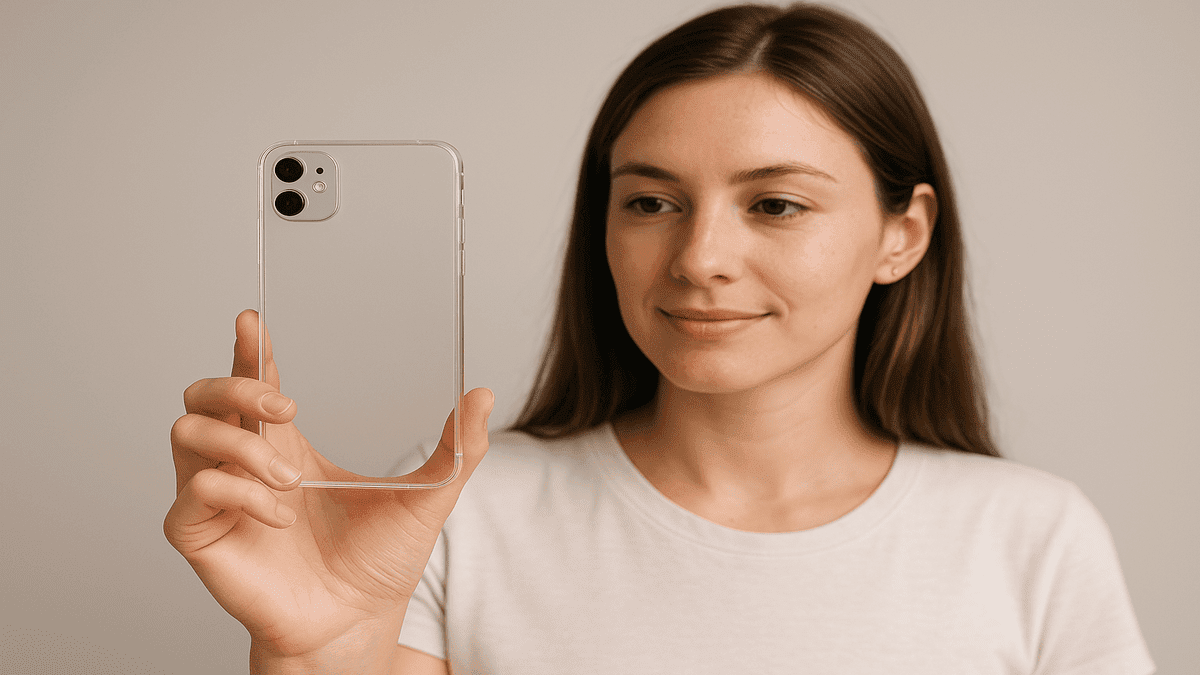
The internet can’t stop talking about a video where a woman casually scrolls on what looks like a transparent phone while waiting in line at a Chipotle. The nine-second clip, posted by TikToker @askcatgpt, has racked up millions of views and a flood of comments from people wondering whether this see-through gadget is the latest futuristic innovation or just an optical illusion.
Spoiler alert: it’s neither. The so-called “transparent phone” is actually a methaphone—a clear, acrylic slab shaped like a smartphone. No screen, no tech, just a cleverly crafted prop designed to look like a phone when you’re holding it.
Why Did Everyone Think It Was Real?
It’s simple: we’re conditioned to expect innovation, especially when it comes to smartphones. From foldable screens to transparent displays in sci-fi movies, our brains are ready to believe that the next big thing might just pop up on a TikTok feed one day. That’s why some people immediately assumed this was the latest release from Nokia or even a next-gen prototype straight out of Silicon Valley.
One commenter joked that it would be a nightmare to find if lost, while another suggested the woman was “on a mission from the future.” People love a mystery, especially one that looks like it’s breaking tech boundaries.
The Real Story Behind the Methaphone
The methaphone isn’t the next big tech evolution. It’s a prop meant to make a point. The creator designed it as a kind of “digital detox” tool. A stand-in for your real phone when you’re trying to break the habit of constantly scrolling. It’s essentially a placebo for phone addiction, giving you the comforting feel of a device in your hand without any of the distracting apps.
But even the woman from the video admitted that carrying the methaphone didn’t actually reduce her screen time. It’s a classic case of treating the symptom rather than the cause. If your brain craves the dopamine hit from notifications, a clear plastic phone isn’t going to fix that.
Phone Addiction: Why Are We Hooked?
The whole methaphone phenomenon taps into a deeper issue. Neuroscientists say that our brains are wired to respond to notifications like they’re urgent signal, ping, buzz, light up. That little dopamine spike pulls us back into our devices, whether or not we actually need to be looking at them.
According to Dr. Mark Williams, a neuroscientist who studies digital behavior, every time we hear a notification, our brain’s cognitive control network activates. It’s basically a built-in distraction mechanism. No wonder it’s so hard to put our phones down.
Sound Familiar? Meet the NoPhone
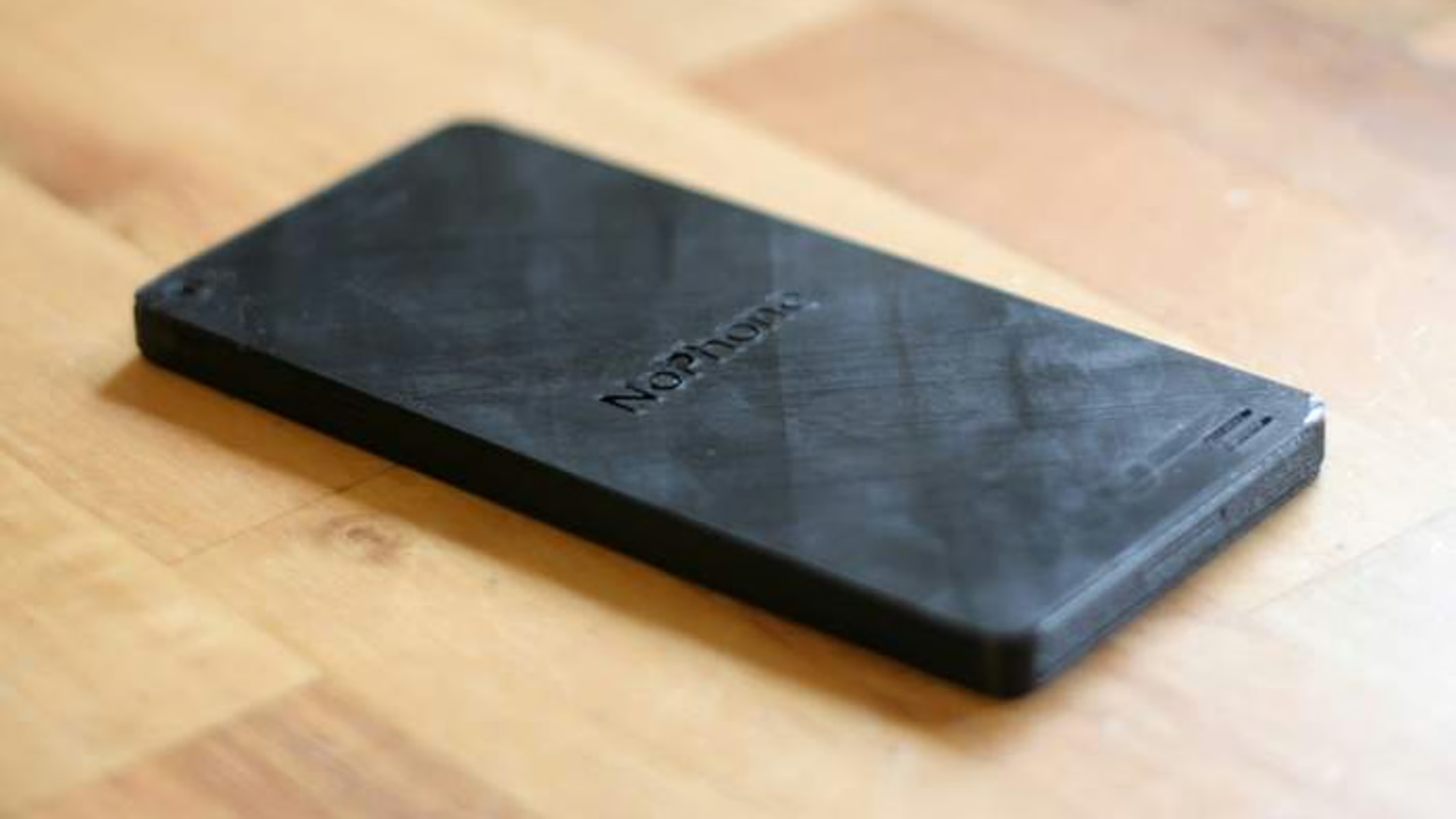
If this whole idea of a phone placebo sounds familiar, that’s because it’s not the first time someone’s tried it. Back in 2014, a Kickstarter project called the NoPhone raised over $18,000 to manufacture a phone-shaped plastic slab. It didn’t do anything—literally just a chunk of plastic, but it was meant to curb the urge to constantly check your device.
There were even different versions: the NoPhone Zero, which was somehow even less functional, and the NoPhone Selfie, which had a tiny mirror because, well, vanity never dies. The creators even pitched the idea on Shark Tank, but it never became the cultural phenomenon they hoped for. In the end, the NoPhone was more of a novelty than a real solution, fading out of relevance after selling about 10,000 units.

So, Does the Methaphone Work?
That’s debatable. On one hand, the methaphone is a fascinating social experiment. A prop that sparks conversations about our dependence on tech. On the other hand, it doesn’t really solve anything. If anything, it highlights just how deeply ingrained our phone habits are. You can swap your real device for a clear chunk of acrylic, but if you’re still mentally glued to your phone, the problem hasn’t really gone anywhere.
The real takeaway here isn’t about transparent phones or futuristic tech, it’s about how deeply embedded smartphones are in our lives. The methaphone might just be a piece of plastic, but it’s also a mirror reflecting our modern addiction. We’re so used to holding our phones that we’ll even cling to a fake one just to feel normal.


