


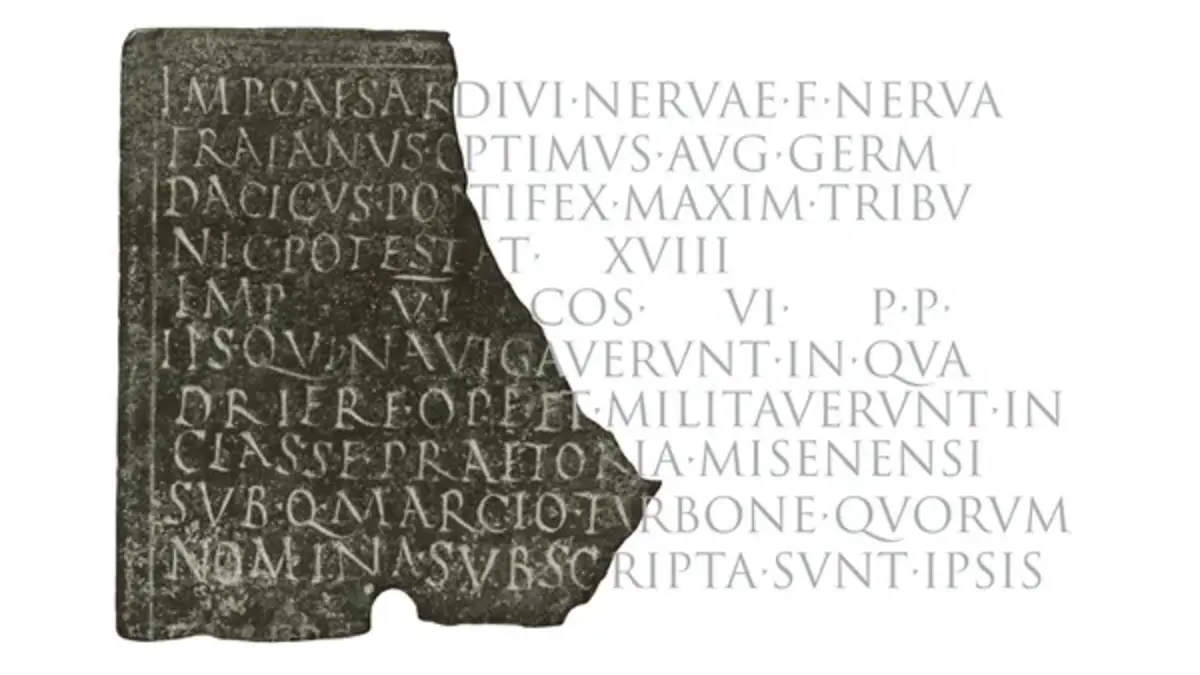
What happens when the brains behind AlphaGo and Gemini turn their attention to ancient Roman inscriptions? You get Aeneas—DeepMind’s new AI model that’s not predicting the next token in your chatbot, but filling in the blanks of crumbling Latin stone slabs from 2,000 years ago.
It’s not just cool. It’s revolutionary.
Wait—AI and Ancient Rome?
Yup. DeepMind teamed up with universities across Europe to build an AI called Aeneas that does four very geeky, very powerful things:
- Restores damaged Latin text (even when whole sections are missing).
- Dates inscriptions with uncanny precision (±13 years vs historians’ ±30+).
- Pinpoints where it came from—mapping it to one of 62 Roman provinces.
- Finds similar inscriptions across a vast database to help historians make sense of context.
This isn’t just some ChatGPT-style autocomplete. Aeneas has been trained on 176,000+ Latin inscriptions across more than 16 million characters, using a custom transformer model built for ancient text. Call it NLP meets archaeology.
Under the Hood: Transformers, But Make It Classical
Aeneas runs on a customized transformer architecture with a decoder backbone (think T5, but buffed up) and three smart “heads”:
- One for text restoration
- One for date prediction
- One for geographic attribution
It doesn’t just guess missing words—it makes educated predictions based on context, syntax, spelling patterns, and even changes in how Latin evolved over time.
And yes, it uses images of inscriptions when available, although the real magic happens in the text.
AI + Humans = A New Research Workflow
What makes Aeneas special isn’t that it replaces historians—it supercharges them.
In a study with 23 professional epigraphers, researchers found that Aeneas:
- Helped historians improve accuracy
- Boosted their confidence by 44%
- Delivered searchable parallels that often revealed previously overlooked connections
And when the AI’s suggestions were combined with human insight? That’s when the real breakthroughs happened.
From Broken Stone to Digital Insight
Some real-world highlights:
- Res Gestae Divi Augusti: Aeneas mapped competing scholarly theories about when Augustus wrote his self-praising epitaph—highlighting subtle historical ambiguities.
- Altar from Mainz: It restored part of a dedication to a Roman governor and found a similar one from 17 years earlier, hinting at a broader regional trend historians had missed.
Imagine using AI to trace trends in how people wrote about emperors, gods, or taxes across time. That’s the level Aeneas operates on.
What It Means for EdTech, History, and AI Ethics
Aeneas is already being rolled out into European classrooms, helping students learn Latin, epigraphy, and digital humanities using real data. There’s even an interactive interface at predictingthepast.com where researchers and educators can test it out.
This is how AI enters the humanities the right way:
- Augmenting human expertise, not replacing it
- Prioritizing accessibility, reproducibility, and ethical use
- Amplifying marginalized voices found in ancient records (enslaved people, women, non-elites)
Why Geekhub Readers Should Care
This isn’t just about Latin nerds (though we love them too). Aeneas shows us what’s possible when cutting-edge AI meets history:
- Real-world use of transformer models beyond text generation
- Multimodal AI handling both visuals and language
- Open-access AI tools reshaping research and education
- A roadmap for AI collaboration—not competition—with experts
It’s also a killer example of how deep tech can bring dusty stones to life and how machine learning can actually preserve culture instead of erasing it.
TL;DR:
DeepMind’s Aeneas is basically an AI archaeologist. It can read, restore, date, and locate ancient Roman inscriptions with impressive accuracy—while helping real historians do their jobs better and faster. It’s open, ethical, and shockingly useful.
The future of AI isn’t just in your browser window. Sometimes, it’s carved in stone.
Want to see more smart tech making history? Bookmark geekhub.co.za for updates on AI, education, culture, and all the ways innovation is rewriting the rules.


