

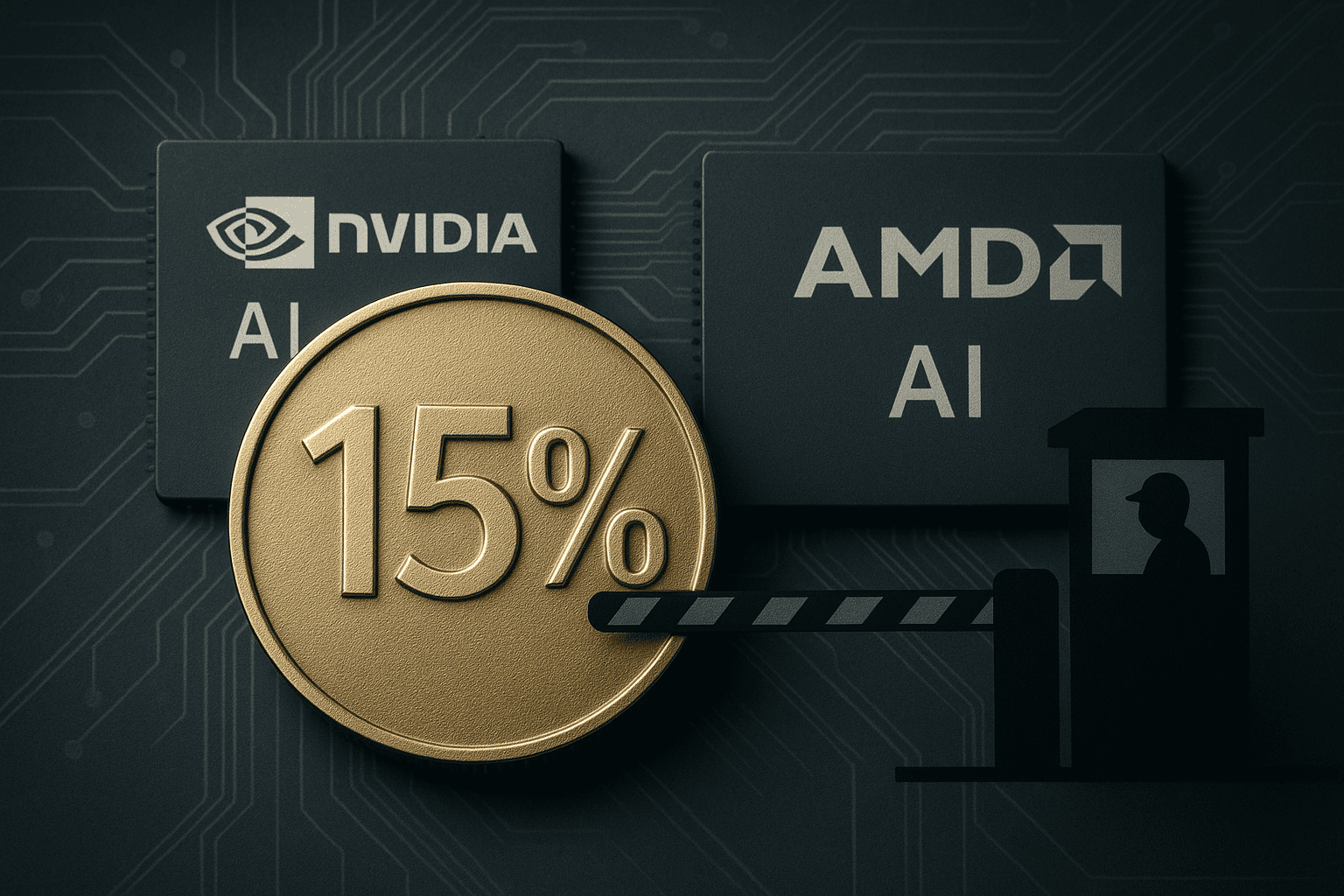
Some deals change the numbers on a balance sheet. Others change the rules of the game. The U.S. government’s decision to take 15% of Nvidia and AMD’s AI chip sales in China feels like both.
This is not just about two companies. It is about a fundamental shift in how we think about technology, trade, and power. For decades, export controls were about blocking technology from landing in the wrong hands. Now they are becoming a toll booth. Pay the fee and you can pass.
The Numbers Hide a Bigger Story
On paper, the math is simple. Nvidia sells H20 chips in China, AMD sells MI308s. The U.S. wants a slice, 15% of every dollar from those sales. In Nvidia’s case, that is potentially over $2.5 billion a year. AMD’s cut is smaller but still a nine-figure dent.
But behind the spreadsheets is something more unsettling: precedent. Once you open the door to revenue sharing in exchange for market access, what is to stop the next government, any government, from charging whatever it wants?
National Security or National Profit?
The official line is that this is about safeguarding AI technology from strategic competitors. And yes, geopolitics is baked into every chip these days. But it is hard not to notice how convenient it is that “protecting national security” now also fills the treasury.
When policy starts looking like business, the boundaries blur. Export controls used to be about yes or no. This is more like yes, but what is it worth to you?
The Tightrope Walk
For Nvidia and AMD, China is not just another market. It is oxygen. Pull it away and their balance sheets gasp. That is why they will swallow the fee, tweak product designs to comply with the rules, and hope to hold on to market share. But every concession sets a new baseline for what is acceptable.
Why This Moment Matters
We are watching a new kind of global trade currency emerge, one where innovation is not the only bargaining chip. Access itself is becoming a commodity, sold to the highest or most compliant bidder.
Today it is AI accelerators. Tomorrow it could be quantum processors, biotech breakthroughs, or the next leap in energy storage. And each time, the toll booth gets a little bigger.
