



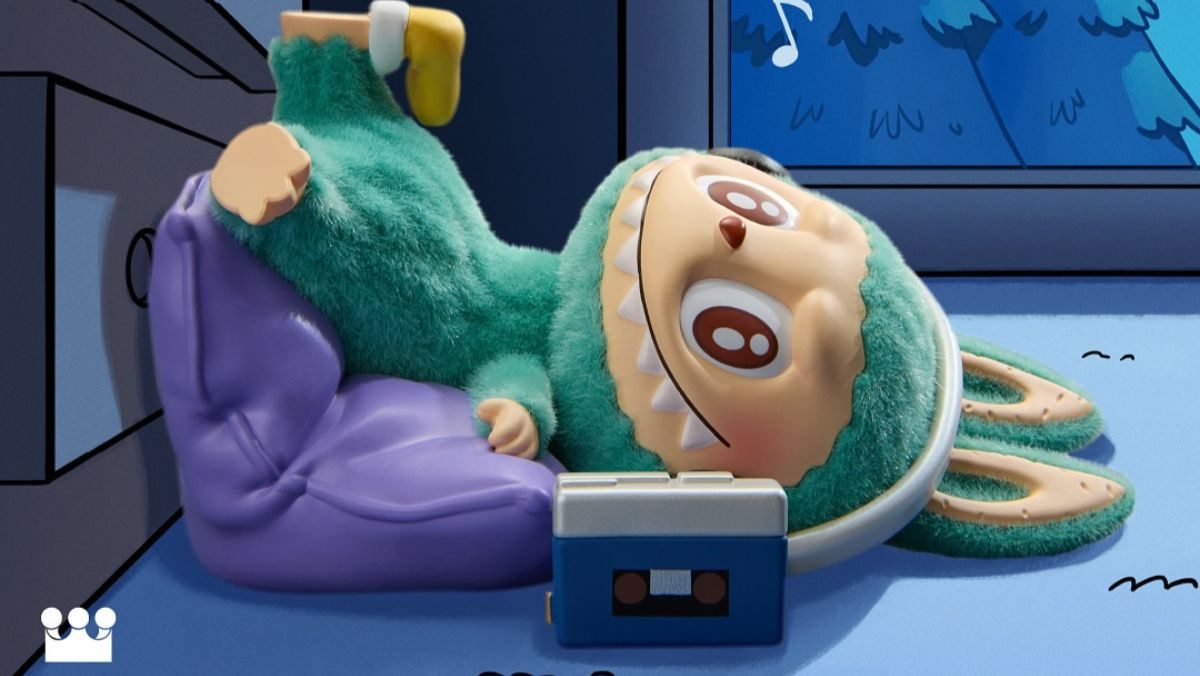
Alright, movie-obsessed friends, buckle up because what started as a quirky collectible is now roaring toward the big screen. The whimsical world of Labubu, the toothy, adorable “monster” plush line born in Hong Kong and blown up globally via the blind-box craze, is getting its cinematic moment courtesy of Sony Pictures. Sony’s decision to acquire the screen rights to Labubu isn’t just another IP play. It’s a bet on the weird, the cute-ugly, and the culturally viral. Labubu, designed by Hong Kong illustrator Kasing Lung and popularised through the Chinese retailer Pop Mart, was never meant to be only a toy. It’s part of Lung’s larger “The Monsters” story universe.
The rise of Labubu is deeply connected to how it’s sold, in blind boxes. Buyers never know which version they’re getting until they open it, and that mystery, combined with limited editions, has sparked a full-scale collector frenzy. What started as a playful gimmick evolved into a booming secondary market where rare figures sell for astonishing prices. Sony clearly sees the power behind that momentum. The Hollywood Reporter suggest that the studio is not simply developing a single film but is considering the potential for a full franchise. It makes sense, because Labubu isn’t one character but an entire tribe, a strange and charming monster world that feels perfectly suited for cinematic exploration.
This is where the project becomes especially intriguing. Sony has not yet decided how the film will look or feel. There is no confirmed director, no announced producer and no decision on whether the film will be animated, live-action or a hybrid. That blank slate is both thrilling and risky. Without a clear creative team in place, the project could easily drift in several directions. Still, Sony has a track record of taking bold creative swings. The studio has successfully delivered visually playful and genre-mixing films before, from the energetic reimagining of “Jumanji” to animated projects that embrace vibrant, chaotic worlds. They have the experience needed to tap into Labubu’s off-beat charm, its textured monster mythology and its potential for whimsical spectacle.
This move is bigger than a toy-to-film adaptation. Labubu has become a genuine cultural symbol. These tiny, odd creatures aren’t just sitting on collectors’ shelves. They’ve been carried as bag charms by celebrities like BLACKPINK’s Lisa, Rihanna, and Emma Roberts. That kind of star visibility helped transform Labubu from niche collectible into a viral fashion accessory. Sony is stepping into something that already has cultural traction, not merely consumer appeal. Hollywood is also shifting. Instead of films creating merchandise, studios are now chasing toy brands that already command massive fan engagement. Labubu fits that trend perfectly.
The potential here is huge. Imagine a richly designed Labubu world where each monster has its own personality, role and backstory within The Monsters universe. Picture a story that embraces the mystery of the blind-box concept itself. Maybe the main character doesn’t know who they are meant to be and sets out on a quest to discover their identity, or to find a rare Labubu that holds special meaning. There is also room for deeper themes that speak to belonging, self-worth, the idea of rarity and the search for meaning in a world where everyone looks different. If Sony embraces the heart of Labubu rather than just the brand value, this could turn into a visually charming and emotionally compelling fantasy adventure.
Within the Labubu community, expectations vary widely. Some collectors hope for traditional 2D animation with a cozy, storybook feel. Others want something closer to stop-motion or an aesthetic that mirrors the original plush designs. Fans who love the folklore inspiration behind Kasing Lung’s work are hoping Sony respects the quiet magic of his world. At the same time, fans are nervous. There is a risk of over-commercialisation, mismatched voice casting, or a visual style that strays too far from the toys. Labubu is a beloved character line that thrives on mystery and intimacy, so the stakes feel higher than usual.
If I had to guess, I’d say Sony will ultimately choose a fully animated approach, likely 3D CGI, but with stylised textures that echo the soft, slightly eerie aesthetic of the plush figures. I imagine a plot that mixes origin story with adventure, centred on a Labubu who feels out of place and goes on a journey that reveals their purpose among the monster tribe. If Sony leans into the quirky wonder that made these characters famous, this could become a breakout franchise.
If they treat it like a quick cash grab, though, it could fade fast.
The bottom line is simple. Sony’s Labubu movie is not a guaranteed hit, but it has the potential to become something special. For anyone who’s watched the rise of Labubu from a blind-box obsession to a global pop-culture symbol, this moment feels like the beginning of something fascinating. Let’s hope the studio captures what makes Labubu weird, beautiful, and irresistibly beloved.


