



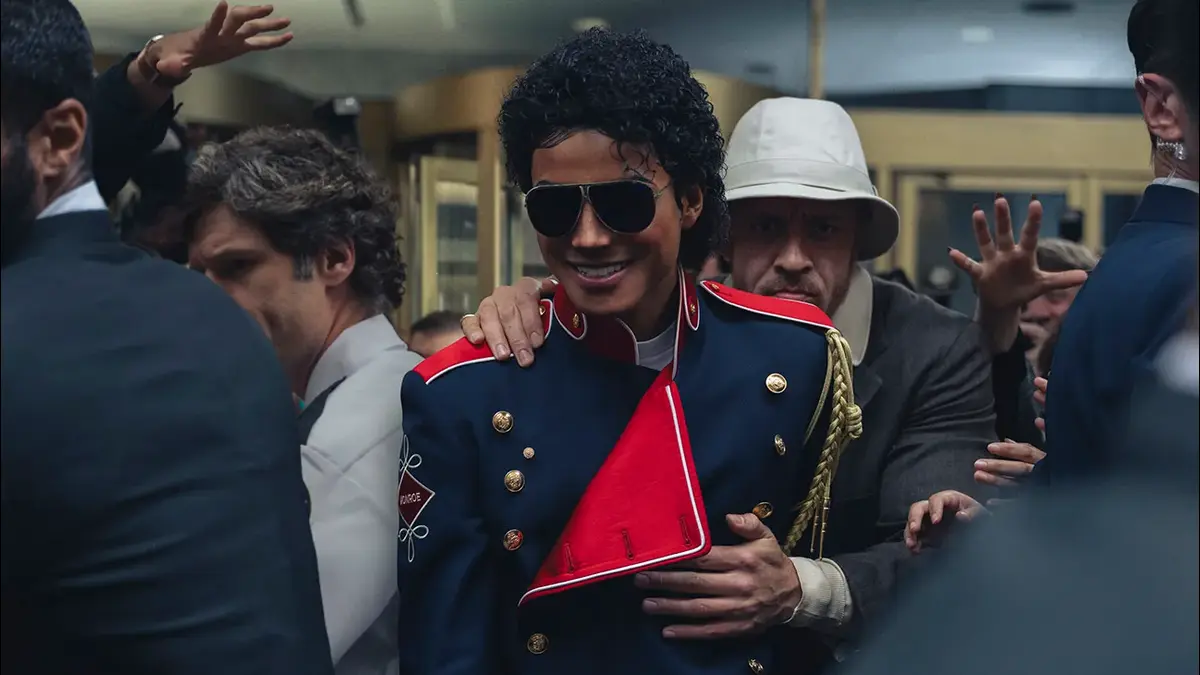
Michael Jackson, the man, the legend and a story that steeped on controversy that divides a room. And right now, the conversation around the biopic Michael is doing exactly that. The audiences have shown up in droves and have enjoyed every bit of it, but for the critics the conversation around it isn’t exactly calm.
The criticism isn’t quiet… and it isn’t going away
The film, directed by Antoine Fuqua, focuses on Jackson’s childhood. The man who rose to fame through his music, and the cultural impact that turned him into an artist that lives on. But there was also a very deliberate choice to stop the story in 1988. Why?, because the allegations after 1988 defined much of the public conversation around him. And it is with that decision that things have become messy. The public is all too aware of the media articles that made their rounds that turned the artists life into a web of controversy. Some critics have stated that the film “is too polished,” arguing that you can’t tell the story of someone like Michael Jackson without confronting the darker chapters as well.
Spike Lee isn’t entertaining that argument
Speaking to The Hollywood Reporter, Lee confronted the criticism head-on and pushed back hard saying:
“you’re judging a film for not including events that fall outside its timeline”.
The film ends in 1988 and all the fans that followed the artist know that the allegations surfaced years later. For Lee, that’s not avoidance. How can a film include events that fall outside the timeline it chose. In his view, critics are trying to force a different film into the one that was actually made. And whether you agree with that or not… it’s a perspective that reframes the whole debate. Which means the court cases as well as the public unravelling came after the allegations, and that isn’t part of the story being told here. But wait…..there’s more. Reports suggest that legal constraints tied to past settlements meant certain allegations couldn’t be depicted at all, forcing major rewrites and reshoots late in production. So what you’re watching isn’t just a creative decision, but also a legal one.
A film caught between legacy and reality
What makes this situation feel uncomfortable is that neither side can be discounted. On one hand, you have a film that clearly wants to celebrate the man that was Michael Jackson. The version that that people grew up with tied to music, that filled stadiums and rewrote pop culture. And on the other, you have a real-life story that isn’t neat and tidy. And that’s where the tension sits. The numbers are a direct reflection of this. Critics have been lukewarm, but audiences have shown up in full force, pushing the film into major box office territory. Which clearly tells you that people aren’t just watching this film. They’re choosing what they want from it.
So what is Michael really trying to be?
That’s the question hanging in the air. And other questions include, Is it a full portrait?, no, not quite. Is it a celebration?, yes it definitely looks that way. Is it incomplete? Well that depends on what you expect from a biopic. Lee seems to be saying: judge the film for what it is, not for the film you wish it was. But the critics aren’t sure that’s enough.
The part no one can quite settle
You see, at the centre of all this isn’t just a movie, it’s a legacy. And legacies encompass everything, even when it’s inconvenient. So what you end up with is a film trying to celebrate a legend, while the world keeps reminding it that the story was never that simple. And I guess that is why this conversation feels so loud. Not because the film skipped something… But because the world hasn’t.


