

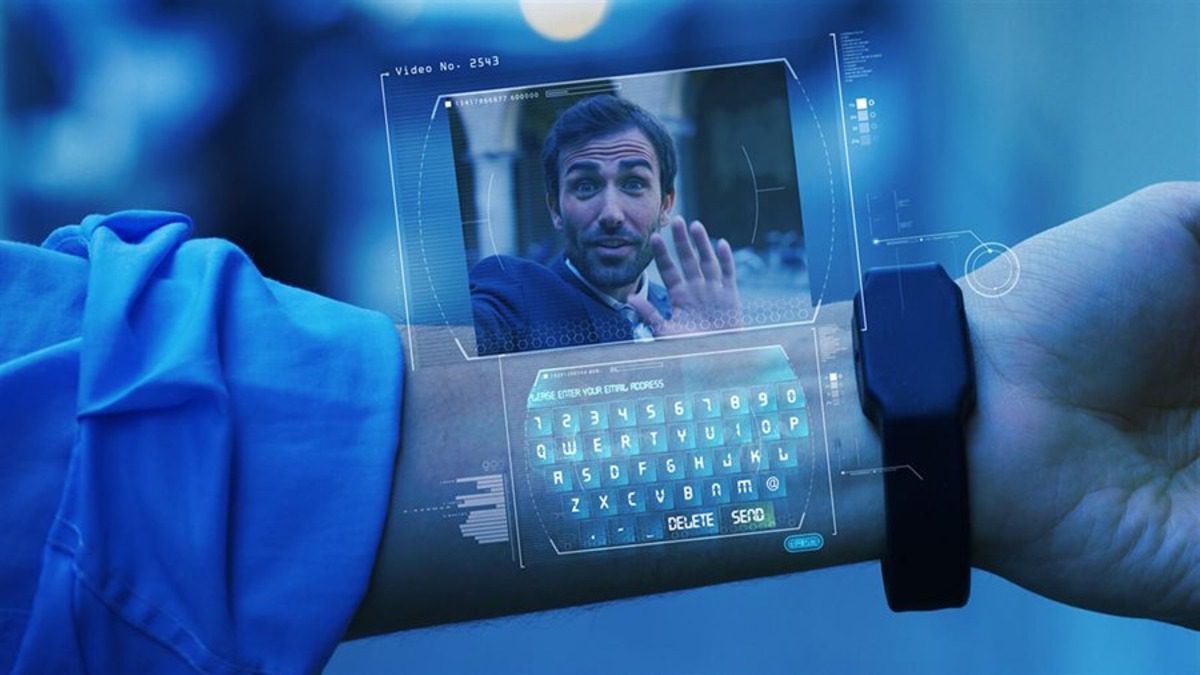
For nearly 20 years, we’ve had a little glass rectangle glued to our hands. It’s been our window to the world and our escape from it. A tool, a toy, a lifeline. The smartphone reshaped modern life with such force that most of us can’t remember how we functioned without it. But its time as the centerpiece of our digital universe may be winding down.
We’re not ditching phones tomorrow. But we are slowly stepping into a new era. One where the “phone” stops being the main character and quietly shifts into the background.
The Generation Raised by Screens
You don’t just use a smartphone. You grow up with it. You form habits around it. You form relationships through it. For millennials and Gen Z, the smartphone isn’t just a tool, it’s a cultural artifact. It taught us how to communicate in emojis, filter our faces into perfection, and find love by swiping right.
But it also made everything urgent. Everything public. Everything always on. There’s beauty in the access, sure but also burnout. Notifications have become the soundtrack to our lives. And beneath the dopamine hits and curated timelines is a creeping sense of digital fatigue.
So maybe it’s not surprising that the industry is now asking: what comes after the glass slab?
Where We’re Headed
1. Foldables: Phones That Morph
Let’s start with the hardware. Foldables aren’t just a gimmick. They’re the first sign that we’re moving past the idea of a static slab. When your phone unfolds into a mini tablet or rolls out like a scroll, the possibilities change. It’s a throwback to the tactile joy of old-school tech – flipping, sliding and snapping, but with modern ambition.
Companies like Samsung, Huawei, Honor and Google are experimenting with form in ways that finally feel…alive. Not perfect yet, but promising.
Read: Samsung Galaxy Z Fold7 first impressions
2. AI Isn’t a Feature—It Is the Phone
The biggest shift, though, isn’t in the shape. It’s in the soul of the device.
AI is transforming phones from reactive to proactive. It’s not just Siri or Google Assistant anymore. It’s predictive messaging, real-time language translation, generative content on demand. Your phone will soon understand you, your habits, routines, quirks and start making decisions on your behalf.
That’s both exciting and terrifying. But mostly inevitable.
3. From Screens to Spaces: The AR/VR Leap
When Apple announced Vision Pro, people rolled their eyes. Another headset? Another $3,500 toy?
But zoom out and pause a little. Spatial computing isn’t about replacing your phone with goggles. It’s about changing the entire concept of an interface. No more tapping on glass. Instead, imagine reaching out and touching your calendar, dragging your emails into the air, or navigating the city through digital overlays in your field of vision.
In that world, the phone becomes the back-end engine. You don’t need to see it, you just feel its presence.
4. Wearables: The Quiet Takeover
Watches, rings, earbuds. They’re getting smarter. Smaller. More essential.
We’re inching toward a reality where these “accessories” start doing everything your phone used to. Taking calls. Making payments. Reading biometrics. Summoning AI. They’re frictionless, discreet, always on.
You won’t check your phone. You’ll be connected. Silently, constantly.
5. Superapps and Shape-Shifting Software
Apps are evolving too. The one-task-per-app model is collapsing. In its place? Superapps that do everything. One app for messaging, shopping, banking, reading the news, ordering food. Musk is trying this with X. China’s already nailed it with WeChat.
But the real twist is AI-powered interfaces that build themselves. Imagine asking for a travel plan, and your phone creates a custom itinerary with bookings, currency converters, language guides, and even AI companions. No app-hopping. Just ask and it appears.
The Smartphone Won’t Die. But It Will Fade.
This isn’t a funeral for the smartphone. It’s a transition. The phone won’t disappear, but it’ll stop being the center of your tech experience. It becomes the processor—the invisible brain behind your digital life while your interaction shifts to glasses, rings, earbuds, maybe even smart clothing.
It’s not a single device anymore. It’s an ecosystem. A personal operating system that follows you around and adapts to the moment.
How We’ll Communicate in 2035
Typing will feel ancient. Instead, we’ll talk. Gesture. Visualize. Share presence.
Conversations may happen through holograms. Translations in real-time. Your AI assistant might join meetings for you and debrief you later. Messages won’t be typed, they’ll arrive as expressions, avatars, ambient sounds.
We’re not just changing tools. We’re changing how we exist digitally.
Read: What AI Can’t Replace: The Quiet Power of Human Work
Final Thought
The smartphone gave us the digital world. But it also gave us boundaries—flat screens, battery limits, notification overload. Now we’re entering a phase where technology dissolves into the background. It adapts. It listens. It blends in.
In the end, the question isn’t “what comes after the smartphone?”
It’s: what happens when the screen disappears and the world itself becomes the interface?
We’re about to find out
