



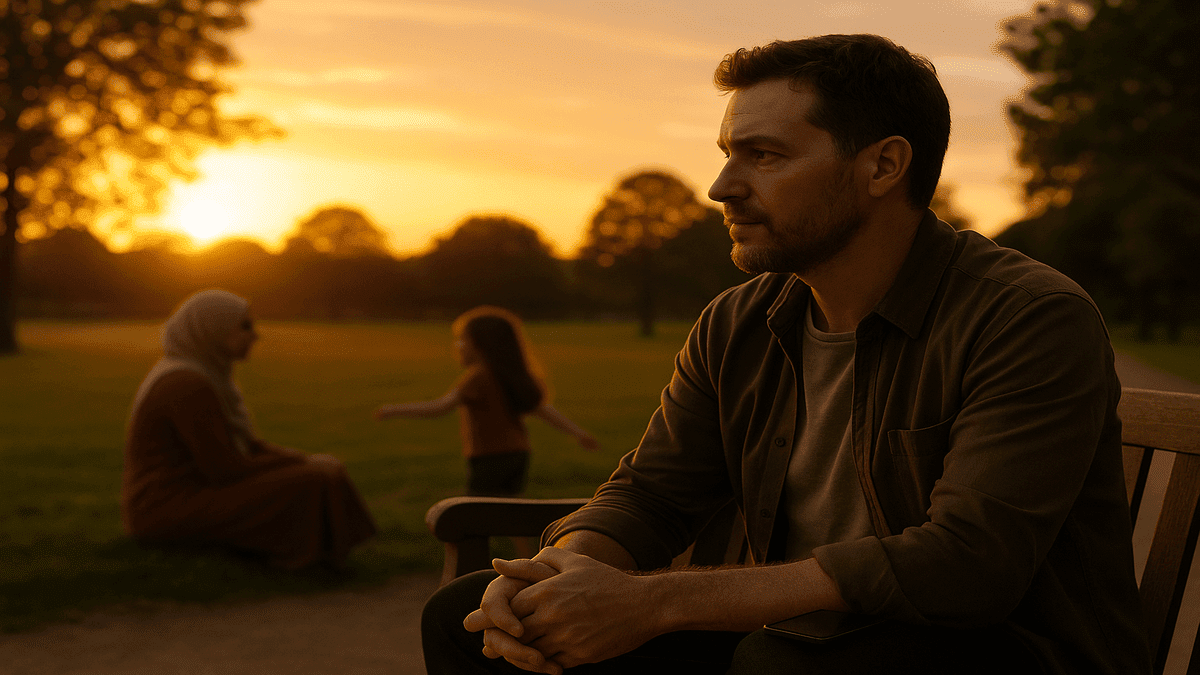
I used to glorify the grind. Now I just want to be present.
There was a time not too long ago when I believed taking a break was being lazy. When I told myself — and others — that if you’re not hustling, you’re falling behind.
I lived it. Preached it. Posted about it.
I thought that grinding nonstop was the price of greatness. That every hour I wasn’t working was an hour someone else was getting ahead.And in fairness, that mindset got me far. I built a respectable career, a strong reputation and felt a sense of control.
But at some point, I started to wonder: what was I really building?
While I was chasing goals, I was missing everything that truly mattered. My daughter would tell me about her day — the drama, the dreams, the little things that felt big to her — and I’d nod along, thinking I was listening. But I wasn’t really there. My wife would open up about the universe, about things that moved her soul… and I’d shrug it off, too busy grinding for a future I thought they wanted. But what they needed — what they were asking for all along — was something far simpler: me. Fully present. Unshackled. Human.
Somewhere along the way, I bought into the lie that being busy was the same as being important. That if I wasn’t constantly chasing and running on fumes, I was falling behind. We’re taught that grinding is more important than being present. But that mindset doesn’t build success; it quietly erodes your soul.
It’s nonsense. And worse — it’s dangerous.
And that’s the part hustle culture never warns you about.
The Wake-Up Call
We’ve all fallen for it. #RiseAndGrind. Coffee-fueled 5AM club rituals. That Gary V energy telling you there’s “no excuse” not to work every hour you’re awake.
The message is always the same:
- Sleep when you’re dead.
- Work harder than everyone else.
- Success is directly tied to how much pain you’re willing to endure.
But behind the motivational quotes and time-lapse montages is a brutal truth: none of this is sustainable. The World Health Organization literally classified burnout as an occupational phenomenon — not because people weren’t tough enough, but because the modern work culture is broken.
It wasn’t a single moment that changed everything for me. It was a slow, creeping awareness.
Realising I’d been physically present with my family, but mentally stuck in a success spiral.
That I was achieving more — but feeling less.
And worse of all, I forgot how to be grateful. I forgot the true meaning of love. I forgot how to be me.
You grind thinking one day you’ll finally achieve the success you’re so desperately looking for… and then years go by and you’re still postponing peace.
That’s The Big Fucking Lie: that you can only earn joy after you’ve exhausted yourself trying to “make it.”
But if making it costs your health, your relationships, your presence — is it even worth it?
The Real Cost of the Hustle
Let’s talk facts.
- The World Health Organization warns that long work weeks (55+ hours) are linked to heart disease and stroke.
- Sleep deprivation impacts cognitive function worse than alcohol, yet hustle culture celebrates running on fumes.
- And the more we glorify busyness, the more disconnected we become — from ourselves, and from the people who actually matter.
We don’t just burn out.
We burn bridges.
We miss birthdays, sunsets, quiet dinners, belly laughs. All because we think success is on the other side of just one more time.
What hustle culture sells is a fantasy — that if you just push a little harder, wake up a little earlier, say yes to one more thing… you’ll “make it.”
But what does making it even mean?
Samhita Mukhopadhyay, in her book The Myth of Making It, dismantles this illusion. She argues that we’ve inherited a toxic definition of success: one built on capitalist grind cycles, not personal growth or fulfillment. (Teen Vogue)
“We are taught to value ambition above all else. But ambition without boundaries just leads to self-erasure.”
Even tech giants are catching on. Companies like Google and Microsoft have introduced wellness days and mandatory recharge periods because they finally realised that dead employees don’t ship code.
My Own Reckoning
I’ll say it plainly: I used to be the loudest advocates of the hustle cult.
And while I still believe in ambition and while I still wake up with fire in my gut ( well most days, sometimes I just wanna stay in bed with my wife and binge Netflix)
But now, I make sure I’m also there when my kid wants to talk about their day. When my wife tries to intepret the meaning of my dreams. When my body says, “Rest, bro.”
Because I’ve come to realise that nothing else matters — the meetings, the launches, the deals — if you lose the people and moments that give life its meaning.
You can chase dreams and still stay grounded. You can also want more without missing what’s already in front of you.
Redefining the Win
I no longer measure success by how hard I work or what the world thinks of me:
These days, winning looks more like this:
- Laughing with my family over dinner that I helped prepare
- Laying in bed chatting about life and our interests without constantly being on our phones (This is a difficult one).
- Saying no to opportunities that drain me, even if they’re “big.”
- Creating — not just content or companies — but memories.
I’ve come to realise you don’t need to suffer to succeed.
You need rhythm.
You need boundaries.
You need joy in the process — not just the outcome.
As Tricia Hersey said in Rest Is Resistance:
“Rest is a portal to imagine new worlds. A vehicle to disrupt grind culture. A tool for healing.”
Final Thoughts: Work Hard. Live Deeper.
Look, I’m not telling you to quit chasing your goals. Heck, I’m still chasing mine. But I’ve stopped chasing them at the cost of my soul.
Hustle culture taught us to value the grind.
Real life teaches us to value the gift — of time, love, health, and being here, now.
So if you’re feeling tired — not the good kind of tired, but the “what am I even doing this for” kind — you’re not broken.
You’re just waking up.
And maybe it’s time to stop trying to keep up… and start trying to catch your breath.


