



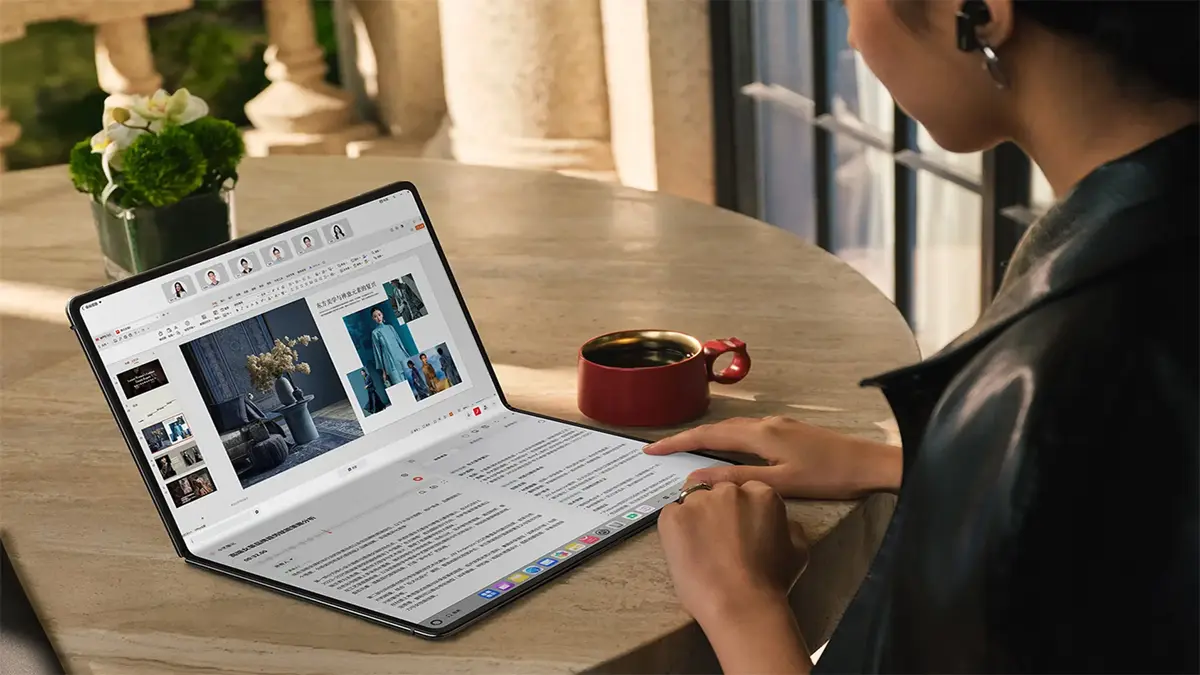
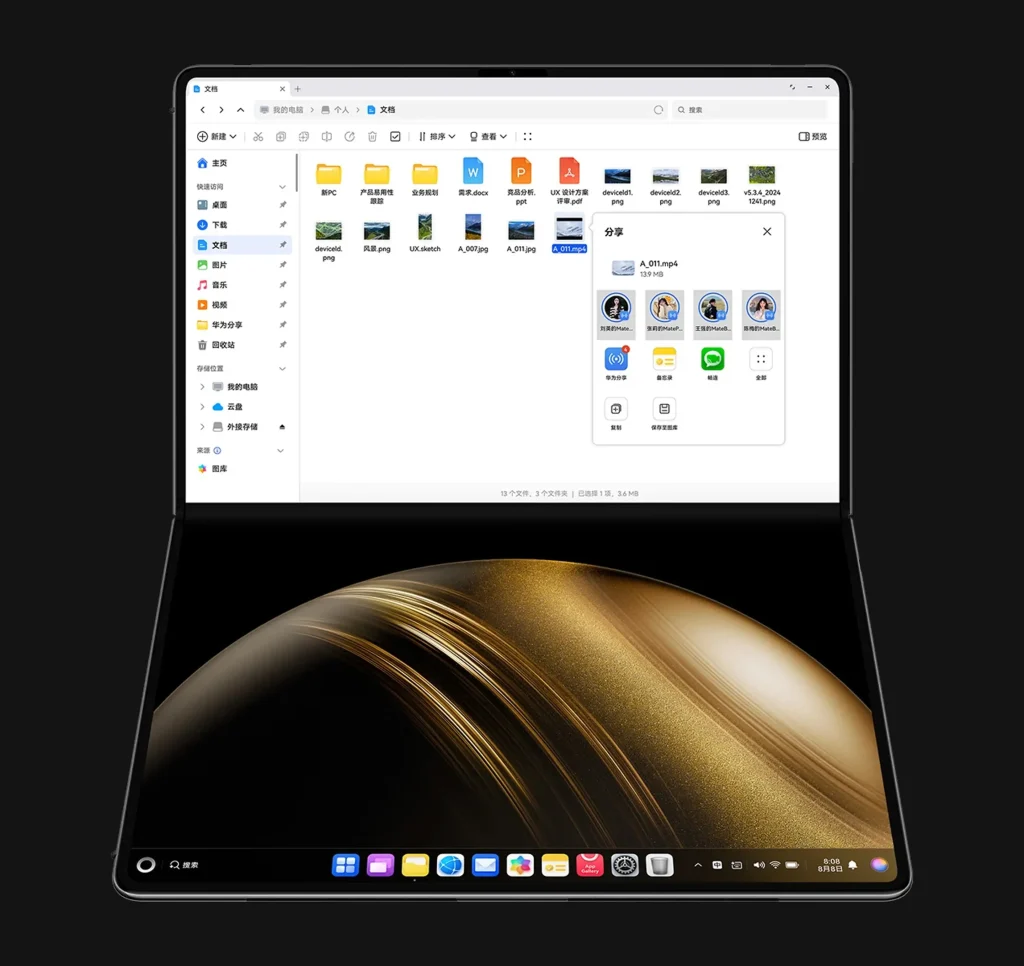
Some gadgets make you stop and go, “Wait, what?” Huawei’s new foldable laptop is one of those. The MateBook Fold Ultimate Design looks like a regular 13-inch laptop at first glance. But open it up and suddenly you’re staring at a massive 18-inch OLED screen that folds right down the middle like some kind of sci-fi origami trick.
Yes, you read that right. An 18-inch foldable screen.
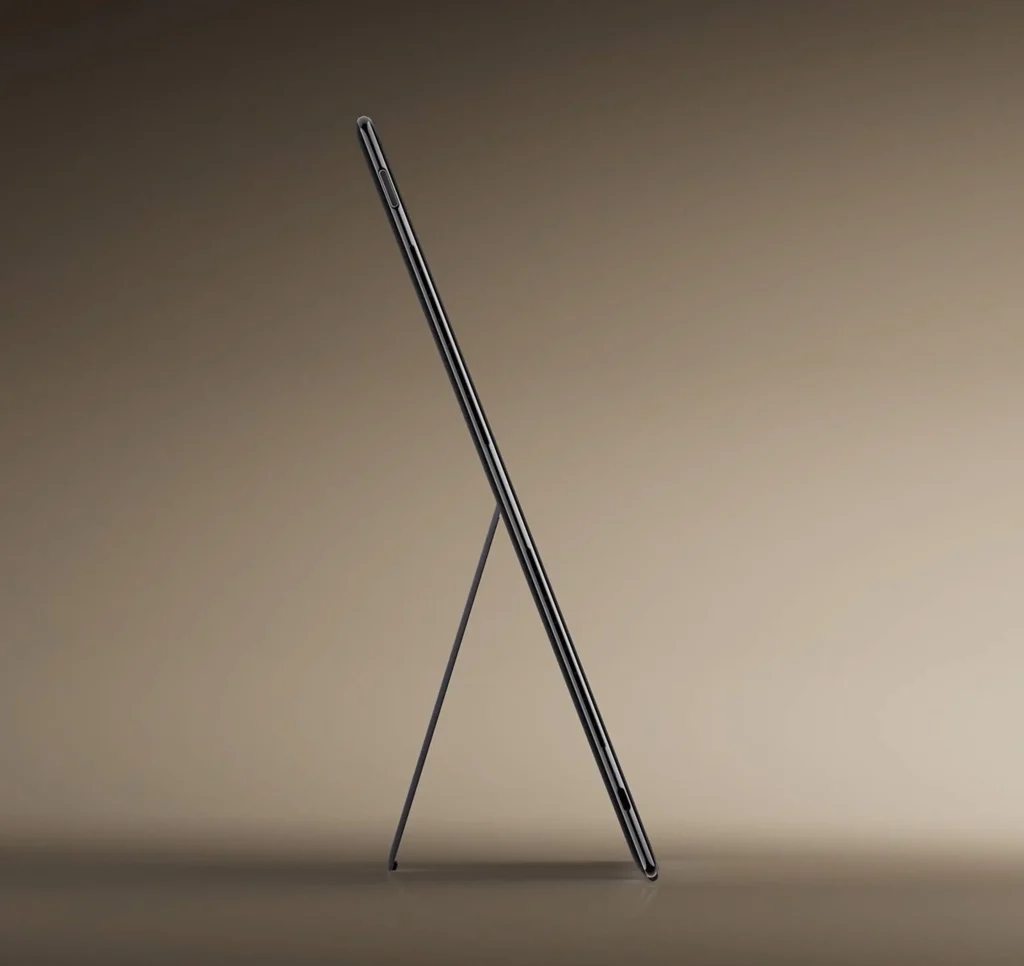
Unfolded, it’s just 7.3mm thick, which is actually thinner than an iPhone 16. Folded, it shrinks down to a compact notebook. And when propped up, it doubles as a giant tablet, a presentation screen, or a vertical workstation. Whatever you’re doing, this machine wants to shape-shift around it.
Sure, Lenovo technically got there first with foldable laptops, but Huawei’s known for refining things rather than rushing them. Remember that wild $2,800 Mate Xs trifold phone they launched? Same energy here — big ideas with real execution.
Let’s talk engineering
Huawei didn’t just slap a hinge in the middle and call it a day. They built a custom zirconium-based hinge that can hold the screen steady anywhere between 30 and 150 degrees. And since it’s a touchscreen, it needed to stay firm even when you’re tapping on it. The result is something that feels premium and solid instead of flimsy or experimental.
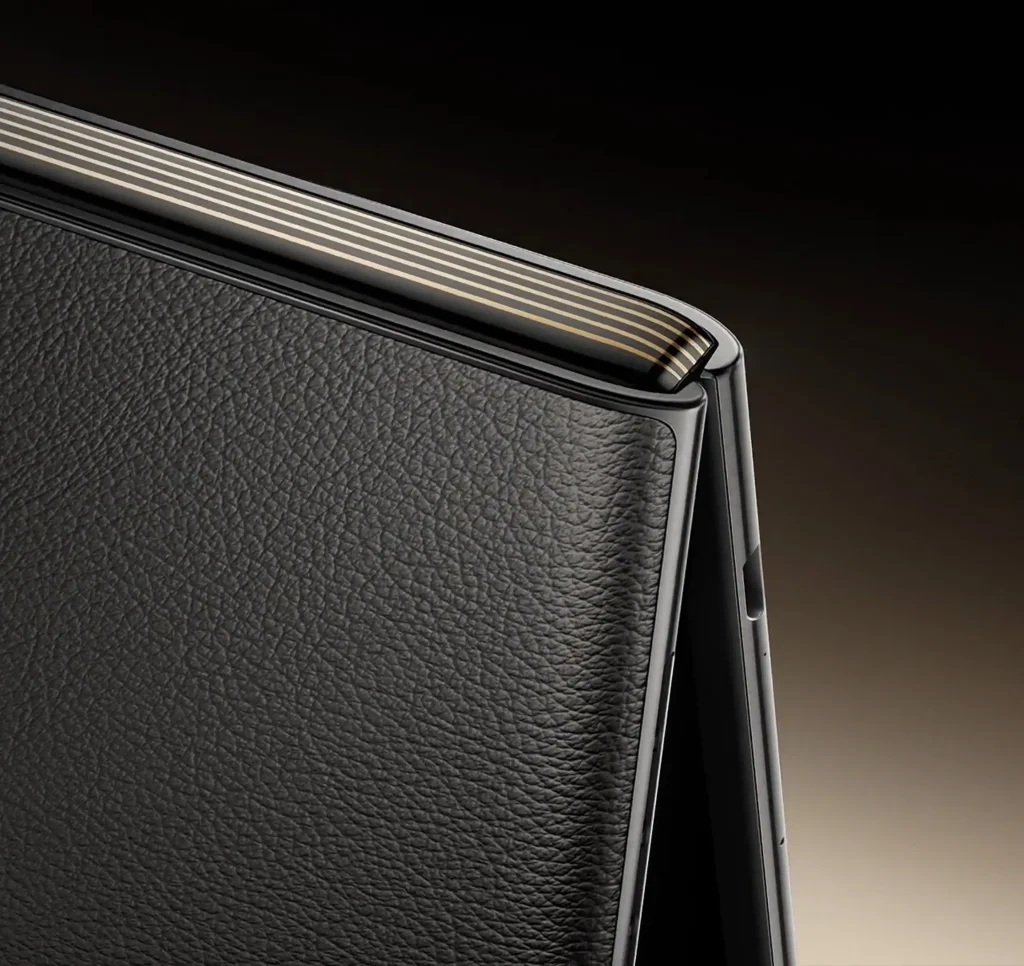
The frame includes a carbon fiber support layer and a non-Newtonian fluid buffer to help with shock absorption. There’s even a built-in kickstand so you can angle it however you like. The exterior is wrapped in silicone-coated vegan leather, and Huawei added some neat design touches like subtle gold lines down the spine and unique patterns on the kickstand.

The screen isn’t just big. It’s gorgeous.
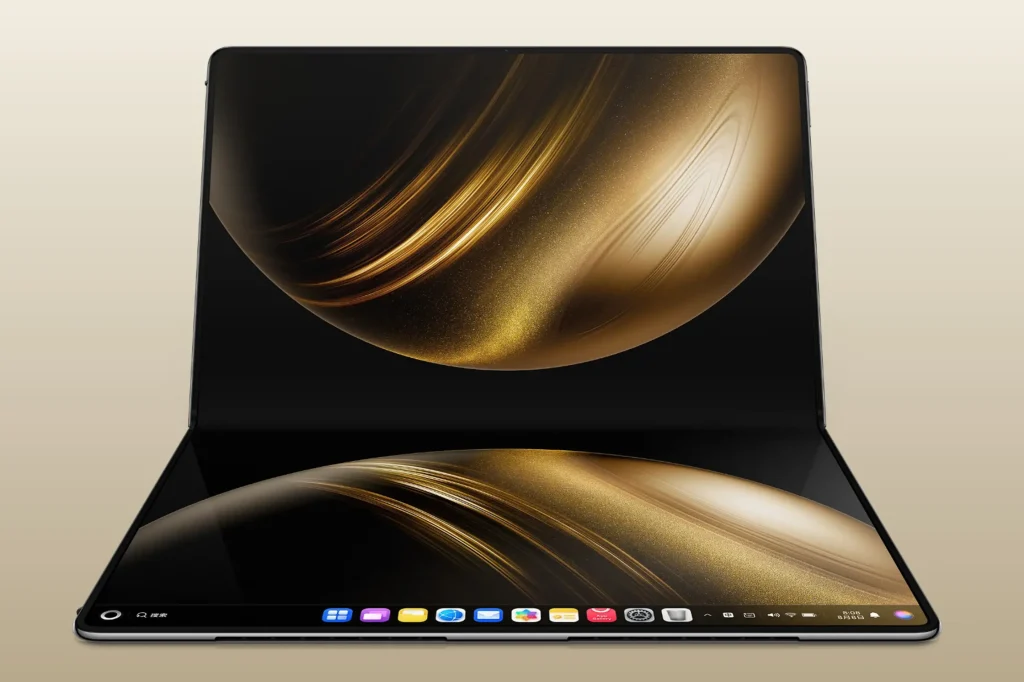
This is a 3.3K dual-layer OLED panel with a peak brightness of 1,600 nits. It supports HDR10+, has a contrast ratio of 2,000,000 to 1, and delivers punchy visuals whether you’re editing videos or streaming shows. The 92 percent screen-to-body ratio makes everything look immersive, with almost no bezel to distract you.
And it’s smart, too. Huawei used LTPO display tech, which adjusts the refresh rate on the fly to save battery. So it stays buttery smooth when you need it, and sips power when you don’t.

Powered by HarmonyOS, not Windows
This is where things get interesting. The MateBook Fold doesn’t run Windows. It runs HarmonyOS 5, Huawei’s own operating system. If you’ve used a Huawei phone or tablet recently, you’ll be familiar with it. The interface feels like a cross between macOS and Android, with features like multitasking across split screens, drag and drop, and even built-in AI tools for taking notes and creating presentations.
The OS is built for cross-device collaboration, especially if you’re already in the Huawei ecosystem. But keep in mind that it won’t run Android apps out of the box. You’ll need an emulator for that, which could be a hassle depending on your needs.
Performance and extras
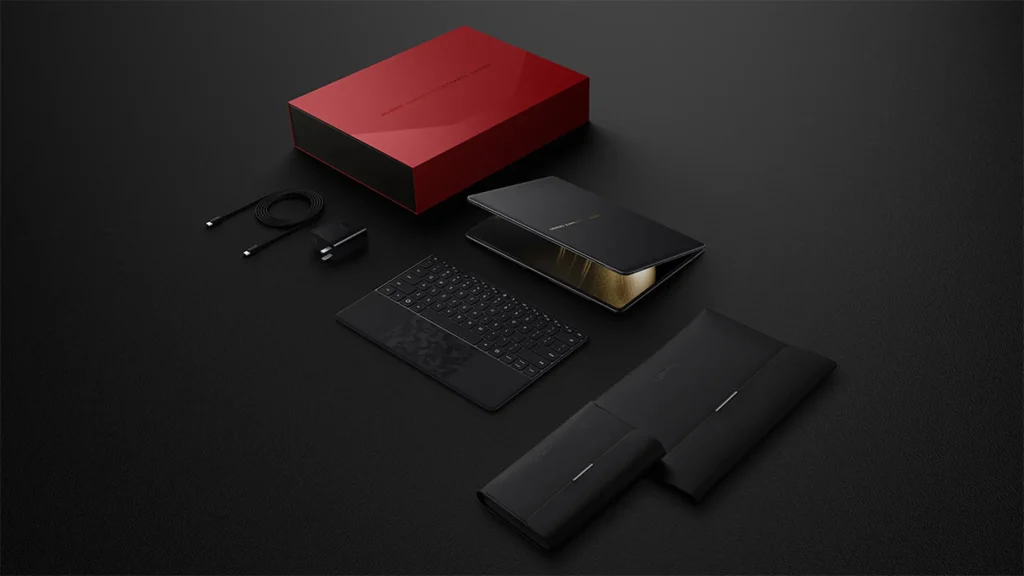
Inside, you get Huawei’s custom Kirin X90 processor, up to 32GB of RAM, and up to 2TB of SSD storage. It also packs a 75Wh battery, six speakers, two USB-C ports, and a fingerprint scanner baked into the power button. There’s an 8MP front-facing camera, and a solid quad-mic setup for video calls or voice input.
Prefer typing on actual keys? Huawei’s got you covered. There’s a 5mm-thin wireless keyboard that magnetically attaches to the back. It matches the overall design and gives you that satisfying physical typing feel when you need it.
Now for the catch
The MateBook Fold Ultimate Design is only available in China for now. And it’s not cheap. The base model with 32GB of RAM and 1TB storage goes for the equivalent of $3,300. The maxed-out version with 2TB pushes it closer to $3,740.
So unless you’ve got deep pockets and a friend in Shenzhen, this might be more of a flex than a practical buy for most of us.

Bottom line
This isn’t some half-baked concept device. The MateBook Fold is a real, polished product that shows where portable computing could go. It’s expensive, yes. It’s running a non-Windows OS, which won’t work for everyone. But it’s also exciting to see a company going all-in on innovation again.
If foldables are the future — and let’s be honest, they’re getting better every year — this might be the most exciting laptop we’ve seen in a while.


