


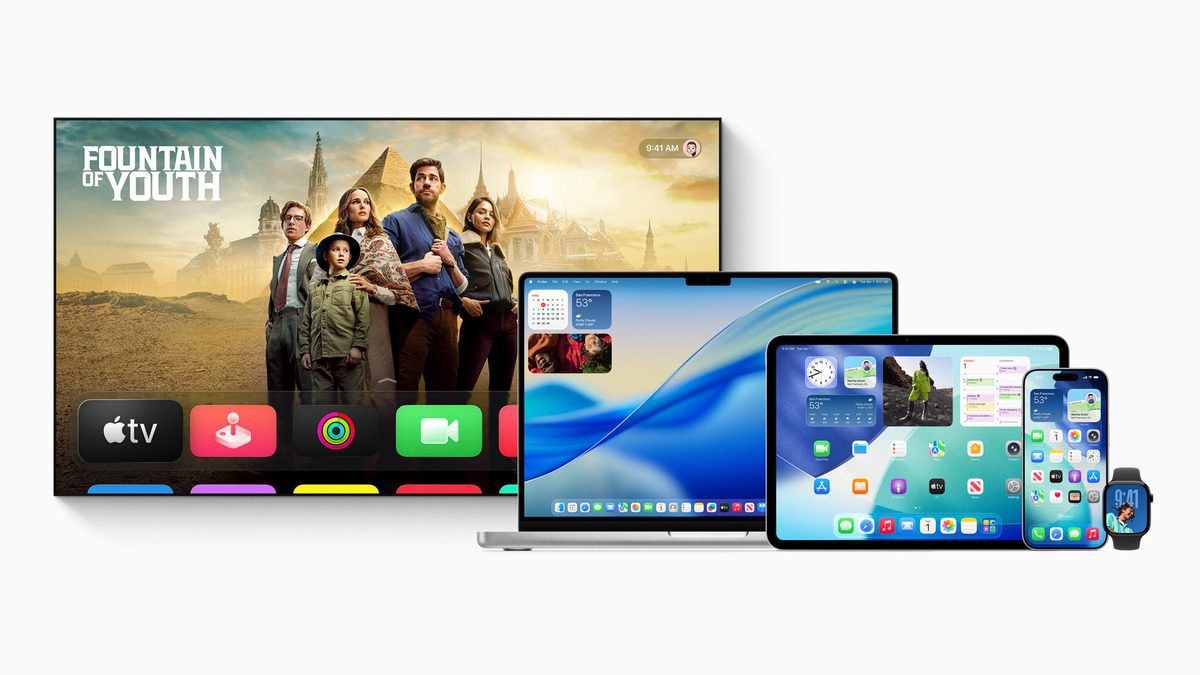
At WWDC yesterday, Apple did something it hasn’t done in over a decade: it redesigned the look and feel of its software across the board. iOS 26, iPadOS 26, macOS Tahoe 26, watchOS 26, and tvOS 26 all got a fresh coat of—well, not paint. More like translucent, shimmering, interactive glass.
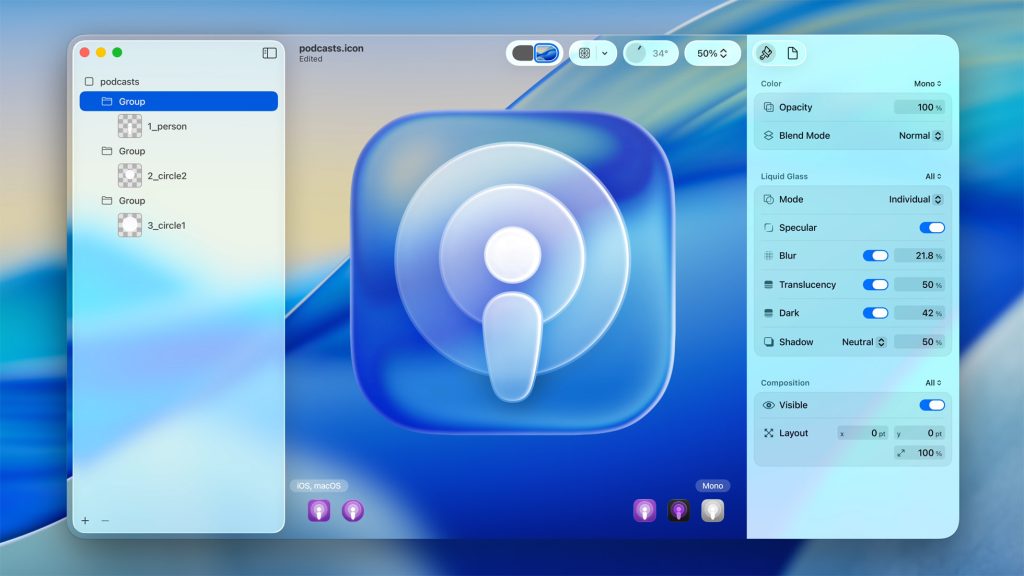
They’re calling it Liquid Glass. It’s glossy, reactive, and meant to breathe life into every interface across iPhone, iPad, Mac, Watch, and TV.
You’ll also notice something different about the software names: iOS 26, iPadOS 26, macOS Tahoe 26. Apple is officially aligning its OS version numbers with the calendar year, starting now. iOS 26 for 2026, iOS 27 for 2027, and so on. It’s cleaner, more predictable, and frankly long overdue. But clarity in naming is one thing. Clarity in vision? That’s another story entirely.
Because for all the shimmer and spectacle, Apple’s big reveal raised a more uncomfortable question: is the company still driving the conversation or just decorating the room?
Liquid Glass: A Pretty Face with a Shaky Soul
At its best, Liquid Glass gives Apple’s UI a long-needed refresh. The interface now feels dynamic, with elements that reflect light, react to motion, and adapt to context in subtle, clever ways. Tab bars shrink when you scroll. Sidebars refract background content. Even the Lock Screen clock bends gently around your wallpaper.
It’s immersive, cinematic, and yes, very Apple. But it’s also exactly what Apple excels at: surface-level polish. And this year, surface isn’t enough.
Because while Apple’s been busy fine-tuning translucency and spatial effects, the tech world has shifted beneath its feet.

Apple Intelligence: A Fancy Name for a Catch-Up Act
Apple’s entry into the AI conversation comes under the banner of Apple Intelligence. It’s a bold name, but what’s inside the box… not so much.
We’re talking basic features like rewriting emails, summarizing notifications, and smarter photo edits. Useful, yes. Impressive? Not by a long shot. Especially when you compare it to Google’s deep Gemini integration or Microsoft’s Copilot vision, which are weaving generative AI into the very DNA of their platforms.
Apple’s take feels reactive, like they waited too long and are now scrambling to stitch AI into an ecosystem that wasn’t built for it. Even Siri’s promised revamp, which we’re still waiting for, feels more like an apology than a leap forward.
It’s ironic, really. Apple talks about intelligence, yet their smartest move this year might be finally giving us a version number we can understand.
When Design Becomes Distraction
Let’s be honest. The Liquid Glass redesign feels like Apple doing what it does best when it doesn’t know what else to do: make things prettier.
It’s not a reinvention or a platform shift. It’s a glow-up. And while glow-ups are fun, they also risk becoming distractions from the hard questions.
Why is iPadOS still a halfway house between mobile and desktop? Why does the Mac still rely on third-party apps to do basic things like window snapping or automation? Why does WatchOS feel like it peaked three years ago?
Apple used to lead with ideas. Now it’s leading with aesthetics. And that’s not the same thing.
The Real Price of Progress: Geopolitics
The other major development that didn’t make the keynote highlight reel? Apple’s increasingly urgent shift away from Chinese manufacturing.
Thanks to rising tariffs and political uncertainty, Apple has ramped up its iPhone production in India and Vietnam. That was a supposedly smart long-term move, until Donald Trump threatened higher tarriffs on Apple unless they move production to the US.
Which means your next iPhone, wrapped in beautiful Liquid Glass, might come with an even glossier price tag.
And let’s not forget, Apple already charges a premium for incremental upgrades. If the company tries to justify higher prices on the back of production changes, don’t be surprised.
Final Thoughts: Design Isn’t Strategy
Apple’s 2025 software lineup, now using year-aligned versioning like iOS 26 and macOS Tahoe 26, finally brings some consistency to its naming. But consistency in branding can’t mask inconsistency in ambition.
Liquid Glass is beautiful no doubt, but it’s also a symptom of Apple’s current identity crisis. A company that once pushed boundaries is now refining them. A company that once invented the future is now polishing the present.
Yes, the redesign may win awards. Yes, it will make your iPhone feel exciting again for a few weeks. But at a moment when the industry is pivoting hard toward generative intelligence, spatial computing, and real-time AI workflows, Apple’s grand reveal feels like a detour.
The company used to ask “What if?” Now it feels more like “Isn’t this nice?”
And that’s not the Apple we fell in love with. That’s just a very good designer with a very expensive toolbox.
Akhram Mohamed is the Editor of Geekhub.co.za and a longtime tech insider who’s spent 20+ years testing, launching, and talking about consumer gadgets. Formerly a VP at Huawei, he now writes with a critical eye and a deep love for tech that actually makes life better. When he’s not breaking down the latest devices, he’s gaming, building businesses, simplifying strategy, or podcasting about real-world leadership. Expect honest takes, sharp insights, and the occasional dad joke.
Follow him on social media: @akreinvented


