

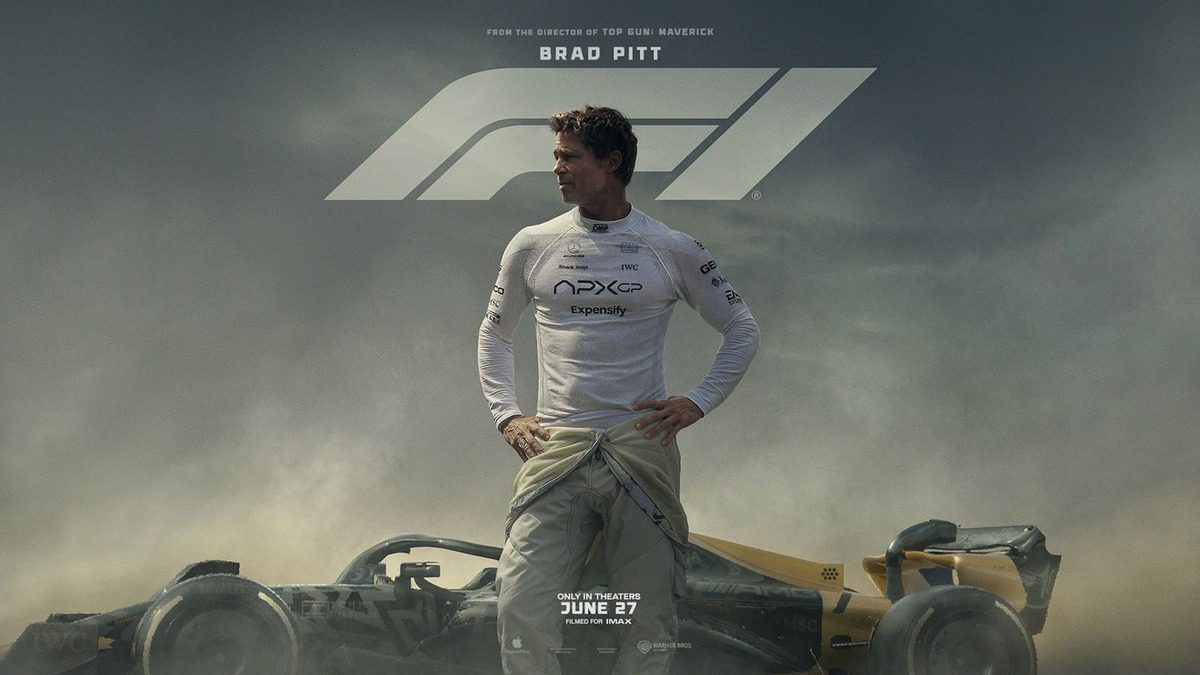
Brad Pitt’s F1: The Movie is speeding past records, becoming both the most successful Apple Original Films release to date and the biggest opening of Pitt’s career.
Touted as this summer’s must-watch blockbuster, F1 wrapped its opening weekend with spectacular results, especially for a motorsport-themed film. The movie launched at No. 1 in the U.S., pulling in $55.6 million domestically and $88.4 million overseas, for a global debut of $144 million.
That figure not only surpasses Pitt’s previous box office openings but also marks a new high for Apple Original Films. Their prior best, Killers of the Flower Moon, brought in $23.2 million during its launch, which is nearly a fifth of F1’s take. Racing films traditionally face an uphill climb at the box office, making F1’s breakout success particularly notable. For comparison, Ford v Ferrari debuted with a $52 million worldwide opening, and 2013’s Rush peaked at $100 million globally.
With the U.S. Independence Day holiday weekend fast approaching, F1 stands to attract even more viewers who missed its opening days. Yet despite its explosive debut, the film still has a long road ahead financially. Estimates suggest F1 cost around $250 million to produce, with marketing expenses tacking on another $150–$175 million. With box office revenue split between theatres and distributors, analysts speculate the film may need to generate over $1 billion just to break even. That said, Apple’s strategy also hinges on long-term streaming success via AppleTV+, where it can continue to generate value over time.
Nonetheless, the film’s early triumphs have already made an impact. F1 has proven that Apple can land a major theatrical hit, while also introducing cutting-edge filming techniques that may revolutionise how motorsport is shot and presented. It’s also demonstrated that, with the right mix of marketing and spectacle, racing films can reach audiences far beyond traditional fans.
Critical reactions have been mixed. Reviewers have pointed out excessive product placements and a plot that occasionally stalls, while some motorsport purists took issue with the film’s over-the-top racing scenes. They have argued that such stunts would likely get a real driver banned from the sport.
Still, many have praised the film’s editing, cinematography, and immersive racing visuals. On Rotten Tomatoes, F1 holds an 83% “Tomatometer” rating, indicating the vast majority of verified critics gave it a positive review. It also earned the platform’s “Certified Fresh” badge.
Even more impressively, the film boasts a 97% audience score on the “Popcornmeter,” meaning most viewers rated it 3.5 stars or higher.
While the long-term impact remains to be seen, the team behind F1 hopes it can inspire a new generation of fans, similar to how Netflix’s Drive to Survive reignited global interest in Formula 1 racing.
Source: planetf1
