



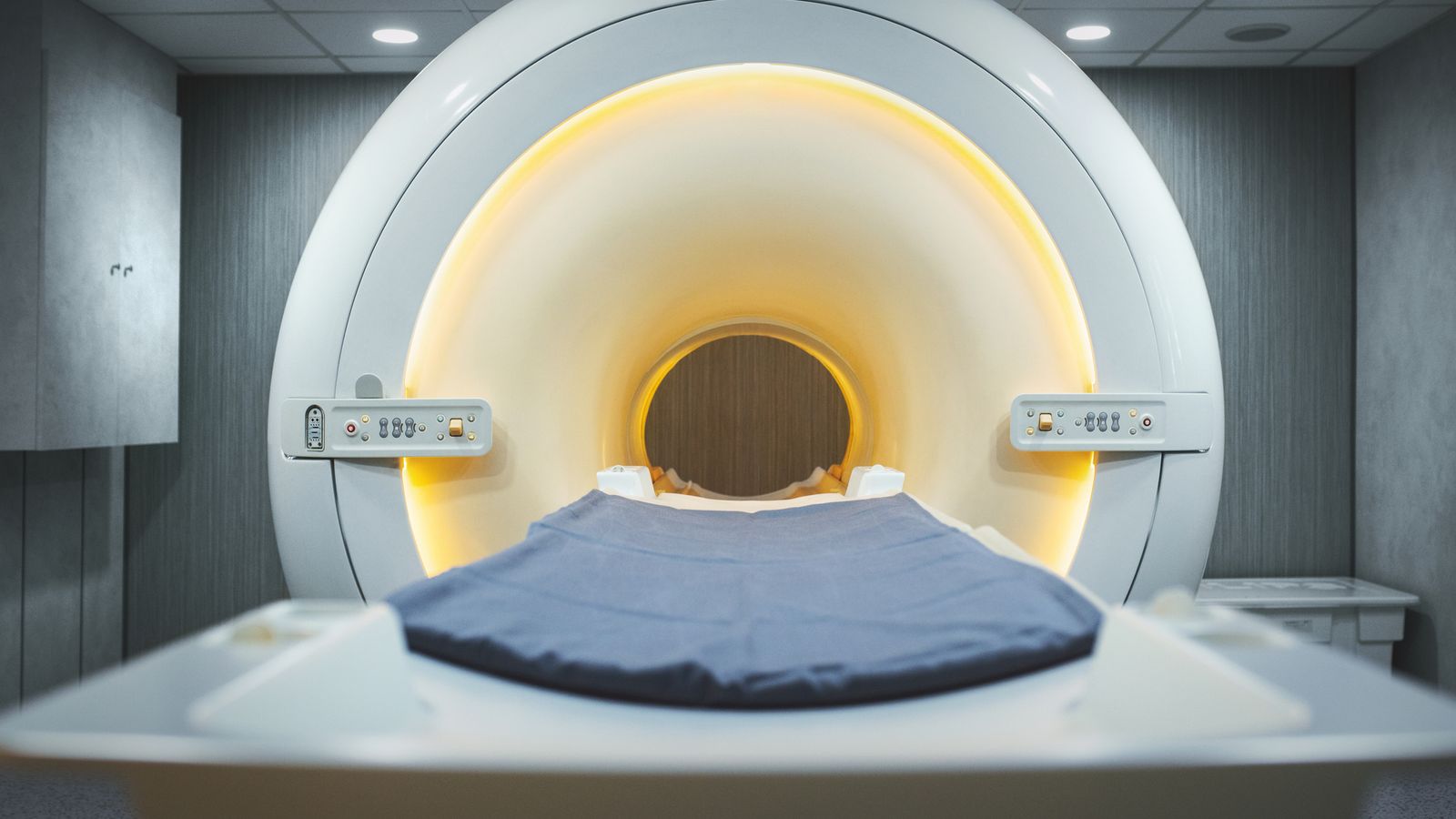
There’s tech that amazes, and then there’s tech that demands respect. MRI machines fall squarely in the latter category. On paper, they’re marvels of modern medicine. But under the wrong circumstances? They’re a disaster waiting to happen.
Last week in Long Island, a 61-year-old man walked into an MRI room wearing a 9-kilogram chain around his neck. Seconds later, he was dead.
No, this wasn’t some freak accident or equipment malfunction. This was human error layered on top of procedural failure — a chain of missed steps that led to an entirely preventable tragedy.
Let’s unpack what happened, why it matters, and what this says about the state of tech safety in real-world environments.
MRI machines aren’t just scanners — they’re supermagnets
Let’s get this straight: An MRI machine isn’t dangerous because it’s high-tech. It’s dangerous because it’s predictably powerful. Most clinical MRI scanners operate at 1.5 to 3 Tesla. That’s tens of thousands of times stronger than Earth’s magnetic field. Strong enough to launch metal across a room like a missile.
And the magnetic field? It’s always on.
This is why every MRI suite has protocols. No metal. No exceptions. Every patient gets screened. Every staff member knows the drill. At least, they’re supposed to.
What failed?
In this case, it looks like everything did.
- The machine was active.
- The room wasn’t secured.
- A patient walked in unsupervised.
- He was wearing a 20-pound chain.
- There were no physical barriers to stop him.
You don’t need an engineering degree to know that’s a catastrophic setup. This isn’t about tech. It’s about basic process. About operational discipline. And when you skip those steps, you don’t just risk a bad scan. You risk a life.
What makes MRI safety so unforgiving?
Unlike other medical machines, there’s no room for improvisation with MRI. The danger isn’t subtle. It’s immediate.
The magnetic field doesn’t just attract metal — it accelerates it. We’re talking full-speed, no-warning, zero-recovery-force physics. A chain like the one worn by the victim becomes a weapon the moment it enters the field gradient. Once it’s in motion, no one can stop it.
This is why MRI suites are divided into strict zones (I to IV), with Zone IV being the magnet room. Only trained personnel should enter, and only after checks are complete. That’s not bureaucracy, just logic.
The tech is advanced. The procedures often aren’t.
Most MRI safety protocols still rely on paper checklists and human memory. Some facilities have upgraded, using AI vision systems, door interlocks and ferromagnetic detectors, but many still haven’t.
Why? Budget. Staffing. Complacency.
It’s a tech industry cliché to talk about “automation,” but this is a case where smarter automation could literally save lives. Motion sensors that detect unscheduled entries. AI systems that scan for foreign objects. Access-controlled doors that lock while the scanner is running. This stuff exists. It just hasn’t been made standard.
And that’s a problem.
This isn’t the first — and it won’t be the last
In 2001, a child died in a New York hospital after an oxygen cylinder flew into an MRI machine. Over the years, there have been dozens of incidents globally. Some make headlines. Most don’t. But they all point to the same issue: people underestimate the risk.
We treat MRI like another checkbox on the diagnostic journey. But when the system gets lazy, the machine doesn’t care. The laws of physics don’t cut corners.
Respect the machine
Tech like MRI saves lives every single day. But only when it’s used with discipline.
What happened in Long Island wasn’t a fluke. It was a failure of training, of safeguards, and of mindset.
This isn’t a call for fear. It’s a call for respect. Respect for the power we build. Respect for the processes that keep us safe. And respect for the reality that when those two things break down, someone doesn’t go home.
That’s not a hardware flaw. That’s a human one.
Source: (BBC)


