

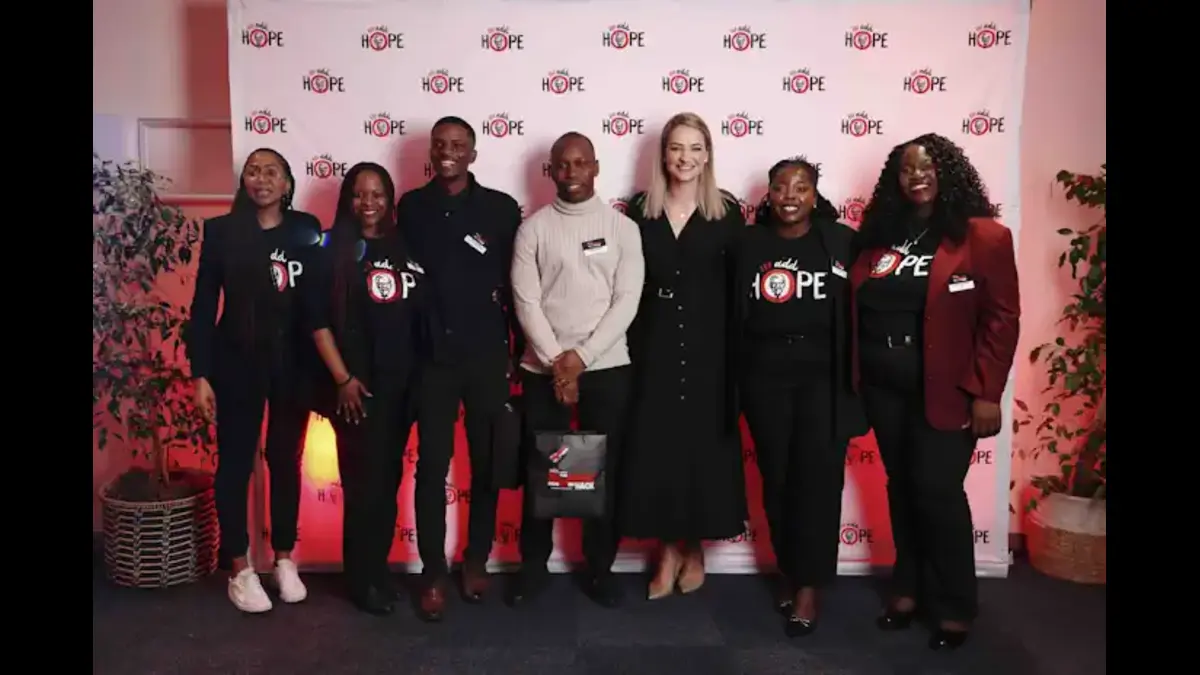
As South Africa continues to contend with deepening food insecurity, a new wave of innovation is rising from an unexpected source: Gen Z tech talent. In October 2025, sixty young digital natives spent a week hacking one of the nation’s hardest problems of child hunger, and emerged with creative, technology-powered solutions that reimagine how hunger is alleviated at scale.
A New Frontline: From Aid to Innovation
The event, The Biggest Hunger Hack, hosted by KFC Africa, invited South Africa’s brightest under-30s to augment and rewire Add Hope, the brand’s open-source blueprint for feeding vulnerable communities. Add Hope, funded by millions of small R2 donations from KFC customers, already supports over 3,300 feeding centres, reaching more than 154,000 children annually. But it’s precisely the scale, the complexity, and the gaps in execution that appealed to the hackers. It was a challenge worthy of the digital age.
Rather than patch around existing systems, these entrepreneurs sought to reimagine them. In doing so, they are turning what many see as a purely social welfare domain into fertile ground for civic tech, data, transparency, and new models of participation.
Standout Projects: Tech + Purpose
Several teams stood out in the hackathon with ideas that combined smart use of technology with community impact:
- Ctrl-Alt-Del-Hunger led the pack with Misfits Mzansi, an app that rescues “ugly” or cosmetically imperfect fruit and vegetables (often rejected by conventional supply chains) and delivers them to food-insecure families. The app also gamifies philanthropic engagement, allowing users to feed families by watching content, entering cooking challenges, or supporting via ad revenue.
- Streetwise Scripters built a social media–first donation platform that includes a real-time donor dashboard, a “donation hotspot” map, and integration with KFC loyalty rewards so good deeds lead to free meals. They also proposed a TikTok-to-till campaign to maintain storytelling and donation momentum.
- Bit Coders developed a chatbot ecosystem that works for all donors, including non-KFC customers. It leverages AI insights into donor behaviour and rewards, and enables tax documentation downloads. Payments are handled via the MTN MoMo API.
- Hack 4 Hope focused on transparency and traceability. Their system allows customers to scan a QR code from their KFC till slip to donate instantly via WhatsApp. Built on blockchain, the flow lets donors trace each R2 from donation to a meal served. They also introduced gamified “HopeCoins” to reward repeat giving.
Each of these ideas blends social purpose with data, usability, transparency, and community engagement. They show that technology, if wielded with empathy, can improve not just reach but trust and accountability.
Why Gen Z?
According to Andra Nel, KFC Africa’s Head of Brand Purpose and ESG, the advantage lies in lived experience and digital fluency. Many Gen Z participants have known hunger or food insecurity firsthand; they also grew up with technology. This combination gives them insight into both the problem and the tools needed to fix it.
Their mindset isn’t just about finding a quick technical fix. These young innovators focus on systems: how to integrate donation flows, community platforms, traceability, gamification, and storytelling. Their ideas bridge the worlds of development, social welfare, marketing, and civic tech.
From Hack to Pilot: Scaling with Partnerships
A hackathon is only the first step. What will matter is whether these prototypes can scale, integrate with existing supply chains, and deliver real meals. In that regard, KFC Africa intends to work with Add Hope partners to pilot the most promising ideas, with the aim of showing measurable impact by the time the National Convention on Child Hunger convenes early next year.
Key to success will be collaboration. KFC is not acting alone. Partners like McCormick, Tiger Brands, Foodserv, CBH, Nature’s Garden, Digistics, and Coca-Cola Beverages South Africa are rallying to support the Add Hope “recipe.” By opening Add Hope as an open-source blueprint, the initiative invites innovation across sectors and geographies.
Broader Implications and Lessons
This experiment suggests several larger lessons for how tech, youth, and social purpose can intersect:
- Hunger interventions need modernisation. Traditional food aid models struggle with distribution inefficiencies, lack of transparency, and donor fatigue. Tech can layer in accountability and better user experience.
- Transparency builds trust. Giving people visibility into how their donation is used, especially through traceable tech like blockchain, can enhance legitimacy and drive more engagement.
- Gamification and storytelling matter. In a social media–driven generation, DIY philanthropy, where donors feel engaged, seen, and rewarded, can unlock new flows of micro-giving.
- Local context, local agency. Gen Z innovators grounded in their communities bring context, cultural relevance, and lived insight, often more effectively than top-down interventions.
- Open source and ecosystem thinking. By making the Add Hope blueprint open, the system can evolve, adapt, and be adopted in new contexts without reinventing the wheel.
Challenges Ahead
Of course, there are hurdles. Prototypes must overcome real-world constraints: logistics, stable funding, integration with existing NGOs and government programs, connectivity in rural areas, regulatory concerns like data privacy, and the difficult leap from pilot to sustainable operations.
Moreover, the risk of tech hype must be managed. Innovation for its own sake, without clear pathways to impact, can become a distraction. The real measure will be how many children are fed, how efficiently, and how reliably over time.
And Finally
Gen Z tech talent is not just the future of work, it is becoming a frontline in social transformation. In South Africa’s fight against hunger, the “hackathon economy” is proving it can do more than produce clever apps. It can rewire donor systems, strengthen trust, and unlock new models of civic engagement.
If properly supported and scaled, the ideas born in The Biggest Hunger Hack could be more than prototypes. They could become part of the structural architecture of how South Africa, and perhaps the wider world tackles food insecurity in the digital age.
