

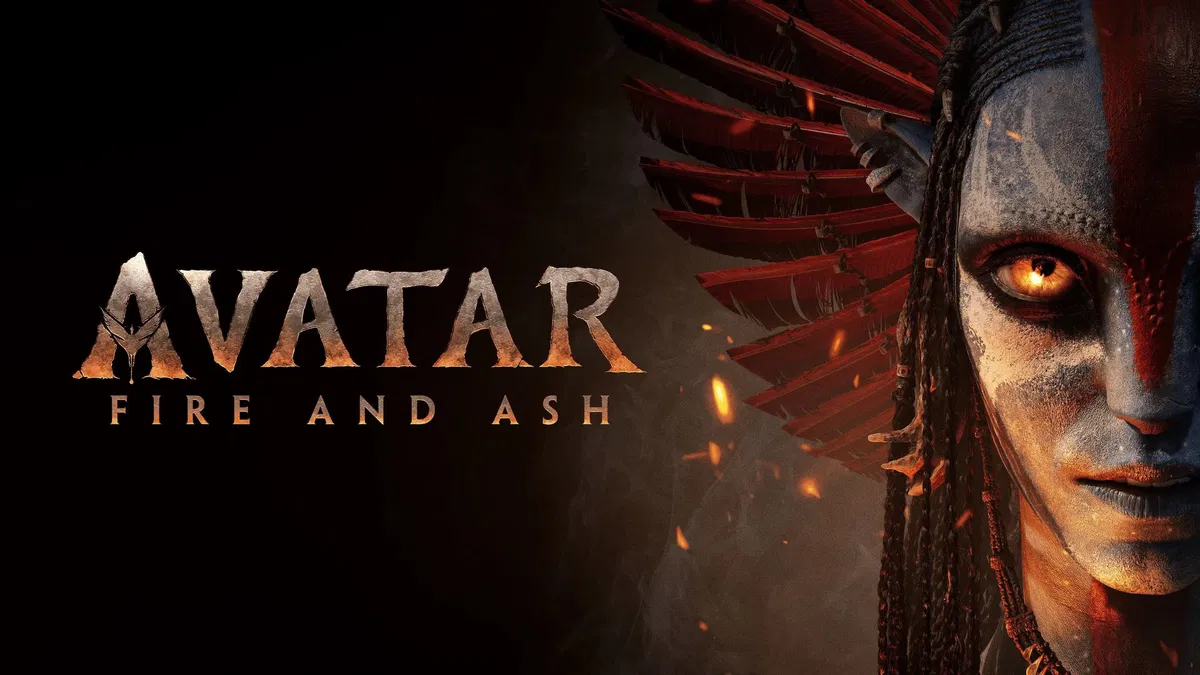
When the lights dimmed and the first whispers from the press screenings of James Cameron’s third chapter dropped, it was clear that Fire and Ash is being hailed as the kind of cinematic event that reminds us why we go to theatres in the first place.
Critic Courtney Howard summed it up perfectly: 3 films into the franchise, and Cameron “still has the sauce”, delivering what she called “a glorious saga… bold, brilliant & awesome in every way” reported Variety. For many, Fire and Ash feels like a vivid reminder of the power of a shared cinematic experience accompanied by the big screen, immersive visuals and raw emotional stakes. Fire and Ash was unveiled to members of the film press ahead of its theatrical rollout later this month and revealed the reactions as being pointed to a raw, sweeping ambition from critics who aren’t die-hard fans of the series. Sean Tajipour, admittedly not “the biggest ‘Avatar’ super-fan”, wrote that Fire and Ash proves once again that Cameron “can and will always deliver the ultimate cinematic spectacle.” Bold, immersive, unforgettable.
Another critic, Perri Nemiroff, described the latest installment as “truly a ride,” admitting surprise at how quickly she was swept back into the world of Pandora, “and once that happens,” she said, “there’s a noticeable increase in complexity in quite a few aspects of the production.”
Even reviewers with some reservations about the script were nearly unanimous in praising the film’s visuals and action as “out-of-this-world,” “huge on visual spectacle, especially in 3D.” The deeper exploration of Pandora, the introduction of new tribes, the heightened world-building have all contributed to a sense that this is not just a sequel, but an evolution.
Yes, it is true that there are murmurs that the story may not reach new heights, that some narrative threads feel familiar. But in the face of jaw-dropping visuals, ambitious scope and emotional ambition, many feel that Fire and Ash does what only a film like this can do in prioritising spectacle without compromising soul.
“Avatar: Fire and Ash” picks up in the aftermath of Avatar: The Way of Water, still shadowed by the heartbreaking loss of Jake Sully and Neytiri’s son, Neteyam. As the Sully family struggles to heal, Pandora doesn’t grant them the luxury of peace. A new danger rises, the Fire Tribe, a fierce clan of volcanic warriors led by the vengeful Varang, played by franchise newcomer Oona Chaplin. Returning to the saga are Sam Worthington, Zoe Saldaña, Sigourney Weaver, Stephen Lang and Kate Winslet, along with the rest of the familiar ensemble.
There’s something terminally bold about a film that, three instalments in, still insists on expanding its canvas with new tribes, deeper world-building and by all early accounts, some of the most ambitious visual storytelling ever attempted. Critics say it raises the bar on what a blockbuster can be if it possesses the elements of being immersive, emotional and technically groundbreaking all at once. For longtime fans, this is the payoff of experiencing the living, breathing world of Pandora, bigger and richer than ever. For skeptics, it might be the moment they understand the hype of a film that doesn’t just rely on CGI or spectacle, but uses them to elevate emotion and myth allowing the audience to feel loss and hope, danger and beauty.
