




So when I heard about LEGO’s new smart bricks announced at CES 2026, I sat back for a minute and tried to figure out how I actually felt about it. Not so much about the tech behind it or all the noise surrounding it, but my actual gut feeling.
Because for me, LEGO is not just a toy. Infact for a lot of us, it is memories. It is the floor of your childhood bedroom and losing pieces under the couch. It is building something dumb, breaking it, then building something better without anyone telling you how.
So when LEGO says it is adding sensors, sound, motion detection, and computing power into a brick that looks like a normal brick, that hits a nerve.
This is not “LEGO with a screen”
First thing to clear up. This is not LEGO turning into an iPad accessory.
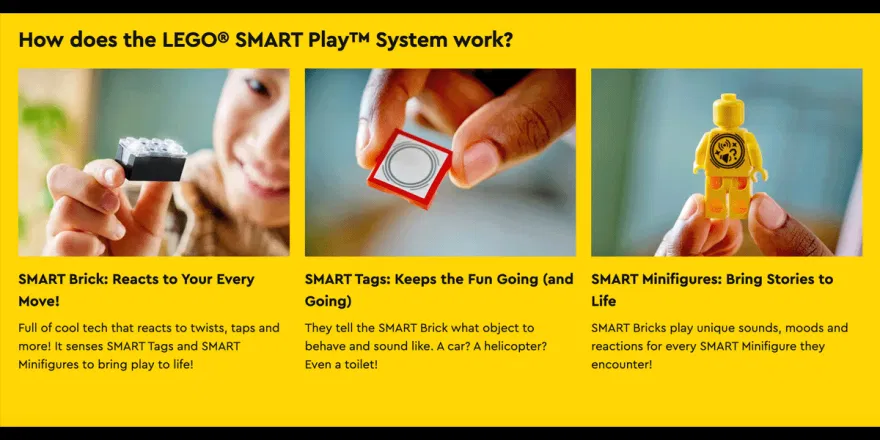
The smart brick has no screen,no app for basic play and does not require you “stare at glass” to experience it. The intelligence lives inside the brick itself. It can sense movement, orientation, light, and proximity to other tagged pieces. It can generate sound dynamically based on how you play, not just replay a recorded noise.
That part is really important.
LEGO seems obsessed with keeping play physical. You are still building, you still touch and most importantly, you still imagine. The brick just reacts now.
Tilt it and it responds. Move it fast and it reacts differently. Connect it to something else, the behaviour changes. At least that’s the promise.
Why people are uneasy, and I get it
There has been somewhat of an uproar from LEGO fans online and I kinda get it.
If you grew up with classic LEGO, your first instinct might be discomfort. I know mine was.
LEGO was powerful because it did nothing by default. You supplied the story, the rules and the drama.
The fear is that “smart” becomes “prescriptive”. That the brick starts telling kids how to play instead of responding to how they play.
And that concern is valid.
We have seen what happens when toys over-instruct. When they turn imagination into a checklist and creativity gets boxed into modes and menus.
So the skepticism online makes sense. This is not people hating technology, but hardcore fans protecting something sacred.
Where I think LEGO might actually be onto something
But here’s what surprised me.
The more I thought about it, the more I realised LEGO is not trying to replace imagination. They are trying to create feedback.
A somewhat subtle but important difference.
Imagine a spaceship that hums differently depending on how you fly it or a creature that reacts when another character comes close. A city build that has ambient sound because of how it is constructed, not because you pressed a button.
That is not telling a story for you, but responding to the story you are already telling.
If LEGO gets this right, the tech disappears into the play. You stop thinking about sensors and chips and start thinking about cause and effect. Action and reaction.
That is actually very LEGO if you think about it.

The real test will not be the launch
Here is what will decide everything.
Will LEGO eventually open this up?
If these bricks stay locked to predefined experiences only LEGO controls, the backlash will continue to grow. Fast.
But if builders, kids, and yes, adult nerds are given tools to shape how these bricks behave, this could become one of the most interesting play platforms LEGO has ever created.
LEGO has always thrived when it trusted its community. When it stepped back and let builders surprise it.
This needs to follow the same philosophy.
My honest take
Listen, LEGO messing with the core brick is a big deal. That brick is almost holy in toy terms. You do not touch it unless you are absolutely sure.
If smart bricks end up feeling like imagination with a heartbeat, this could be special. If they feel like rules wrapped in plastic, it will miss the point entirely.
Either way, this is one of those moments where you can feel a company standing at a crossroads.
And as someone who grew up stepping on LEGO pieces at 2am, I am watching closely.


