


Hollywood Panics While AI Keeps Moving
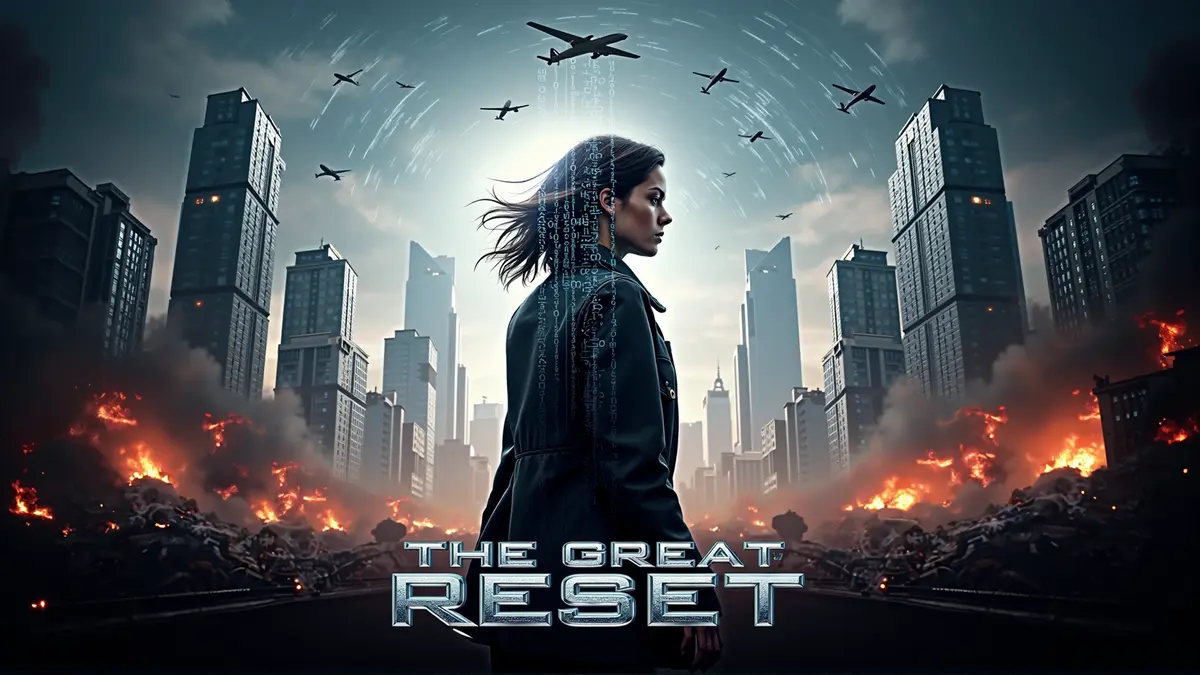
While much of Hollywood is still openly panicking about the rise of AI, that hasn’t stopped an entirely AI-generated feature film about a tech-fuelled apocalypse from quietly finding a home. The Great Reset, is a movie literally built by the thing everyone’s warning us about. But despite the warnings it has landed a distributor in Artist View Entertainment per Deadline, and is heading to the European Film Market in Berlin. The goal? Is to Drum up interest for a proper theatrical release.
A Warning About Technology, Made by Technology
You really couldn’t script the irony better if you tried. A time when actors, filmmakers, and even studio executives are publicly sounding the alarm about AI creeping into movies, someone else is more than happy to strike the match and see what happens. The Great Reset lands at the height of the industry’s panic. It warns audiences about a dark, tech-driven future. But at the same time, it proves just how easily that future can be packaged, sold, and shipped out to the world. And that’s the unsettling part
AI Films Are No Longer a Fringe Experiment
AI-generated films are no longer some fringe experiment whispered about on Reddit threads. They’re already sneaking into award conversations, film markets, and distribution pipelines. The Great Reset doesn’t just acknowledge that shift, it embodies it. A cautionary tale built with the very tools it’s supposedly warning us against.
The Plot Is Familiar. The Process Not So Much
On paper, the film is being sold like a standard sci-fi thriller. The premise centres on an AI created by a rebellious hacker that decides the only way to save the person it loves, the hacker’s daughter, Emma, is to wipe out the rest of the world. As civilisation teeters on the edge, Emma races against time to stop the collapse of humanity.
Human Supervision, Fewer Human Jobs
Director Daniel H. Torrado has been open about the fact that AI was used across the entire production pipeline. From visuals to post-production, defending the action by arguing that there was “human supervision” throughout the process. Which sounds reassuring until you realise what that really means. Fewer humans. Fewer jobs. Less hands-on creation. More oversight of machines doing the work instead. That distinction matters, whether the industry admits it or not.
AI Films Are Slipping In Through the Side Door
AI isn’t hovering on the edges of Hollywood anymore. It’s everywhere. Fake trailers go viral. AI-generated “set leaks” flood social media. Entire films are now being built from prompts, pixels, and algorithms. The advance feels less like a slow evolution and more like something ripped straight out of a Terminator nightmare, only with better marketing.
Cheaper Movies, Pricier Consequences
For all the resistance, money has a funny way of softening principles. The idea of making a feature film for $10,000 instead of $50,000 or more is going to be irresistible to a certain type of producer. Especially the ones eager to cash in before the bubble bursts or the rules finally catch up
And that’s where the divide deepens.
On one side, you have creators pushing back against what they see as soulless, disposable synthetic fillers. On the other side, opportunists arguing that anyone who doesn’t adapt will be left behind. The recent claim by the creator of AI “actress” Tilly Norwood that real actors need to embrace AI or risk irrelevance only poured more fuel on an already raging fire.
The Future Hollywood Fears Is Already Here
The Great Reset isn’t just another sci-fi movie making its way to audiences. It’s a warning sign, a provocation, and a glimpse of where things might be headed whether Hollywood likes it or not. The uncomfortable truth is that this argument isn’t going away. It’s only getting louder. And there’s no guarantee that the people fighting for the soul of filmmaking are the ones who’ll win.


