



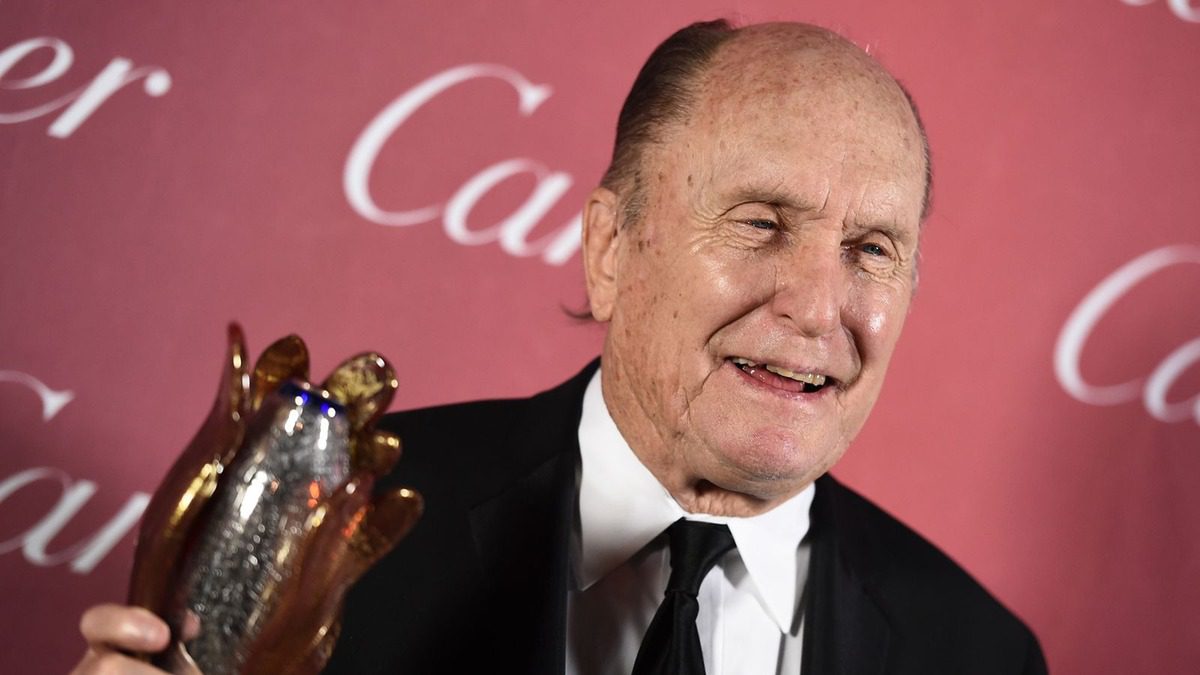
Saying Goodbye to a Legend
It’s strange to talk about Robert Duvall in the past tense. And yet here we are, saying goodbye to yet another legend. For decades, this movie star jolted consciences, and captured the messy beauty of what it means to be human. We related to him because he was just one of the guys that had been around, seen things, and didn’t feel the need to make a fuss about it. In today’s day and age living to 95 is a great achievement, yet a sad loss nevertheless. And no matter how old the actors get whose characters stayed with us, it is always a shock to the system when they finally exit this thing called life.
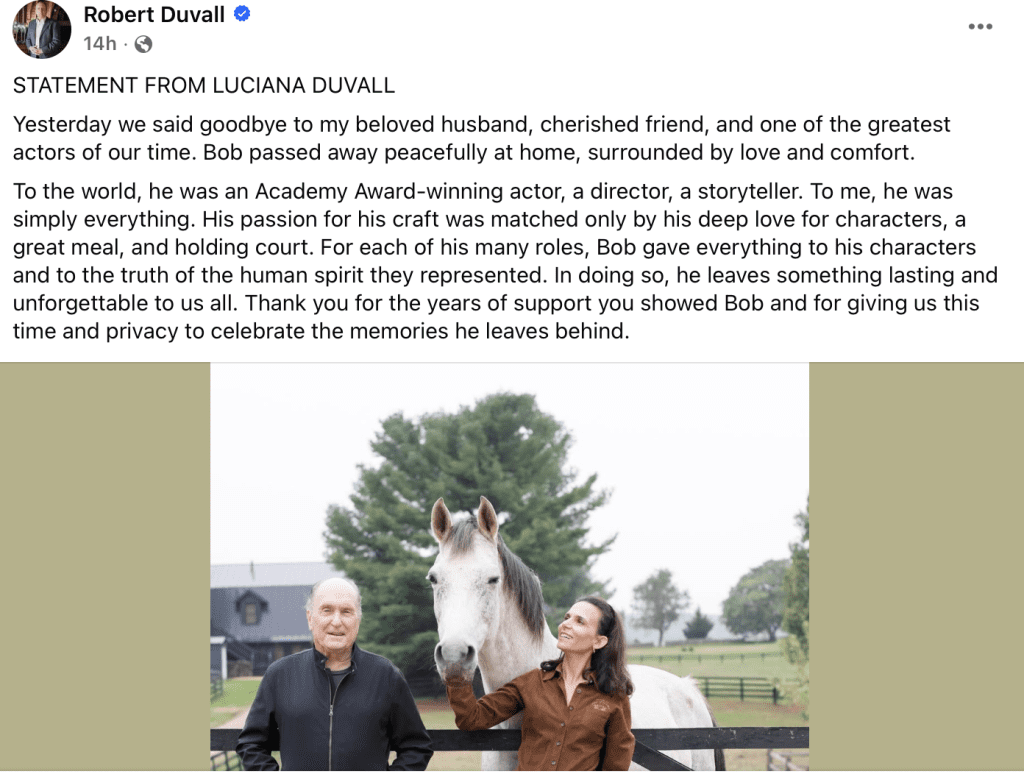
His wife, Luciana Duvall, shared the news with a mix of grief and quiet gratitude:
“Yesterday we said goodbye to my beloved husband, cherished friend, and one of the greatest actors of our time.” She said he passed away peacefully at home, surrounded by love and comfort. Duvall’s final scene filled with tender humanity rather than the harsh glare of a spotlight.

Tender Mercies and the Courage of Fragility
For fans, Duvall was more than just an actor. He had this ability to show you parts of yourself that you denied. He played the loyal friend who knows too much, the man who tries to outrun his own mistakes, and the dreamer who gets knocked around but still refuses to let go. Tender Mercies is probably the clearest example of what made him special. He wasn’t playing a broken country singer so much as he was showing you exactly what it looks like when someone is trying to climb out of a hole they dug for themselves. It wasn’t pretty, and it wasn’t the kind of heroism that gets a standing ovation, but it felt true and real. That was his real gift. He never seemed embarrassed to look fragile on screen, or to be wrong, or to not have the answers. The Oscar he won for that role wasn’t really about the performance. It was about recognising that there’s a particular kind of courage in showing your soft underbelly and trusting the audience not to look away.
Master of Presence
He was never the kind of actor who let you see him working. No theatrical sweat, no desperate reaching for your sympathy. Watching him as Tom Hagen in The Godfather was truly magical. He portrayed his character to perfection by being the calmest man in every room. Never raising his voice because he’d already figured out how everything was going to go. Then watching Apocalypse Now, where Duvall is on a beach with shells raining down, grinning like a man who has genuinely lost the plot in the best possible way. We see two completely different people, yet neither one of them felt like a performance.
Admired Behind the Scenes
The tributes coming in now are full of the usual words used y Hollywood, legend, icon, irreplaceable. But they are not wrong. What stands out most is not the praise from the giants, but the way the crew and people behind the scenes remember him. They admire his warmth, his presence, and the steady integrity he brought to every interaction. How he was the same person whether the cameras were on or not. That’s a different kind of achievement.
A Legacy Woven Into Memory
He won the Oscar. He made the classics. But what he really did was spend sixty-odd years showing us what people actually look like. Duvall didn’t want the cleaned-up version; he chased the complicated, contradictory, and occasionally graceful truth of it. Audiences who grew up listening to Kilgore’s unforgettable lines, feeling the steady calm of Hagen’s loyalty, and witnessing a broken man find a flicker of grace have woven his work into the fabric of their memories. That’s the real measure of a life well lived: not the awards or the acclaim, but the way his art continues to touch the quiet corners of our hearts.And that doesn’t disappear just because he did.
Rest easy, Robert.


