



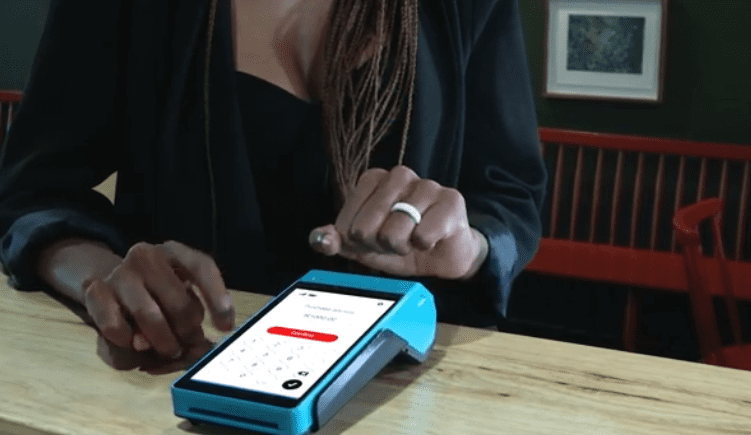
When I first reviewed the VezoPay payment ring, my conclusion was straightforward: it works exactly as advertised, it’s well-executed, and in the right moments, it’s genuinely convenient. But it’s also incredibly easy to question why it exists in the first place.
Realistically, your payment bases are already covered. Your phone does it, your smartwatch does it, and your bank card definitely does it. Adding a ceramic loop into that mix feels like a solution in search of a problem. Two months later, that logic hasn’t shifted an inch—but my muscle memory has.
The Device That Does (Absolutely) Nothing Else
At a functional level, the VezoPay ring is the same static object I reviewed weeks ago. It does one thing: contactless payments. There is no display, no vibration motor, and zero health tracking. It isn’t trying to be a ringside version of an Apple Watch.
Because it doesn’t replace your phone or your fitness tracker, it simply adds another layer to your EDC (everyday carry). From a purely pragmatic standpoint, that makes it a hard sell as a “necessity.”
From Novelty to Routine
The shift happened somewhere between week three and week six. Initially, using the ring was a performance—a novelty boosted by the “how did you do that?” gasps from cashiers. But eventually, the ring moved from being something I was testing to something I was just using.
I found myself reaching for the terminal with my hand instead of fishing for my phone. It became part of the quick grocery dash. More importantly, I actually felt its absence on the few occasions I forgot to slide it on.
The Low-Friction Life
The difference between tapping a ring and tapping a phone is measured in seconds, but the psychological friction is what actually changes.
- With a phone: You reach into your pocket, pull it out, authenticate with FaceID or a fingerprint, and then tap.
- With a smartwatch: It’s faster, but still requires a specific twist of the wrist or a double-tap of a button to “prime” the payment.
- With the ring: There is no process. You reach out, you tap, you walk away.
It’s a tiny optimization, but over sixty days, that “always-on” readiness starts to feel more natural than any other method.
Where It Earns Its Keep
The ring doesn’t replace your wallet for everything, but it thrives in the “quick stop” economy. It’s for the petrol station, a smoothie at the gym, or the moments when your hands are full of shopping bags and the last thing you want to do is juggle a R30,000 smartphone over a concrete floor.
This is where it stops being a party trick and starts being a tool. It excels in any situation where you don’t want to—or can’t—extract your phone from your pocket.
The “Zero Maintenance” Factor
The most significant advantage only reveals itself over time: zero maintenance. We live in an era of “battery anxiety,” where everything from our AirPods to our cars needs a plug.
The VezoPay ring is passive. It’s powered by the payment terminal itself via NFC induction. There is no charging cable, no firmware updates to stall your morning, and no “Low Battery” notifications. In a world of high-maintenance tech, a device that just exists is a breath of fresh air.
The Verdict: A Niche Convenience
Let’s be clear: two months in, the VezoPay ring still doesn’t solve a major life problem. It doesn’t introduce a revolutionary new capability, and it certainly won’t make you more productive. If you are looking at this through a lens of pure logic, you don’t need it.
But tech isn’t always about logic; it’s about friction. The ring integrates into existing behavior so seamlessly that it becomes invisible. I haven’t stopped using it, and for a piece of wearable tech, that is perhaps the highest praise possible. It isn’t a revolution—it’s just a slightly better way to move through the world.


