

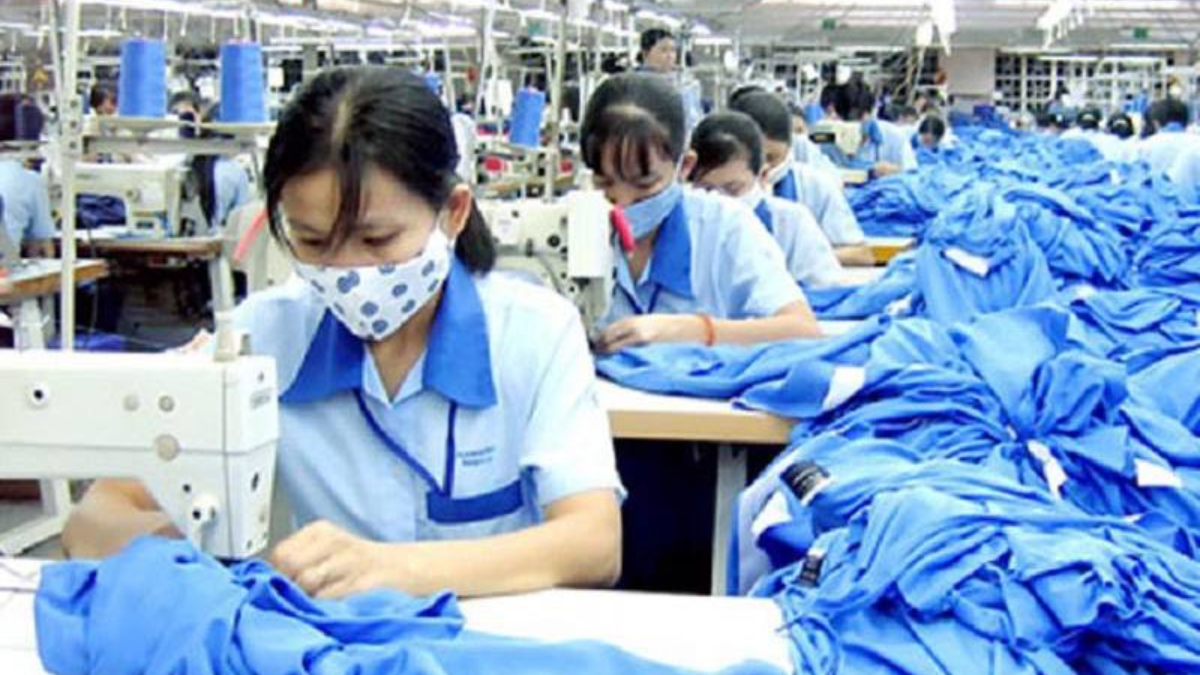
We are all too aware that Robots can build cars with frightening precision. They can also assist surgeons during delicate operations. Heck, some even move cargo around airports without human help. But ask them to make a t-shirt and suddenly things start falling apart at the seams. According to the BBC, people still make most of the clothing sold around the world by hand. With the biggest output usually by low-paid textile workers across Asia. Sewing is one of few skills that still remains incredibly difficult to automate. Fabric constantly shifts during production, forcing manufacturers to stretch it, smooth out wrinkles, and correct slips along the way.
This is one of the areas that robotics companies have chased for decades. Can you imagine a fully automated clothing factory?. Some believe that if machines eventually take over parts of garment production, manufacturing could return to countries like the US and the UK while also reducing the fashion industry’s environmental footprint. But at what cost?. It is important not to lose sight of the millions of workers globally that depend on textile manufacturing to survive. It would be catastrophic to say the least.
California-based robotics company CreateMe believes the solution is surprisingly simple. Stop sewing altogether. Instead of stitching fabrics together, the company uses industrial adhesives and robotic pressure systems to bond materials together. CreateMe already produces women’s underwear this way and plans to begin making t-shirts soon.
“Once the adhesive is laid down, you simply line something over it and stamp,” CreateMe founder and CEO Cam Myers told the BBC.
Myers says the process works with cotton, wool, and leather. He also believes automation could bring parts of clothing manufacturing back to the US, where manufacturers currently produce only a small percentage of garments locally. I am really interested to understand whether glued clothing will survive a washing machine. But Myers insists that it does. The thermoset adhesive used in the process cannot melt under normal ironing or washing temperatures. Which is great news for anyone who doesn’t want their shirt or undies dissolving halfway through laundry day. The seam-free construction also creates a smoother finish and allows garments to better match the contours of the human body.
I am not surprised that Myers admits that fashion itself creates a huge challenge for robotics. With the fashion trends constantly shifting, consumers want endless combinations of colours, cuts, designs, and styles. Producing plain white t-shirts is one thing, but replicating the chaos and creativity of global fashion culture is something else entirely. Thankfully, not everybody believes sewing will disappear anytime soon. Palaniswamy Rajan, chairman and CEO of US-based Softwear Automation, says visible stitching remains essential to many garments, especially jeans. Remove the stitching and you remove part of the design identity itself. His company is preparing to unveil a new generation of sewing robots that he claims could manufacture t-shirts in the US at costs similar to importing them from overseas. He has remained quiet about the actual technology behind it, which is hardly surprising considering how competitive the apparel industry has become.
Several companies interviewed by the BBC reportedly refused to fully explain how their robotic systems work. Meanwhile, textile workers continue facing growing pressure. Factory closures during the Covid-19 pandemic disrupted livelihoods across the industry. And more recently, conflict involving Iran has affected polyester supplies, adding further instability to an already fragile system. Automation companies often argue that workers could eventually transition into better-paying and less repetitive jobs. But realistically, that type of shift cannot happen overnight. Entire communities still rely on garment factories for survival.
There is, however, one argument in favour of automation that is becoming increasingly difficult to ignore. Fashion’s environmental impact is staggering.
The textile industry produces around 92 million tonnes of waste every year. Fashion brands burn or dump huge amounts of unsold clothing while manufacturers consume enormous quantities of water during production, which is already a scarce resource. Researchers at the Technical University of Leoben in Austria recently explored whether robotic, on-demand manufacturing closer to consumers could reduce overproduction and lower emissions linked to transporting garments across the world.
“We can see a significant reduction in greenhouse gas emissions,” researcher Gerald Feichtinger said.
The study found that producing t-shirts with robotic systems in Europe or the US could reduce manufacturing emissions by roughly 45%. Still, Feichtinger acknowledged that re-shoring the entire supply chain will be a difficult task. Other stages of clothing production, such as yarn manufacturing and fabric dyeing, are not so easy to relocate closer to Western markets. And then there is the strange engineering battle taking place behind the scenes. German company Robotextile develops robotic grippers designed to handle delicate fabrics without damaging them. Some systems gently blow air across the cloth to make it lift and flutter before suction pulls it toward a robotic clamp. Which honestly sounds less like fashion manufacturing and more like robots carefully trying to catch an escaping bedsheet. Robotextile co-founder Michael Fraede believes automation in Europe may remain focused on specialist textile products such as bicycle bags and vehicle airbags rather than everyday fashion.
“It will take 10 more years before we see the first actions of re-shoring,” Fraede explained.
“This industry is not used to thinking that way. They are used to saving money wherever they can.”
Others remain more optimistic. Lauren Junestrand from the UK Fashion and Textile Association says that UK has strong potential to adopt more robotics in clothing production, though she also admits Western markets are unlikely to compete with Asia’s manufacturing scale.
“I think it’s going to be more of a co-existence,” she said.
And perhaps that is where the future of fashion is heading. Not toward factories run entirely by machines, but toward a strange partnership between human skill and robotics slowly learning how to handle one of the most frustrating materials on Earth. Fabric.
