
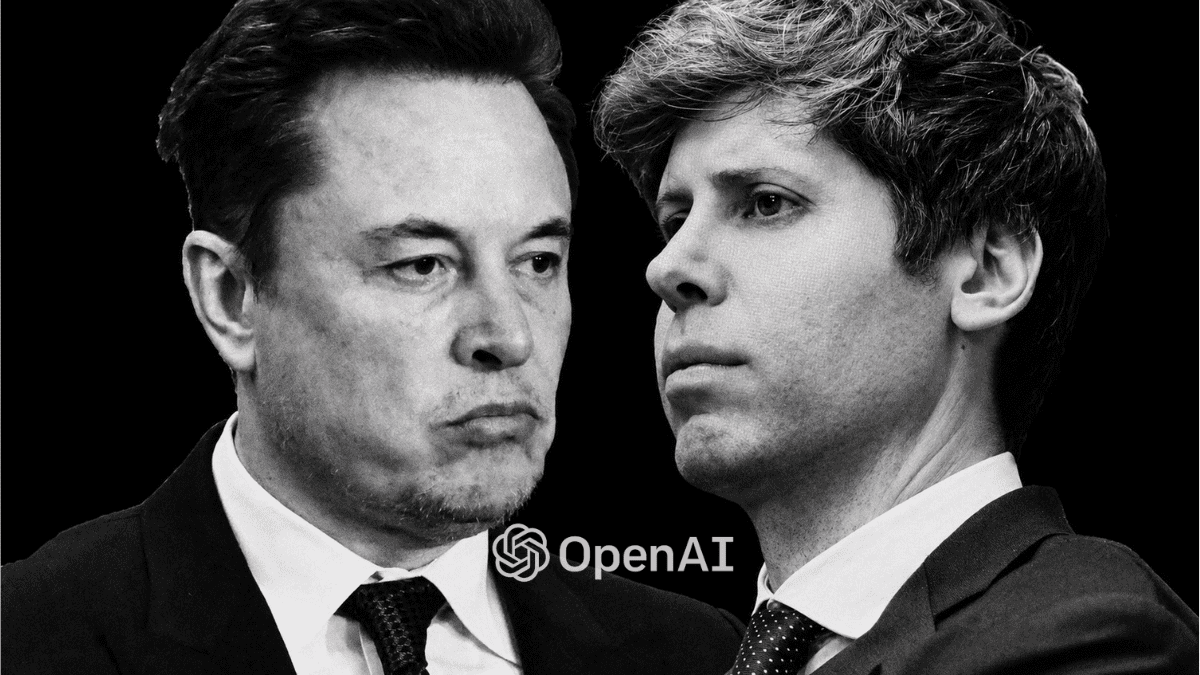
The thing about Elon Musk and Sam Altman is that they both speak the language of “saving the world,” but they pronounce the words differently.
In a U.S courtroom this week, that linguistic gap turned into a full-scale forensic excavation of a friendship gone sour. As Musk took the stand, one can only imagine the clinical air of the room felt heavy with the specific kind of resentment that only exists between two people who once shared a bunk bed in the metaphorical house of the future. He wasn’t just there to argue about contract law; he was there to reclaim his status as the protagonist of a story he feels was stolen from him.
To understand the friction, you have to understand the Silicon Valley ego. For men like Elon Musk, being a “founder” isn’t a job title—it’s a divine right. When he cut those initial cheques for OpenAI back in 2015, he wasn’t just buying servers; he was buying a seat at the head of the table for the end of the world. He saw himself as the benevolent architect of a digital god, one that wouldn’t be beholden to the corporate profit-seeking he now accuses his former partner of embracing.
Then came the Sam Altman era.
If Elon Musk is the brash, rocket-launching visionary who leads by sheer force of personality, Sam Altman has proven to be something far more complex: a quiet, shark-like operator with a reputation for being as ruthless as he is soft-spoken. While he presents as the methodical leader keeping the team together, a different picture has emerged from those who have crossed him—one of a man who managed to survive a boardroom coup by allegedly pitting his own directors against one another.
Under Altman, OpenAI didn’t just become a business; it became a fortress. It got sleek, it got expensive, and it grew so close to Microsoft that the lines between the nonprofit’s mission and the software giant’s balance sheet began to blur. In the process, the company became something Elon Musk could no longer control and something Altman appeared to govern with an iron, if hidden, fist.
The testimony this week feels less like a legal briefing and more like a messy divorce over a child that grew up to be a superstar. Musk’s lawyers painted a picture of a man who feels his altruism was weaponized against him. They framed the shift to a profit-seeking model as a “bait and switch,” suggesting that Altman used Musk’s money and prestige as a ladder, only to kick it away once he reached the top.
The defense from OpenAI’s camp centers on the idea that Musk is simply the disgruntled ex who can’t stand to see the company thriving without his guidance. They’ve hinted that his sudden concern for “humanity” is a convenient cover for the fact that his own AI venture, xAI, is currently playing catch-up.
But beneath the petty bickering and the billion-dollar stakes, there’s a deeply human insecurity at play. For Elon Musk, it is the fear of being sidelined by a former protégé who proved to be a more effective and perhaps more cold-blooded political animal than himself.
Silicon Valley is littered with the corpses of “founding myths”—the neat stories about garage start-ups and noble intentions that eventually get crushed by the reality of the balance sheet and the sharp elbows of those in charge. Usually, the public only sees the polished final product. But this week, the curtain was pulled back, revealing arguably two of the most powerful men on earth arguing over who gets to be the hero of a story that has long since outgrown them both.
The trial continues, but the verdict on the friendship is already in: In the race to build the future, there is rarely enough room for two people to be right—or in charge—at the same time.
