

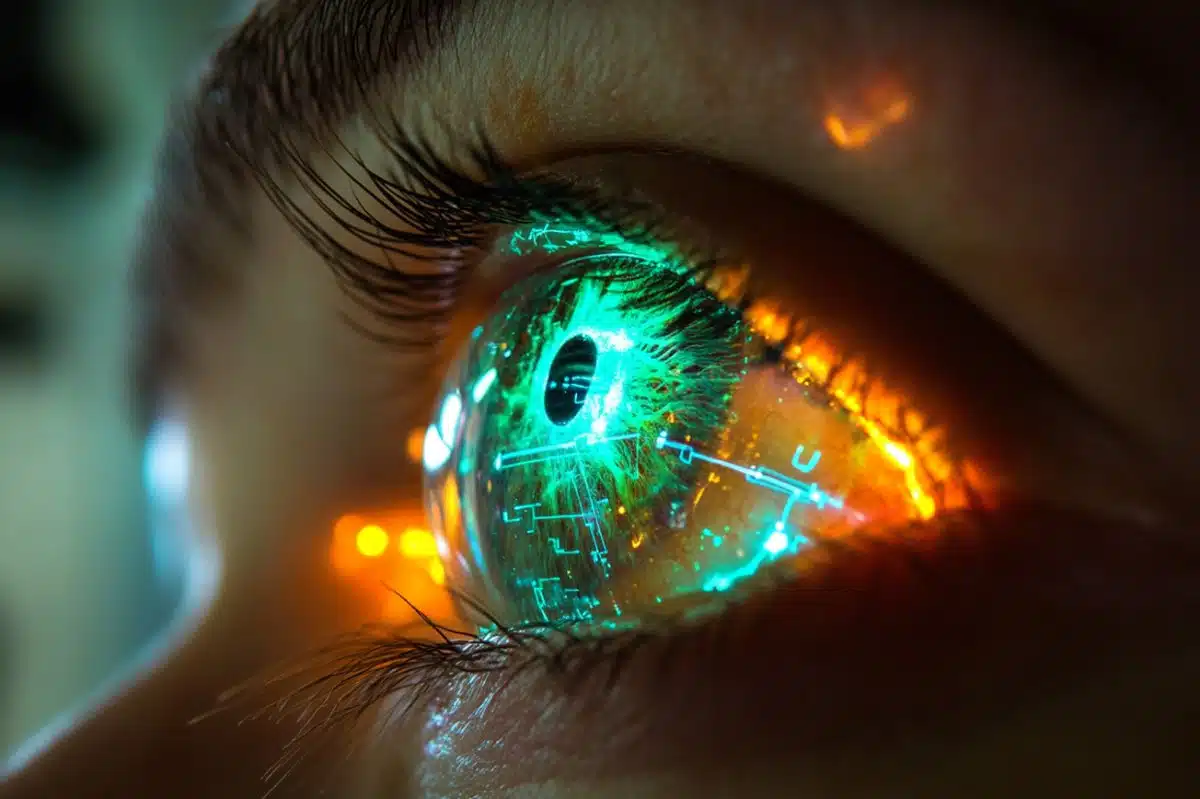
When neuroscientists unwittingly hack the human visual system and an anti-establishment artist decides to profit from it, then what happens? There is a colour so strange, so against the principles of evolution, that it should not be there but somehow is. Let’s meet the bizarre, never-before-seen colour of “olo” and its paint counterfeit, “YOLO”. LOL, I’m not kidding!
Meet ‘Olo’ – The Colour That Isn’t Real (But Also Is)
This all started at UC Berkeley where scientists were bored with the way human vision works and started shooting lasers at people’s eyes. Using a technique known as silent substitution, they succeeded in stimulating only the M-cones in the retina which is the medium wavelength cone, that is the green cone. Normally, our colour vision is a three cone system which involves the S, M, and L cones working in tandem to display the world in full colour. But by stimulating only one cone type, researchers pulled off a visual magic trick.
What did people see? A colour that is “the most saturated greenish-blue that anyone has ever seen.”It cannot be shown on a screen, printed on paper or bottled in a Pantone jar. It does not even exist outside of that very particular laboratory setup. So naturally, they called it “olo” from the binary code 010—M-cone stimulation only. Nerdy, but kind of poetic.
Stuart Semple, the Punk Rocker of Pigments
If you have followed the paint wars, you know that Stuart Semple is not one to sit quietly while colours are being gatekept. He is the person who brought “the pinkest pink” and “the blackest black paint” (after Anish Kapoor was given the exclusive rights to Vantablack and everyone was upset about it). So when he heard about this sci-fi colour that couldn’t be seen, let alone owned, Semple got to work.
Using traditional methods – pigment mixing, optical tricks, and a good dose of spectrometry, he came up with a paint that is a pretty good approximation of olo. Not the real deal (because that’s neurologically impossible), but the best we, mere mortals, can get without a laser to the eyeball.
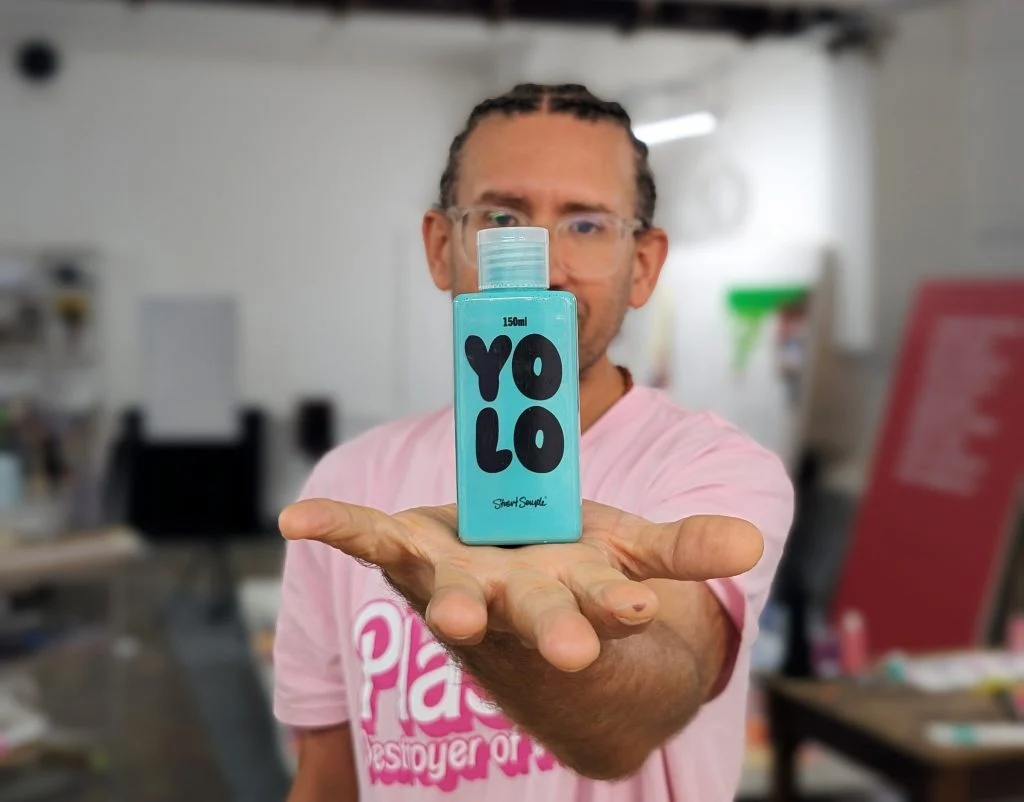
He calls it “YOLO” (because of course he does), and it’ll cost you a cool £10,000 for a 150ml jar. Unless you are an artist, in which case it is £29.99—a rebellious jab at the idea that colours should be exclusive in the first place.
So… Can You Actually See ‘Olo’?
Let’s not kid ourselves: no. Not really. True “olo” is a visual anomaly that lives only inside your brain under very specific, highly controlled circumstances. Even Semple admits it is “an approximation,” not a replication. Dr. Austin Roorda, the Berkeley scientist behind the discovery, said that mixing Midori and Blue Curaçao gave a similar look but also tasted like regret.
Still, YOLO isn’t a scam. It’s a conceptual tribute to a colour most of us will never truly perceive, but can now kind of imagine. A bottle of imagination, if you will. And isn’t that what art’s supposed to be?
Beyond The Spectacle
Beyond the spectacle, there’s something deeper going on here. The Berkeley technology – the Oz system can be useful in certain ways, for instance, in helping colour blind people see more colour. Meanwhile, Semple’s DIY pigment movement continues to democratize what big brands and corporate labs would rather lock behind a patent.
YOLO isn’t just paint. It’s a provocation. A reminder that the visible spectrum isn’t the full story—and that maybe, just maybe, we’re only beginning to scratch the surface of what it means to “see.”
Because in the end, you really do only live once. And if that life includes witnessing the birth of a brand-new colour—however glitchy or abstract—why not put it in a jar and sell it to artists for the price of dinner and a movie? Come to think of it, someone should bottle up a new sound or perhaps a new smell. But let’s try it one sense at a time.
