



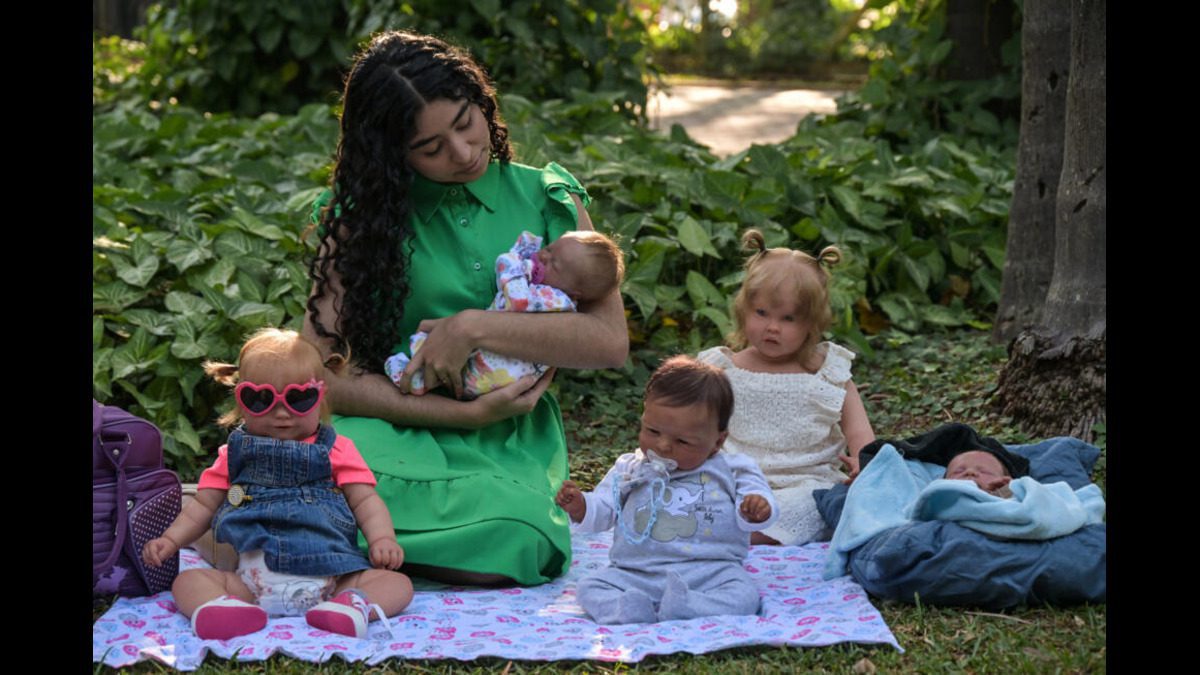
Walk through a park in São Paulo on a Sunday afternoon and you might spot what looks like a daycare field trip—strollers, baby carriers, and doting parents fussing over tiny, swaddled bundles. But look closer and something feels… off. The babies don’t blink. They don’t squirm. And they definitely don’t cry. Welcome to the hyperreal world of reborn dolls.
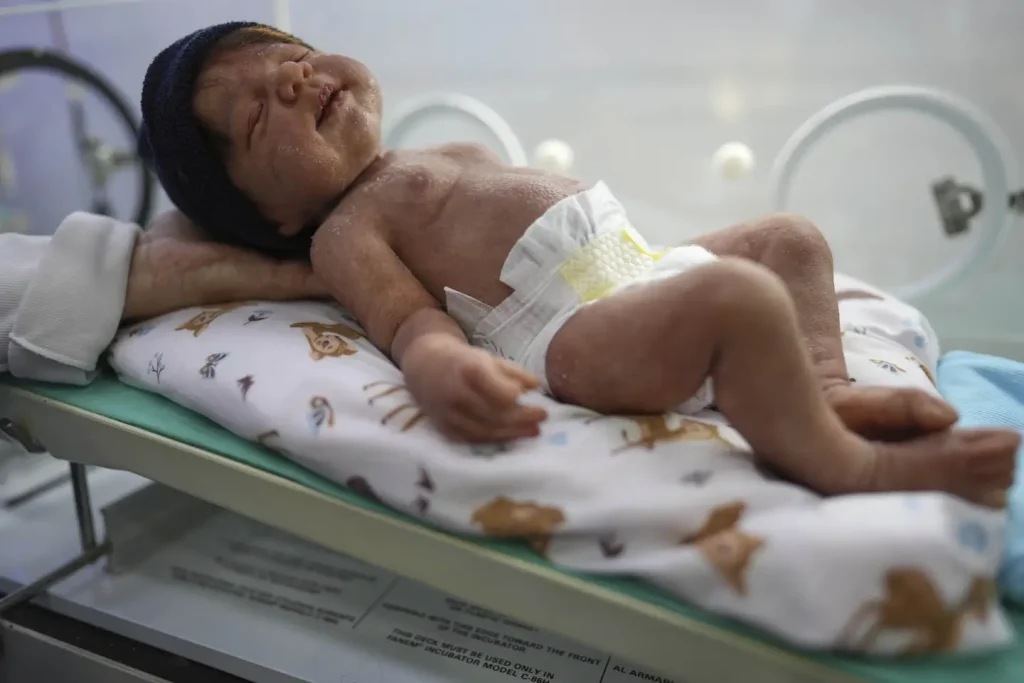
These eerily lifelike dolls, sculpted from vinyl or silicone and painted in painstaking detail to mimic real infants—down to the blotchy skin, tiny veins, and glassy eyes—have exploded in popularity across Brazil. They suck pacifiers. They come with birth certificates. Some even simulate breathing. And for a growing number of adults, they’re more than just collectible art pieces. They’re companions, therapy tools, and yes, surrogate children.
Where Art Meets Attachment
To be clear, this isn’t a new trend. Reborn dolls first surfaced in the US in the early ‘90s, where artists began modifying ordinary baby dolls to look hyperreal. The movement started in niche collector circles but has since evolved into a full-blown subculture.
In Brazil, though, the movement is in overdrive. YouTubers like 21-year-old Gabi Matos have built entire careers around their doll collections. Matos owns 22 reborns and documents her daily caregiving routines—changing nappies, bottle feeding, soothing them in public—for an audience of over 1.3 million. Some viewers find it soothing. Others, predictably, are disturbed.
“They tell me I belong in a psychiatric ward,” Matos says in one clip. “But I’m not delusional. I know they’re dolls.” Her tone is calm, but it’s hard to ignore the weight of the criticism.
Gabi Matos via AFP

Between Grief and Fantasy
So what’s really going on here?
According to psychologists, it’s complicated. Some collectors are simply fans of the artistry. Others use the dolls as therapeutic tools—particularly women dealing with infertility, miscarriage, or empty-nest syndrome. And then there’s the growing loneliness epidemic, which spiked globally post-COVID. In a world that feels increasingly disconnected, reborn dolls offer a form of low-risk emotional intimacy.
“They serve as transitional objects,” says psychologist Viviane Cunha. “If someone treats it like a real baby to the point where it interferes with work or relationships, that’s cause for concern. But for most, it’s a coping mechanism.”
And let’s not pretend this is all that unusual. We normalize adults spending hours in VR headsets, pouring money into fantasy football leagues, or tweaking car mods for a weekend race that never happens. But when a woman wants to rock a silicone baby to sleep, suddenly it’s pathological?
The Business of Baby Dreams
Alana Generoso, a collector turned entrepreneur, runs a doll store in Campinas designed to look like a maternity ward. Her team wears lab coats. Dolls are “delivered” from incubators. New owners are presented with a “birth certificate.”
“Here, you’re not buying a doll,” she says. “You’re buying a dream.”
And that dream doesn’t come cheap. Prices range from R$1,000 to over R$10,000 (roughly $200 to $2,000+ USD), depending on the realism. Custom orders can take weeks to fulfill. For some customers, it’s art. For others, it’s healing. But either way, it’s business—and business is booming.


Politics and Puppets
Naturally, anything this visible—and this unusual—was bound to attract political attention.
After videos went viral of collectors strolling through parks or “birthing” dolls on TikTok (yes, there are simulated reborn C-sections involving fake amniotic sacs), Brazilian lawmakers jumped in. Some called for mental health assessments. Others accused reborn “mums” of gaming the system to access public services, though no hard evidence supports those claims.
In a show of defiance, legislator and evangelical pastor Manoel Isidorio brought his own reborn “granddaughter” to parliament. “Playing with dolls is not a sin,” he declared.
That one statement might sum up the whole debate: Is this play? Or pathology?
The Real Question
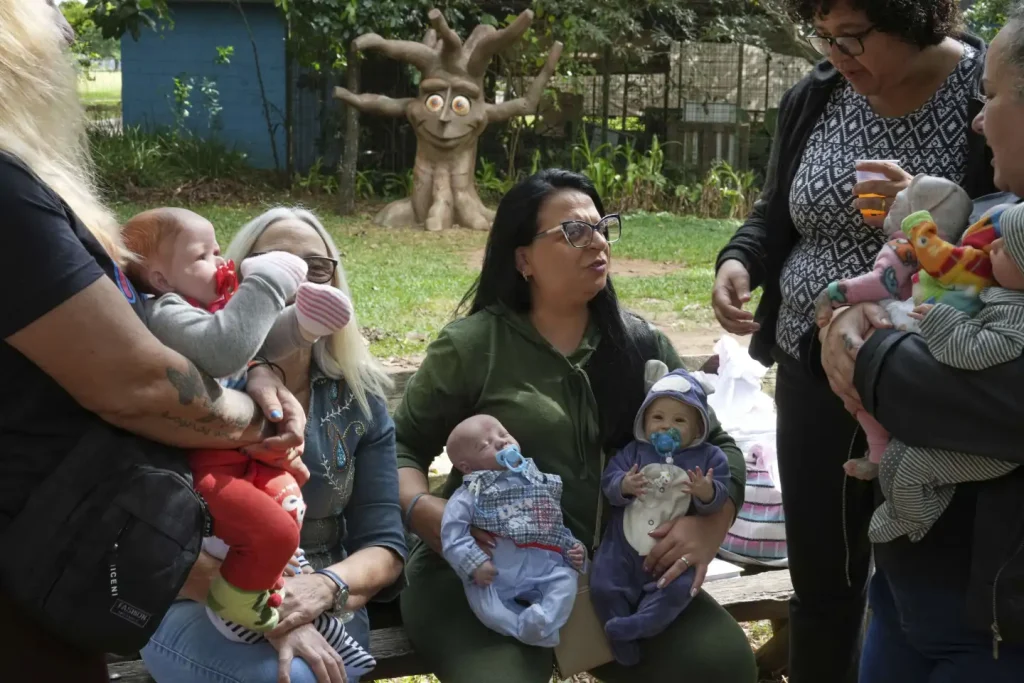
Look, it’s easy to mock the reborn community—especially when your feed serves you a grown woman bottle-feeding a silicone baby. But that knee-jerk reaction says more about us than them.
We’re uncomfortable with emotional expression that doesn’t follow the script. We’re cool with adult men roleplaying as soldiers in Call of Duty, but a woman nurturing a doll? Suddenly, it’s madness.
Maybe it’s time to ask why.
And maybe, just maybe, it’s okay to let people have their weird little hobbies—especially when they’re not hurting anyone.
In a world full of synthetic connections, maybe it’s not so strange that some people choose one that feels, at least to them, a little more human.
Akhram Mohamed is the Editor of Geekhub.co.za and a longtime tech insider who’s spent 20+ years testing, launching, and talking about consumer gadgets. Formerly a VP at Huawei, he now writes with a critical eye and a deep love for tech that actually makes life better. When he’s not breaking down the latest devices, he’s gaming, building businesses, simplifying strategy, or podcasting about real-world leadership. Expect honest takes, sharp insights, and the occasional dad joke.
Follow him on social media: @akreinvented


