



vivo is celebrating its 30th anniversary with something more meaningful than another flashy device launch. The company has unveiled OriginOS 6, its most advanced operating system to date, and it’s coming to South Africa alongside the new X300 Series. Built on three pillars: smoothness, design, and AI, it’s meant to represent the next evolution of human–computer interaction.
That’s a big promise. And while vivo’s new software clearly shows ambition and polish, it also raises a familiar question: can a smartphone OS really understand what users need, or is this still a beautifully packaged exercise in optimization?
The Pursuit of Smoothness
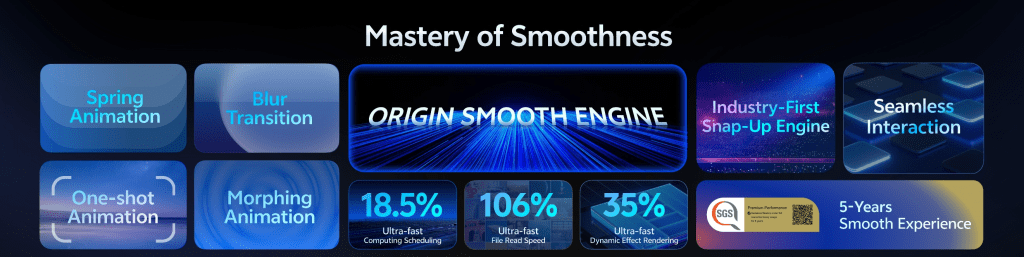
vivo talks about “smoothness” as if it’s a philosophy, not a feature. The new Origin Smooth Engine coordinates the system’s core modules such as computing, storage, and display to create a consistent, fluid experience. The company claims faster app launches, steadier frame rates, and improved responsiveness that stays intact over years of use.
Those numbers are impressive: up to 18.5 percent quicker cold starts, 35 percent better animation performance, and 11 percent steadier frame rates under load. There’s even an SGS certification for “sustained smoothness,” simulating five years of heavy use.
But smoothness is one of those things that’s easy to promise and hard to sustain. Most new phones feel slick for the first few months. The real challenge is keeping that responsiveness after years of real-world use, clutter, and software updates. If vivo can deliver on that, then it’s onto something. Until then, the numbers are impressive but still theoretical.

Design That Strives for Intuition
OriginOS 6’s design direction is one of its strongest points. vivo’s Origin Design language aims to make digital interactions feel more natural. The interface leans heavily on fluid motion, depth, and simplicity. Animations like Spring and Morphing Animation give gestures a sense of rhythm. Translucent layers and Dynamic Glow lighting effects add visual depth.
Even the typography has been reconsidered. The new vivo Sans font supports over 40 languages and allows variable weights, giving text a more balanced, global feel. Combined with the redesigned home and lock screen grids, it’s clear vivo wants users to see their phones as a personal canvas rather than a static grid of icons.
It’s elegant, no doubt. But there’s also a tension here: OriginOS 6 wants to feel alive, yet much of it feels carefully choreographed. Atleast in the keynote and marketing materials it does. It’s visually stunning but not always emotionally engaging. vivo’s design team has nailed the look, now it needs to capture the feeling. And we will definitely put this to the test once it lands locally.
AI That Enhances, Not Transforms
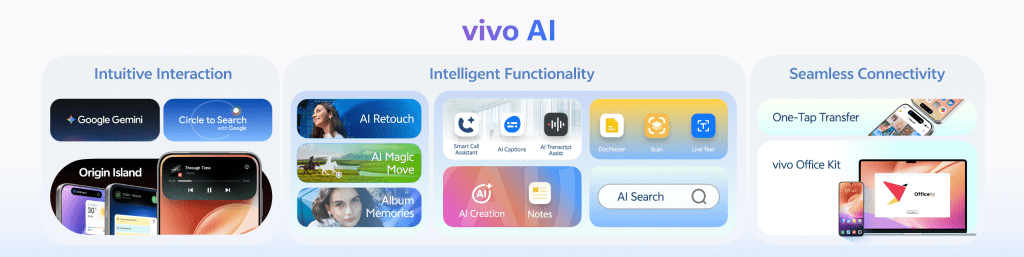
The third pillar of OriginOS 6 is AI, and here vivo is walking a fine line between innovation and imitation. Partnering with Google brings upgraded Gemini integration and Circle to Search, while vivo’s own AI layer introduces new experiences like Origin Island.
Origin Island is a small, persistent space at the top of the screen that displays live updates and contextual actions. Copy a phone number and it offers to call or save it. Edit a photo and it suggests continuing that task in another app. It’s a clever, genuinely useful idea that reduces friction without demanding attention.
Elsewhere, vivo AI powers features like AI Retouch for photos, DocMaster for document handling, and Smart Call Assistant for voice interactions. These tools improve convenience, but they don’t redefine it. The AI here is supportive rather than transformative, helpful but not yet revolutionary.
The Bigger Picture
vivo deserves credit for ambition. With OriginOS 6, it’s clearly trying to move beyond being just another Android brand. The system feels cohesive, thoughtfully designed, and technically advanced. The company is also taking privacy and reliability more seriously through its vivo Security brand and BlueVolt power efficiency system.
Still, it’s hard to shake the feeling that vivo is chasing perfection rather than comfort. Everything about OriginOS 6 feels intentional, but sometimes overly so. It’s beautiful, but it doesn’t always breathe.
That’s not necessarily a bad thing. vivo is evolving into a mature software company that values design and user experience as much as hardware. But the real test will come when the X300 Series launches here, when real users, not lab conditions, decide whether all that smoothness, intelligence, and polish actually make life simpler.
Geekhub’s Take:
OriginOS 6 is vivo’s most complete vision yet, a powerful blend of performance, aesthetics, and AI-driven convenience. But as polished as it looks, the real challenge isn’t how fast or fluid it feels on day one. It’s whether it can stay that way when the honeymoon phase wears off.


