
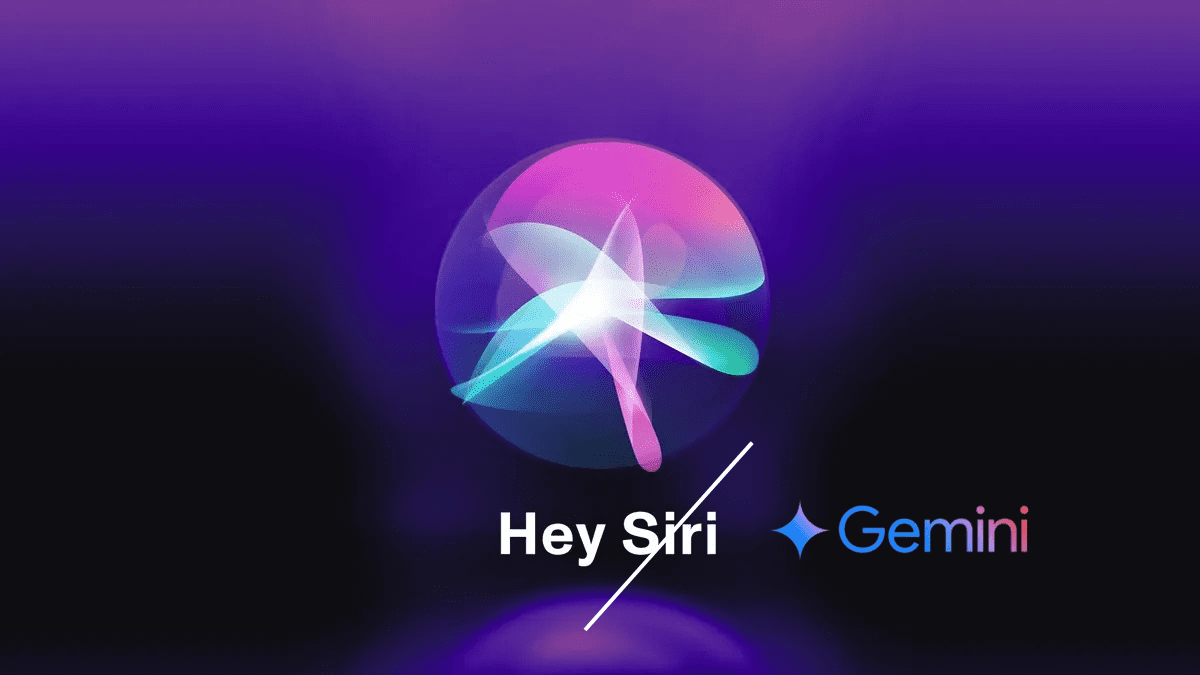
Apple Inc. is doing something remarkable, and yes, a little embarrassing. After years of preaching control, privacy, and in-house magic, the company is quietly admitting it needs help. Specifically, it will pay Google LLC roughly $1 billion annually for access to a custom version of Google’s Gemini AI model to power its forthcoming “Apple Intelligence” and next-gen Siri.
Why this matters
Apple has spent years building its brand around owning the entire stack: hardware, software, and services. Privacy as a differentiator. Seamless integration. The “we build it ourselves” mantra. Now it’s paying its arch-rival Google to do the heavy lifting. That tells us Apple recognized its own AI architecture was falling behind. Rather than lose the battle in the open, it’s resorting to a stealth alliance.
Let’s unpack the gambit
- The model gap
According to the report, the version of Gemini going into Apple’s machine will use roughly 1.2 trillion parameters, significantly more than the ~150 billion-parameter model that underpins Apple’s cloud-based Apple Intelligence today. (theverge.com) On the face of it, that’s a dramatic leap. In practice, it’s an admission: Apple couldn’t scale its own model quickly enough, so it outsourced. - Private cloud compute, not public circus
Apple isn’t simply licensing some black-box AI hosted at Google’s datacenters. The deal reportedly involves Apple running this custom Gemini inside its “Private Cloud Compute” environment, keeping hardware, environment, and presumably data governance under Apple’s umbrella. That maintains Apple’s veneer of “privacy first,” even though it’s still exploiting Google’s muscle. - A bridging strategy, not a destination
The deal isn’t an admission of permanent surrender. Apple continues to build its own in-house systems, models that might eventually replace Google’s Gemini entirely. So the current arrangement is a stop-gap, a way to stay relevant while the home team catches up. Smart, perhaps. But not without risk. - Competitive optics and brand identity
Apple’s identity is built on difference. It sells you the iPhone because it’s “yours.” It sells you the ecosystem because it’s “you in a connected world.” The fact that behind the scenes it’s leaning on Google’s AI may rattle that identity. If consumers ever learn that “Siri’s brain is really Google’s brain,” the narrative of distinctive value starts to fray. - Timing, stakes and the broader AI map
With the next version of Siri and Apple Intelligence slated for next year, the clock is ticking. Apple can’t afford excuses or missteps because everyone else is moving fast. Google, OpenAI, Anthropic, Microsoft are all in a sprint. Apple’s entry into the race starts from a lag, not a lead. That means execution will matter more than marketing.
The verdict
Yes, it’s shrewd. Yes, it’s desperate. And yes, it changes the way we need to think about Apple’s AI narrative. This is not the era of Apple doing it all itself. It’s about survival, and survival in tech lately means leveraging whoever has the biggest model, the most data, the fastest compute. Apple may still talk about “privacy” and “on-device intelligence,” but the structure of the deal tells a different story.
If you’re paying attention, here’s what really stands out: Apple is no longer just competing on hardware and software. It’s now betting on model partnerships, infrastructure scale, and brand credibility in AI. If it gets those right, the result could still feel like that Apple magic you know—the seamless layered product. If it fails, it will look like a massive user-facing let-down, a model that didn’t deliver, a Siri that still flubs basic tasks.
Either way, the era of Apple building everything in-house is over. The question now is whether Apple’s execution will be enough to preserve the brand that built itself around the idea of independence. The answer will shape not just Siri’s future, but Apple’s.
Source: theverge.com
