

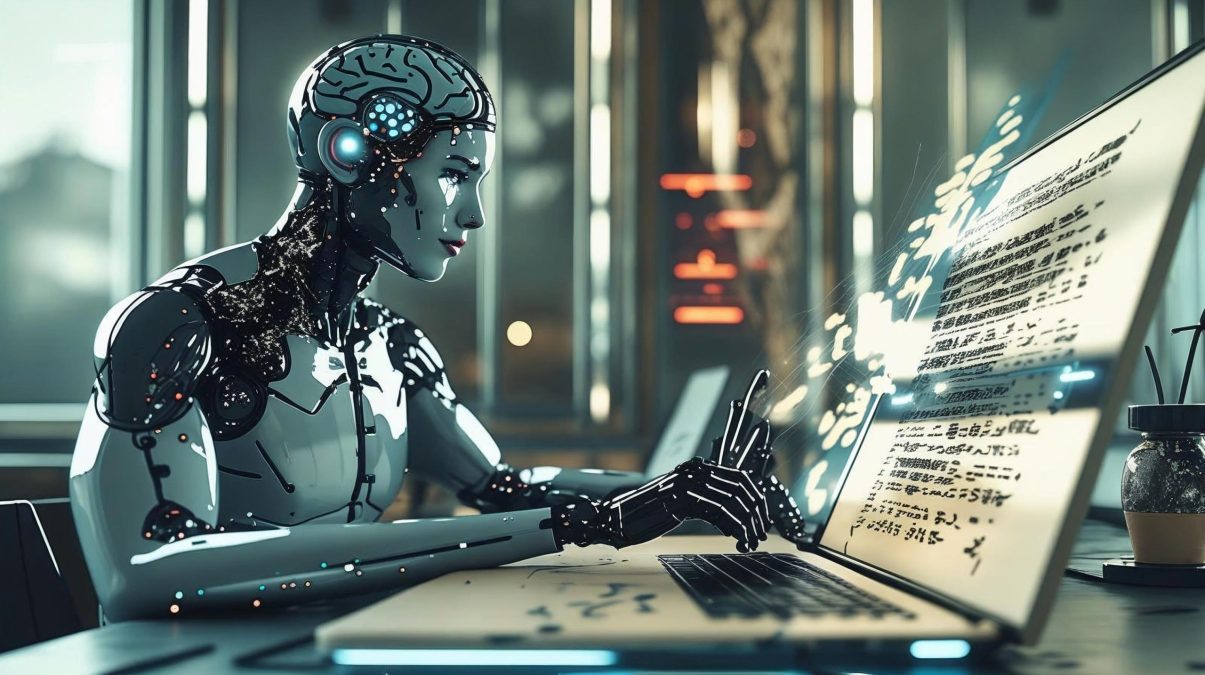
I have always believed that writing is less about the words and more about the story and honesty behind them. There is a moment before you begin when the page feels almost reflective and you kinda see yourself in every sentence you write. Maybe that is why people react so strongly to the idea of using AI as a writing companion. Because It feels like letting someone else hold the mirror for you.
But I keep circling back to the fact that we have never really written in isolation. We have always written in consultation. Be that with our editors, teachers, managers or colleagues. AI is just the newest voice in that process. And perhaps the most misunderstood.
Fear From The Noise
Have you noticed that the people shouting the loudest about “protecting the craft” are often the same ones who have no qualms using AI for the small stuff? Maybe an Instagram caption here, a corporate email there or that mind numbing 2 hour meeting summary and the tweets they pretend was inspired by Gabriel himself.
The thing is, througout history, we have always feared what we do not control. This time is no different – with AI creating a feeling like its something that might just expose how fragile our sense of originality can be.
We want our writing to reflect depth, thought and effort. So we tell ourselves that typing every word manually is some kind of badge of authenticity. But authenticity has never been measured by words and keystrokes. It has always been measured by intention.
The Karachi Lesson
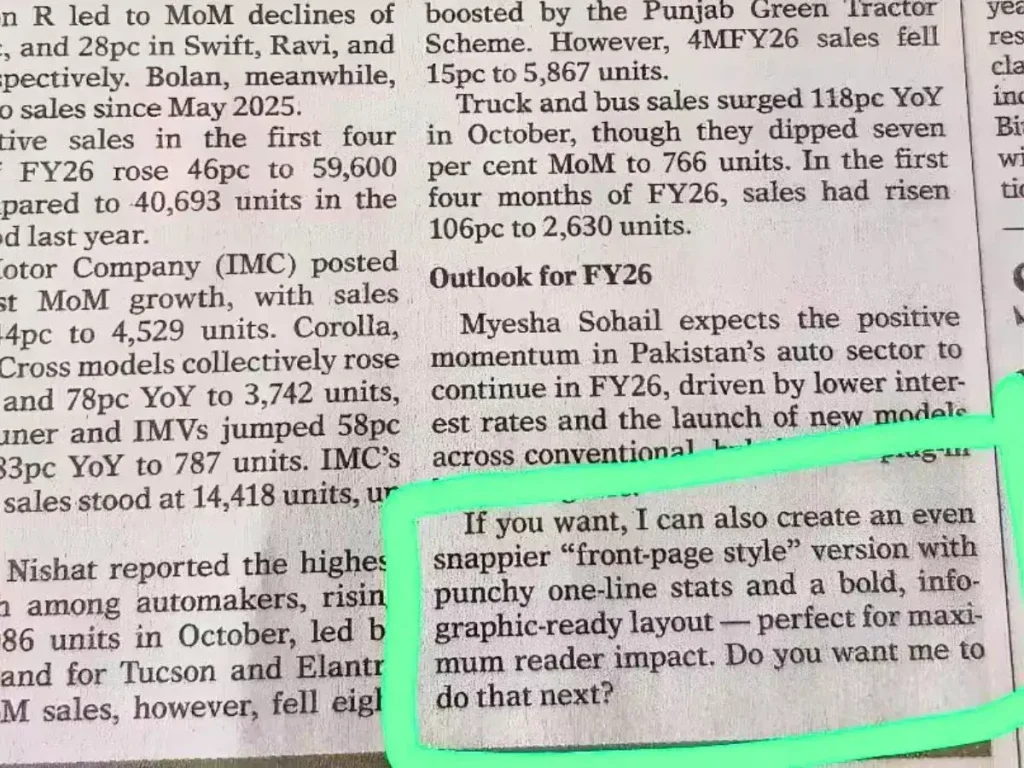
The controversy that stemmed from that Karachi newspaper situation proved something important. AI is not ruining writing, laziness is ruining writing. That story went viral because the editor was lazy and didn’t take the time to read before publishing. The mistake was not a technological one. It was a very human one. It was irresponsibility and the choice to skip the simple but necessary act of care. The editor clearly didn’t give a crap.
It’s a stark reminder that we can have the best tools in the world, but they do not absolve us from responsibility. Infact, they serve to amplify whatever we bring to them. If you bring clarity, it becomes clearer. Bring sloppiness and it becomes louder.
South African View
The South African examples stay with me because they are grounded in reality rather than theory.
Local journalists are already using AI, but with caution. (many won’t admit it, but ok!) Most use it to summarize leads and not to replace reporting. They treat it like a searchlight, not a storyteller and that’s the way it should be. Understanding that context is not something an LLM model can feel. Human experience still needs to drive the work.
Marketing agencies are a lot more open to AI, they can’t afford not to be. But every agency you speak to echoes the same sentiment. The human element is not removed, its actually what holds the vision.
Our universities also sit at the edge of a moral debate surrounding AI. AI is already helping students learn but it cannot do their learning for them. It can only clarify a thought, but you still need to do the thinking.
These perspectives remind me that the real issue is not the existence of AI, but rather the integrity of the person using it. Perhaps we need to explore the degredation of societies value systems before passing judgement solely at tech.
Let Go of the Judgment
If you strip away the noise – and theres a lot currently, the judgment around AI writing feels less like an ethical issue and more like a cultural one. Writing has always carried a sense of pride. Serving as a symbol of intellect, effort and insight. So when a machine enters the room, it’s understandable that some people feel dethroned. Saying to themselves that using AI makes their work less worthy.
But the irony is that the best writing has never come from purity. It has come from influence, conversation and collaboration. From borrowing ideas, refining them, reshaping them and making them our own. It’s always been that way.
AI is just one more collaborator in the workflow. One more tool that speeds things up so we can spend more time on the soul of the work.
We do not lose ourselves by using it. We lose ourselves by pretending we do not.
Where I Stand Now
As you may have gathered, I support using AI to write. Not because it replaces the writer or thinking itself, but because it frees the writer to think more deeply. It allows us to revise more thoughtfully and focus on meaning rather than mechanics.
But I also believe strongly in accountability. You best check your facts and correct the inaccuracies. Rewrite parts that do not feel like you, maintain your own voice and ultimately be responsible.
Writing with AI does not have to remove actually working. But rather reshaping it and shifting the effort away from the grind and more towards intention.
And maybe that is what is really scaring people. We now have the tools to remove our excuses, leaving us alone with the real question. And that fundamental question is not whether we can write, because it’s clear that everyone now can, but whether we have something that’s actually worth saying.
If we can answer that question honestly, the tool simply becomes part of the journey. It’s no longer a threat or the enemy of creativity. It’s just a companion walking beside us while we do the work we were always meant to do.
