



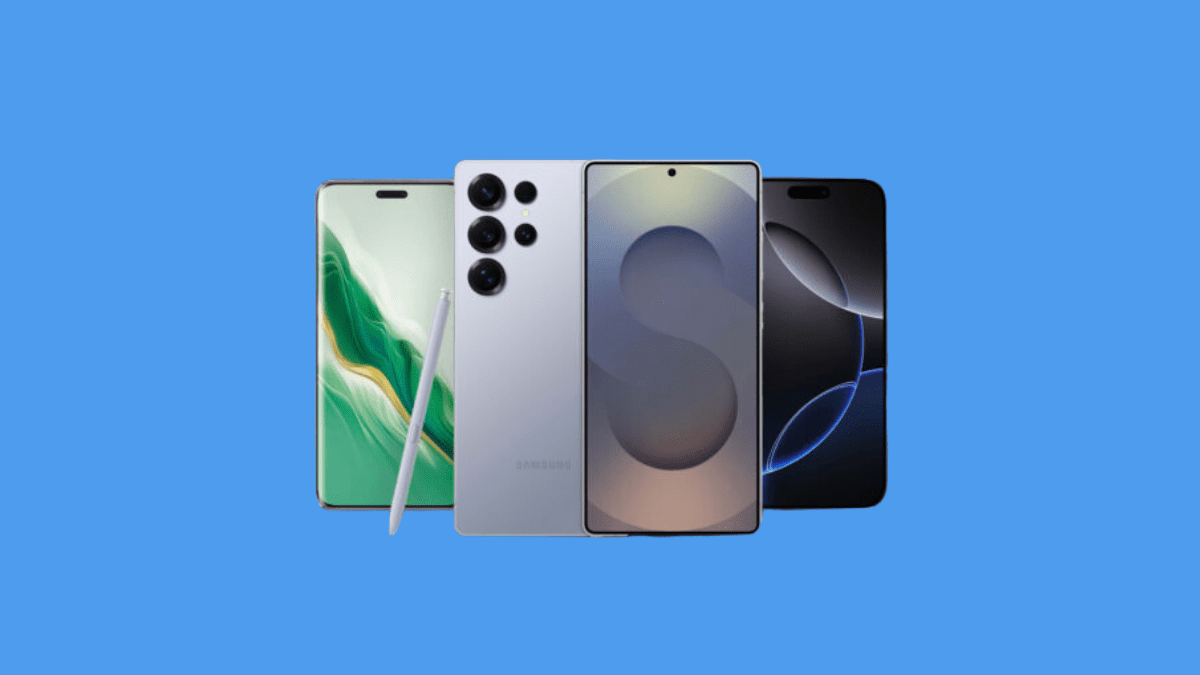
The smartphone market in South Africa is one of those things that looks simple until you’ve actually lived in it. I’ve spent the best part of 20 years living deep in that world and trust me, its far fro simple.
From the outside it may look like the usual story. Samsung everywhere, Apple sitting at the top like a status symbol, a bunch of Chinese brands trying to break through, Huawei somehow still in the conversation, Honor starting to make some noise and Xiaomi hovering just outside relevance.
But the more you look at it, the less it feels like a clean “brand war” and the more it feels like a layered, slightly chaotic system where a lot of global assumptions just don’t hold up.
The reason they don’t hold up is because South Africa doesn’t behave the way most markets do
This isn’t a typical “tech market”
South Africa is advanced for an African nation, very connected, very aware of global tech trends, but at the same time it’s deeply unequal. And that tension shows up in how people buy phones in a way that’s hard to ignore once you see it.
For a huge portion of the population, the smartphone isn’t just a primary device, it’s the only device. No laptop at home, no tablet, no fallback, just one screen that carries everything from communication, work, entertainment, banking, access to the internet, all of it.
So when brands talk about innovation or AI or camera upgrades, it almost feels like they’re talking past the actual lived reality of the local market.
What actually matters here
What really matters here is much more practical.
Does the phone last.
Can you afford it without wrecking your month.
If it breaks, is there somewhere you can take it.
If you buy it, are you going to regret it in six months.
That’s the real product in South Africa and not the flashy keynotes or spec sheet.
Why Samsung keeps winning
And this is where Samsung keeps winning quietly. And it’s not because they’re always the most exciting, but because they understand the system better than anyone else.
Samsung is everywhere, in chain stores, with operators, in marketing, in after-sales support, it feels super familiar, and in a market where people are making very deliberate, sometimes stressful purchase decisions, that familiarity counts for a lot.
Also, and this is the part the industry doesn’t like to talk about, Samsung’s dominance is not built on its flagship phones.
It’s built on its cheap ones.
The Galaxy A series is doing most of the heavy lifting, and that says everything about where the real battle is happening. Vodacom’s best-selling phone last year wasn’t something premium or aspirational, it was a budget Samsung
That stat tells you very clearly that the market is still anchored at the bottom, even if the conversation online is happening at the top.
Apple is selling something else entirely
Apple, on the other hand, is playing a completely different game, and honestly, it’s a smart one.
It’s not trying to compete with Samsung on volume, it’s not trying to be everywhere, it’s trying to own what people aspire to.
And it works!
You don’t get to over 20 percent share in a market like this by accident, that means people are choosing to stretch, to spend more than they probably should, because they believe they’re getting something more than just a phone.
They’re looking at longevity, status, ecosystem, that whole package.
The iPhone in South Africa feels less like a gadget and more like a decision, sometimes emotional, sometimes practical but often both.
It’s not about affordability, it’s about what the purchase represents.
Huawei: still here, somehow
Huawei is probably the strangest part of this whole story.
By all logic it should have faded out by now, the sanctions, the software issues, the global decline, all of that should have hit harder.
But it’s still sitting there with a meaningful share of the market, and that says something important about how these things actually play out in real life.
People don’t just drop brands overnight, especially when they’ve had good experiences in the past. And Huawei manufactures some of the best hardware out there. The P series cemented Huawei’s position as the best camera phone in the market, long before sanctions hit.
The thing is, phones stay in circulation for years, trust lingers, and not everyone is plugged into the global narrative about what’s “winning” or “losing”.
Although Huawei right now feels less like a contender and more like a survivor, survival in this market is still hugely significant.
Honor is trying to thread the needle
Then you have Honor, Huawei’s former sub-brand which is probably the most interesting challenger at the moment.
Not because it’s dominating, it’s not, but because it seems to understand where the gap is.
There’s this space between cheap and desirable that a lot of brands struggle to get a foothold in.
Too cheap and people don’t trust it, too expensive and you lose the mass market.
South African consumers are very aware of value, but they’re also very aware of perception, nobody wants to feel like they’ve bought something that looks or feels second rate.
Honor is clearly trying to position itself right in that middle, affordable but still aspirational enough to feel like a good decision.
Whether it can actually pull that off at scale is another question, but the strategy for now atleast seems to be definitely working.
The uncomfortable truth: this is still a budget market
Because the truth is, this market is still decided at the lower end, no matter how much the industry wants to focus on premium devices and AI features.
Most people are buying phones that are relatively cheap, not because they want to, but because they have to.
Government policy even reflects this, with efforts to keep lower-priced smartphones more accessible by removing the luxury tax (Ad Valorum) on devices priced below R2,500. Because access to a smartphone is directly tied to access to the internet, and by extension, access to opportunity.
Across Africa, the majority of smartphones sold are in the budget category, and while South Africa leans a bit more premium than some other markets, it’s still pulled in that same direction.
Affordability matters, but trust matters more
But here’s the nuance that trips people up.
It’s not just about being the cheapest. It’s about being the cheapest option that still feels safe.
Recognizable brand, decent support, something that won’t leave you stuck if things go wrong.
That’s why some brands that do incredibly well elsewhere on the continent don’t hit the same way here. Tecno is a great example of that.
South Africa is price sensitive, but it’s also brand sensitive in a way that’s shaped by retail, operators, and just a more mature consumer mindset.
You can’t just show up with a low price and expect to win. You have to earn trust, and that takes time.
5G is quietly reshaping the middle
At the same time, there’s another shift happening just above that entry-level space, 5G is being normalised.
Coverage is expanding, devices are becoming more accessible and expectations are slowly changing.
Once 5G stops being a premium feature and starts becoming a baseline expectation, the mid-range market gets a lot more competitive.
Suddenly “good enough” isn’t quite good enough anymore.
But the transition isn’t clean, South Africa isn’t switching off older networks overnight, so you end up with this layered reality where old and new technologies coexist
Which makes buying decisions even more complicated.
The squeeze is coming
And just as all of this is playing out, there’s pressure building in the background.
Component costs are going up, supply chains are tightening, and global demand for things like memory, driven by AI infrastructure, is starting to have knock-on effects on smartphone pricing.
Which means phones are likely to get more expensive and in a market where affordability is already stretched, that’s not a small problem.
So what actually decides the winner?
So the next phase of this whole thing probably won’t be decided by who has the best feature set or the flashiest launch.
It’s going to come down to execution.
Who can manage costs without making the product feel cheap.
Who can build stronger relationships with operators and retailers.
Who can offer financing that actually works for people.
Who can build and maintain trust over time.
Where things stand right now
Right now, if you look at it clearly, Samsung is winning the market as it exists today.
Apple is winning the market people aspire to move into and Honor is trying to build a bridge between those two worlds.
Huawei is holding on through sheer resilience while everyone else is still trying to figure out where they fit.
But the bigger takeaway, at least for me, is this.
South Africa isn’t just another market on a global expansion slide. It’s an often brutal reality check.
It exposes the gap between what companies think matters and what actually matters in people’s lives.
And in that sense, it’s one of the most honest smartphone markets in the world right now.
Because here, hype doesn’t carry you very far.
Eventually, the product has to make sense and if it doesn’t, people just won’t buy it.
Now Read: Best Mid-Range Smartphones that actually make sense


