
Close Menu

    Subscribe to our newsletter

    Get the latest Geekhub updates.

    Friday, May 22
    Geekhub
    Facebook X (Twitter) Instagram
    • Home
    • About us
    • News
    • Technology

      South Africa Isn’t Waiting for Silicon Valley to Save It. At Huawei Code4Mzansi, Builders Took the Stage Instead.

      22 May 2026

      Automated Fashion Could Be A Few years Away

      19 May 2026

      Sony Strengthens Its Alpha Lineup With the High-Performance 7R VI

      14 May 2026

      South African Businesses Can Now Accept Payments Using Only an iPhone

      12 May 2026

      Lesco’s Semi-Robotic Expansion Puts People Before Profit

      Lesco11 May 2026
    • Opinion

      The Great AI Performance: Diary Of A Recovering Suit

      30 April 2026

      Musk Takes the Stand, and a Silicon Valley Origin Story Starts to Crack

      29 April 2026

      The Best Marketing Sometimes Starts With a Dead End

      26 March 2026

      Nostalgia Isn’t a Business Plan: The Truth About 90s Reboots

      11 February 2026

      Convenience vs connection: The Problem With “Smart” Technology

      11 February 2026
    • Movies & TV

      The Internet’s Most Unsettling Horror Phenomenon Is Now a Movie

      22 May 2026

      STER-KINEKOR BRINGS A STREETCAR NAMED DESIRE FROM THE UK STAGE TO THE BIG SCREEN

      Ster-Kinekor Theatres / Cinema Nouveau21 May 2026

      Backrooms Trailer Proves Silence Can Be More Terrifying Than Monsters

      21 May 2026

      King Conan In The Making After 40 Years

      20 May 2026

      Magic Brings Back A Terrifying Dummy Named Fats

      19 May 2026
    • Hardware

      HONOR 600 Series Launches in South Africa with Flagship-Level Performance

      HONOR21 May 2026

      HONOR 600 Pro First Impressions: Premium, Powerful… and Unapologetically iPhone-Inspired

      21 May 2026

      After One Week With the OPPO A6k, Samsung’s Galaxy A Series Has Real Competition

      13 May 2026

      OPPO A6k arrives in South Africa with battery life that keeps up

      OPPO7 May 2026

      Apple’s Foldable iPhone Faces Engineering Delays Ahead of Expected 2026 Launch

      7 April 2026
    • Get In Touch
    Geekhub
    Home » South Africa Isn’t Waiting for Silicon Valley to Save It. At Huawei Code4Mzansi, Builders Took the Stage Instead.
    Artificial Intelligence

    South Africa Isn’t Waiting for Silicon Valley to Save It. At Huawei Code4Mzansi, Builders Took the Stage Instead.

    Akhram MohamedBy Akhram Mohamed22 May 2026No Comments5 Mins Read
    Facebook Twitter LinkedIn Email WhatsApp Copy Link

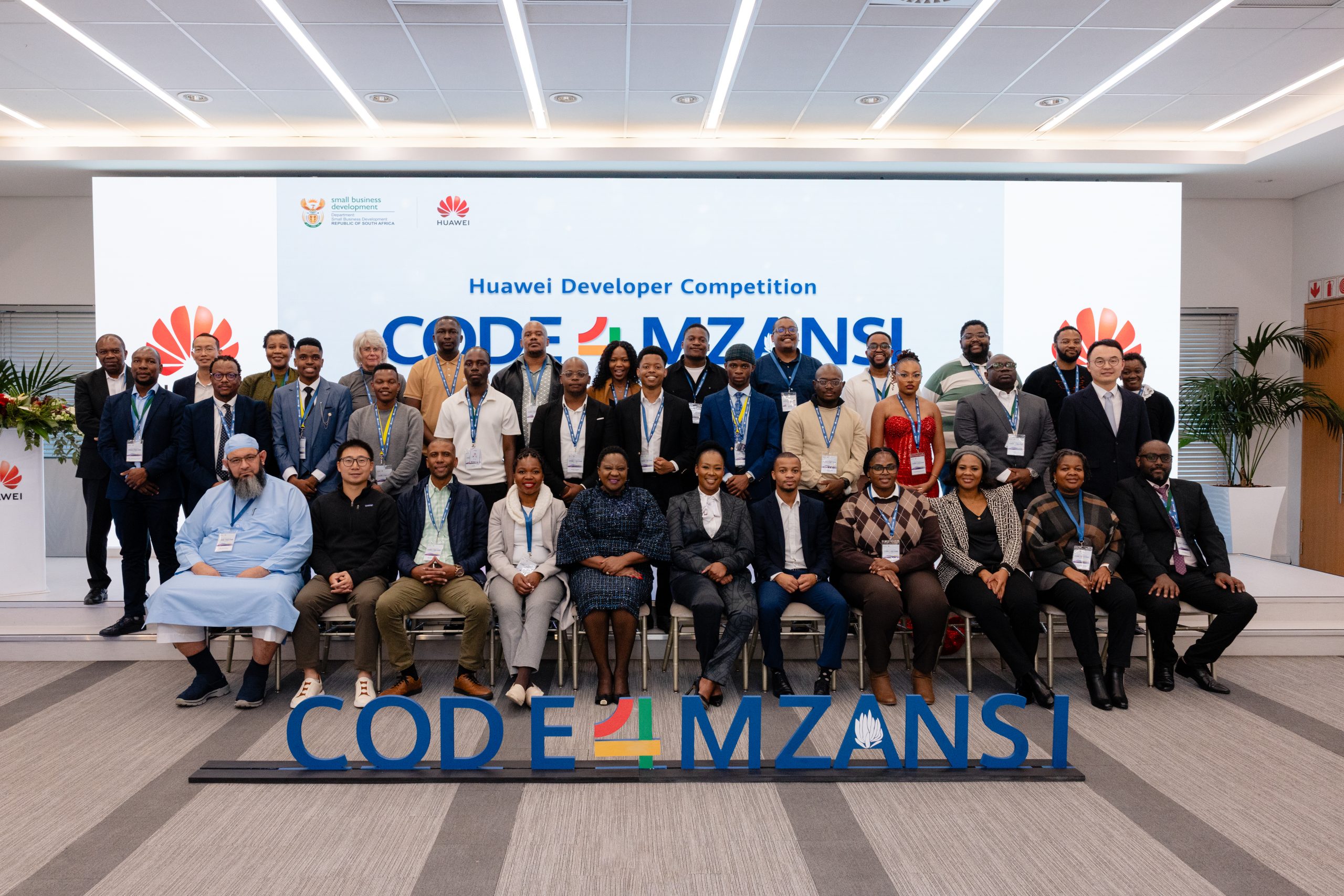
    On Thursday morning, inside Huawei’s sprawling Office Park in Woodmead, Johannesburg, nine South African teams walked onto a stage carrying the kind of optimism the country’s tech industry desperately needs right now: the stubborn belief that local problems deserve local solutions. 

    The event was the finals of Huawei’s inaugural Code4Mzansi competition, a months-long AI challenge co-hosted with South Africa’s Department of Small Business Development. More than 1,000 participants entered. Only nine teams made the final cut. 

    But what unfolded inside the auditorium felt less like a corporate innovation showcase and more like a glimpse into a future where African tech builders stop waiting for Silicon Valley to notice them and simply start building for themselves.

    For years, the global tech industry has approached Africa like an expansion market. A place to deploy products designed elsewhere. Western platforms arrived with assumptions baked deep into their code: reliable infrastructure, formal banking systems, predictable logistics networks, stable electricity.

    South Africa, of course, has none of those luxuries in neat supply.

    And yet, somehow, its developers keep building anyway.
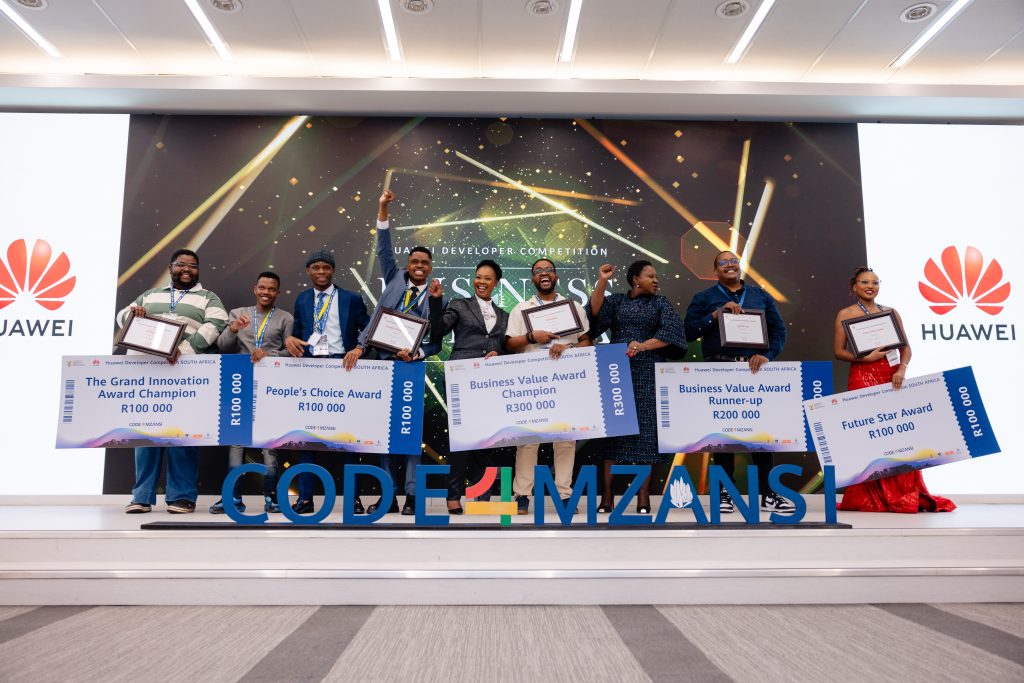
    The winning team on Thursday, a group called SIMVAK, took home R300,000 for a platform named MAAT, which uses AI agents to detect counterfeit food products in the country’s sprawling spaza shop ecosystem and send real-time recall alerts to informal retailers. 

    It is the sort of idea that makes immediate sense if you actually live here.

    Spaza shops are not niche corner stores in South Africa. They are infrastructure. In many communities, they are the primary supply chain feeding millions of households daily. Yet unlike major retail chains, informal traders rarely have access to sophisticated inventory or safety systems.

    MAAT’s founders understood this because they grew up inside that reality.

    That distinction mattered throughout the competition.

    Second place went to HealthHive, an AI-driven telemedicine platform that triages patients before consultations, directing them toward the right healthcare practitioner before they waste money and time on unnecessary visits. 

    Another team, Auraa, built an AI music engine generating African-inspired soundscapes and walked away with the Grand Innovation Award. Their product is already tied to a commercially successful album that has crossed one million streams. 

    Then there was e-Khadi, perhaps the most distinctly South African idea of the bunch: a community credit platform for SASSA grant recipients that combines stokvel culture with AI-assisted credit scoring. 

    This is the part of the global AI conversation that often gets lost beneath the noise around chatbots and billion-dollar valuations.

    Most artificial intelligence systems today are trained on Western data sets reflecting Western consumer behavior, Western infrastructure, and Western priorities. 

    Those systems do not understand load-shedding.

    They do not understand township commerce.

    They do not understand why WhatsApp functions as a primary business operating system across huge parts of Africa.

    And they certainly do not understand the social mechanics of stokvels.

    That gap creates a strange kind of technological disconnect across much of the continent: tools that technically function, but culturally misfire.

    Code4Mzansi felt like a quiet rejection of that model.

    The most striking statistic from the competition was not the prize pool or the AI demos. It was participation. South Africa produced more entrants for Huawei’s global competition than any other country in the world. Not just in Africa. Anywhere. 

    The country also had the highest enterprise participation rate, meaning many entrants were not just students experimenting with side projects, but organized startups already trying to turn ideas into businesses. 

    For a country battling unemployment, infrastructure instability, and sluggish economic growth, the turnout revealed something easy to overlook from the outside: South Africa’s tech ecosystem may be messy, but it is far from stagnant.

    Its builders are adapting in real time.

    There is a long history of constraint-driven innovation in South Africa. Entrepreneurs here have spent years learning how to operate around broken systems rather than waiting for them to improve. Sometimes that produces scrappier companies. Occasionally, it produces smarter ones.

    Still, competitions alone do not build ecosystems.

    The real test begins after the applause.

    What these startups need next is not another inspirational panel discussion about innovation. They need procurement deals. Distribution channels. Venture funding. Enterprise customers willing to trust locally built systems instead of defaulting to imported software from Europe, China, or the United States.

    During the event, rain executive Leon Nortje told attendees the competition gave his company visibility into South Africa’s emerging tech talent pipeline. 

    That is encouraging. But talent recruitment is only part of the equation.

    The bigger question is whether South African institutions are finally prepared to buy from their own innovators.

    Because for all the optimism inside Huawei’s auditorium on Thursday, the country’s startup scene still faces a familiar problem: local founders are often celebrated publicly and ignored commercially.

    And yet, there was something undeniably different about the energy in the room.

    Nobody seemed interested in copying Silicon Valley anymore.

    The builders on stage were solving for South Africa first.

    That shift may turn out to be more important than the AI itself.

    Code4Mzansi Geekhub Huawei Huawei Cloud
    Follow For The Latest Updates Follow For The Latest Updates
    Share. Facebook Twitter LinkedIn WhatsApp
    Akhram Mohamed
    • Website
    • LinkedIn

    Akhram Mohamed is the Editor of Geekhub.co.za and a longtime tech insider who’s spent 20+ years testing, launching, and talking about consumer gadgets. Formerly a VP at Huawei, he now writes with a critical eye and a deep love for tech that actually makes life better. When he’s not breaking down the latest devices, he’s gaming, building businesses, simplifying strategy, or podcasting about real-world leadership. Expect honest takes, sharp insights, and the occasional dad joke.

    Related Posts

    HONOR 600 Series Launches in South Africa with Flagship-Level Performance

    HONOR21 May 2026

    HONOR 600 Pro First Impressions: Premium, Powerful… and Unapologetically iPhone-Inspired

    21 May 2026

    Google I/O 2026 Wasn’t About Apps. It Was About Handing the Wheel to AI.

    20 May 2026
    Opinion

    The Great AI Performance: Diary Of A Recovering Suit

    30 April 2026

    Musk Takes the Stand, and a Silicon Valley Origin Story Starts to Crack

    29 April 2026

    The Best Marketing Sometimes Starts With a Dead End

    26 March 2026

    Nostalgia Isn’t a Business Plan: The Truth About 90s Reboots

    11 February 2026
    Don't Miss
    Artificial Intelligence

    South Africa Isn’t Waiting for Silicon Valley to Save It. At Huawei Code4Mzansi, Builders Took the Stage Instead.

    Akhram Mohamed22 May 2026

    At Huawei’s Code4Mzansi finals, South African developers proved local AI innovation hits differently when it’s built for local realities.

    The Internet’s Most Unsettling Horror Phenomenon Is Now a Movie

    22 May 2026

    STER-KINEKOR BRINGS A STREETCAR NAMED DESIRE FROM THE UK STAGE TO THE BIG SCREEN

    Ster-Kinekor Theatres / Cinema Nouveau21 May 2026

    Backrooms Trailer Proves Silence Can Be More Terrifying Than Monsters

    21 May 2026
    About Us
    About Us

    Geekhub wasn’t built as a traditional media company.
    It was built by people who live and breathe tech.
    We test, question, and share what we learn with a community that values honest insight over hype.

    Contact: +27 83 346 2178

    Facebook X (Twitter) LinkedIn
    Our Picks

    South Africa Isn’t Waiting for Silicon Valley to Save It. At Huawei Code4Mzansi, Builders Took the Stage Instead.

    22 May 2026

    The Internet’s Most Unsettling Horror Phenomenon Is Now a Movie

    22 May 2026

    STER-KINEKOR BRINGS A STREETCAR NAMED DESIRE FROM THE UK STAGE TO THE BIG SCREEN

    Ster-Kinekor Theatres / Cinema Nouveau21 May 2026
    Most Popular

    AI and The Cost Of Convenience: What are we really giving up?

    27 November 2025

    OPPO Reno 12Pro 5G- A beautiful Mid-range Contender

    14 August 2024

    Huawei’s AI Chip Challenge: A David vs. Goliath Showdown?

    15 August 2024
    • Home
    • Terms of Service
    • Geekhub Editorial Policy
    • Privacy Policy
    • Get In Touch
    © 2026 Geekhub.co.za All Rights Reserved!

    Type above and press Enter to search. Press Esc to cancel.