

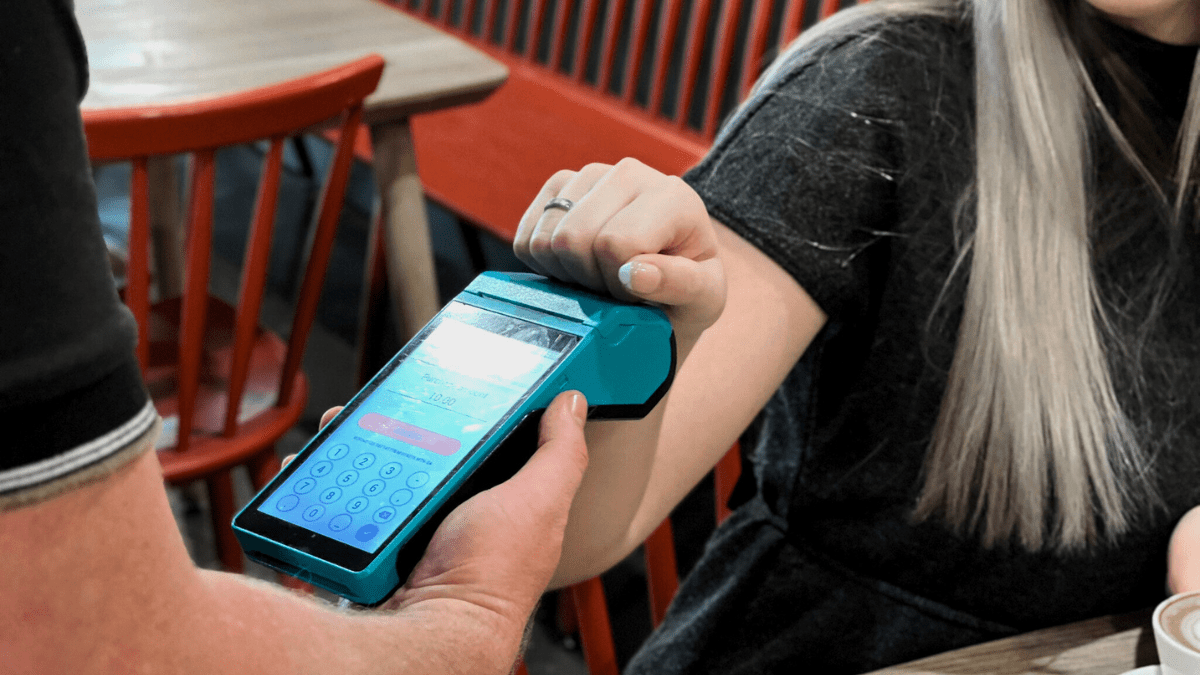
We are officially in your “tap your knuckle to pay” era.
The company behind it, VezoPay, launched a payment ring last year that lets you leave your wallet and your phone at home, which sounds like the kind of headline that usually triggers my internal hype alarm, because we’ve been promised frictionless living so many times before that I’ve developed a mild allergy to the phrase.
And yet.
I actually dropped R2,500 and bought one.
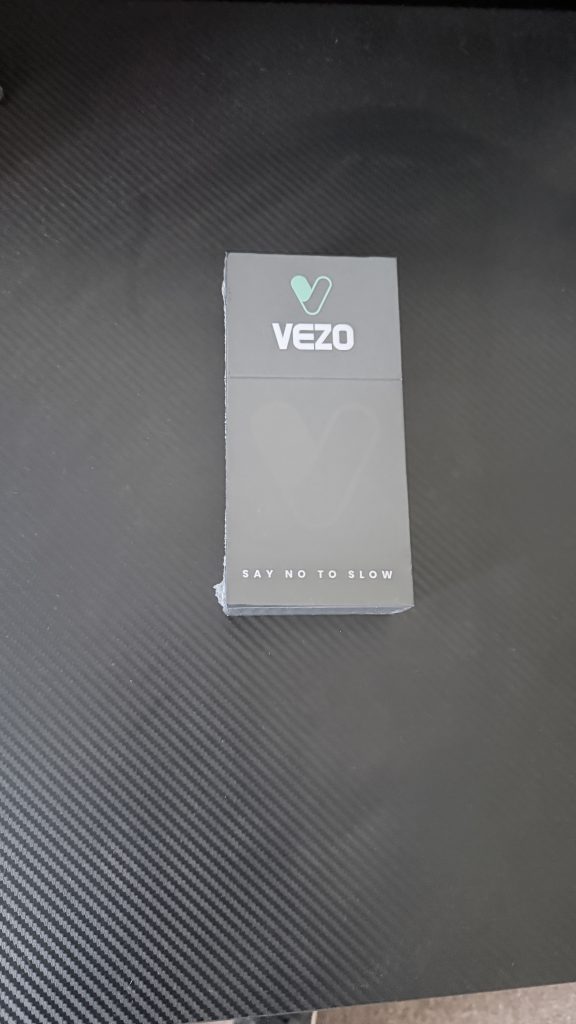
Specifically, the VezoPay X-Ring Wide. I’ve been using it for about two weeks now, not as a reviewer , but as a normal human moving through petrol stations, coffee shops, school runs, and random convenience store stops, and I have to admit that the experience from purchase to setup was almost suspiciously smooth.
From the purchase to the onboarding and set-up, there was absolutely no drama and no “please update firmware” nonsense. You order it, link it through the app and supported banking channels, activate it, and you’re live.
Right now, support includes selected cards from First National Bank and RMB Private Bank, which immediately tells you something important about who this is for in its current phase, because this is not a universal, mass-market, every-bank, every-consumer rollout just yet; it’s controlled, measured, and very much tied to specific partners who are willing to experiment.
I think that approach is important.
Because fintech doesn’t live or die on cool form factors, it lives or dies on bank integration, compliance, and whether your actual debit or credit card can plug into the system without you jumping through hoops.
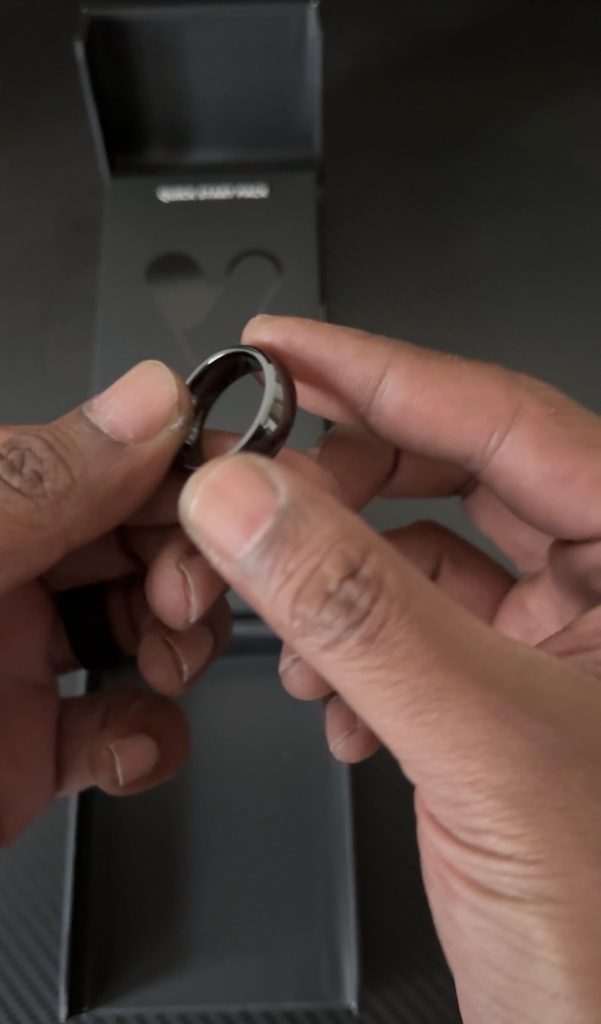
The ring itself is almost boring in its simplicity, which I mean as a compliment. There’s no battery to charge, thankfully not another screen and no notifications buzzing at your finger like a needy smartwatch. It uses NFC, the same underlying tap technology as your contactless card, with tokenisation so your real card details aren’t being blasted into the ether. Over certain limits, you still need to enter your PIN on the terminal, which is reassuring in a very unsexy way.
But here’s where the human part kicks in.
The first time I used it, I half-expected it to fail, because new tech in public settings has a way of humbling you at exactly the wrong moment. Instead, I tapped my hand to the terminal and it went through instantly, and the cashier actually paused, looked at my hand, and asked, “What was that?”
And that has happened almost every single time since.
The reactions are epic, in that small, delightful way where strangers are briefly confused and then impressed, and there’s something undeniably fun about that, which no spec sheet can quantify.
It kinda feels like a magic trick and gets the reaction to match. Infact at my most recent visit to my local petstore, the cashier pleaded with me to make a second purchase just so that his friends can witness the magic.
Now, let’s talk about the uncomfortable part.
Do you need this?
Objectively, no. Your card already taps. Your phone already works. If you’re deep in the Apple or Android ecosystem, you can already pay with your watch. This ring is not solving a crisis of access or a systemic failure in payments; it’s solving convenience at the margins.
But margins are where habits shift.
I’ve found myself leaving the house with less mental load. I’m not checking my pockets and theres no mild anxiety about battery levels. On a quick run to the shop, I genuinely don’t take anything else. That’s not revolutionary, but it is quietly freeing.
At the same time, there are potential pitfalls that shouldn’t be glossed over.
First, rings are personal. Some people don’t wear rings at all. Some only wear a wedding band and wouldn’t consider stacking another. Jewellery isn’t neutral territory; it’s cultural, emotional and often symbolic. Asking consumers to dedicate space on their body to a financial device is a bigger behavioural leap than asking them to download an app.
Second, bank support is still limited. If you’re not with FNB or RMB Private Bank, you’re currently out of the game, which means adoption is constrained by partnerships rather than curiosity. Until more banks come on board, this remains somewhat niche.
Third, there’s the psychology of spending. The more seamless payments become, the more abstract money feels. Tapping a card already distances you from the transaction; tapping your knuckle takes that abstraction a step further. That may not sound dramatic, but behavioural economics tells us friction influences restraint. Remove too much friction and you risk removing awareness.
And yet, I keep wearing it.
Because in real life, what wins is not theoretical perfection but lived convenience.
There’s something compelling about technology that disappears instead of demanding attention. The ring doesn’t light up or ping and it doesn’t try to be your fitness tracker or your sleep coach. It does one thing really well. You tap. You move on.
That restraint might actually be its biggest advantage in a market saturated with overpromising gadgets.
South Africa is an interesting place for this experiment. We’ve adopted contactless payments quickly, our banking apps are sophisticated and onsumers are comfortable tapping. In that context, a payment ring doesn’t feel absurd. It feels like a logical, if slightly theatrical, next step.
Will it replace wallets? Probably not.
Will it replace phones? Definitely not.
But as a lightweight, always-on, zero-maintenance backup that occasionally makes you feel like you’re living five minutes in the future, it has a surprisingly strong case.
The real test will be whether, six months from now, I’m still wearing it without thinking about it.
If I am, that’s success.
If it ends up in a drawer with other clever ideas that didn’t quite stick, then it will have joined a long list of well-intentioned experiments.
For now, though, two weeks in, it’s still on my finger.
