

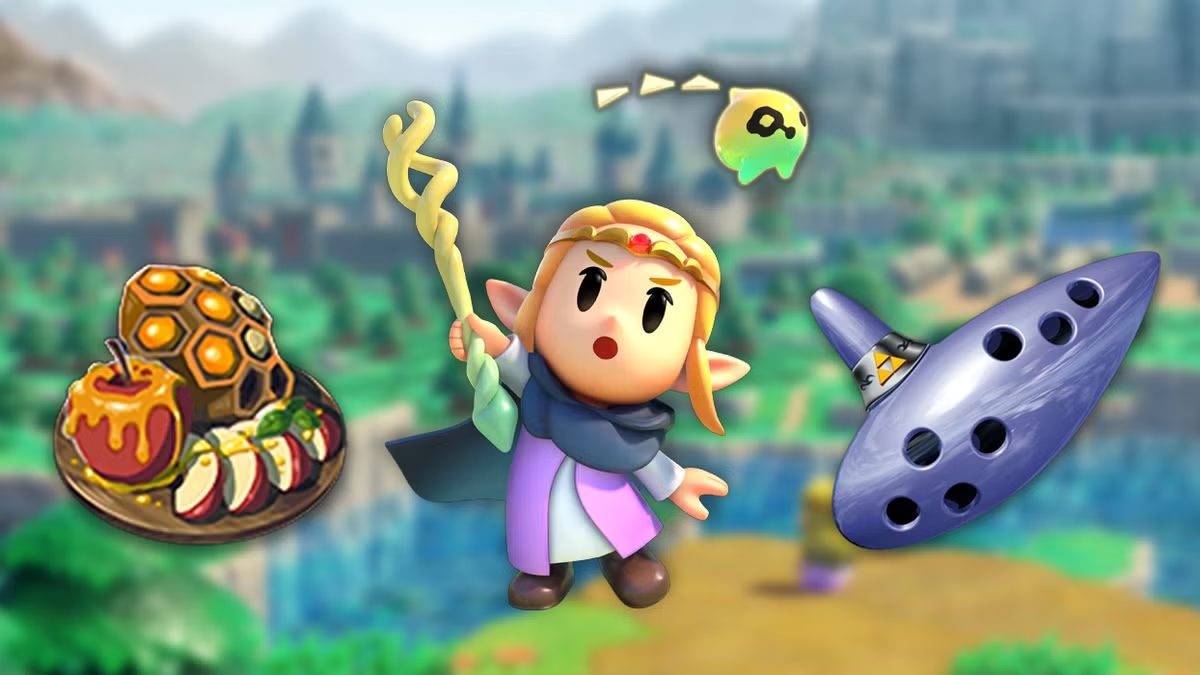
Do you remember when playing the ocarina in The Legend of Zelda: Ocarina of Time required pressing several buttons and hoping you remembered the correct order? Yeah, that has changed. The new remake would prefer you to sing into your Switch 2. Wonderful news for Link. Less wonderful for everyone else in the room.
Nintendo is rebuilding Ocarina of Time for the Switch 2. Expect completely overhauled visuals, fully voiced cutscenes, expanded dialogue and symphonic orchestral music. But that’s not all. There will also be modern camera movement and allow Link to jump and dash. Players will be able to hum the game’s melodies into the Switch 2’s built-in microphone. The console will recognise the tune and Link will play it on his ocarina. Nintendo says the game can even recognise music played on a real instrument, which means somebody is already preparing to complete the Water Temple using an actual ocarina with a bunch of confidence. Nintendo Now I don’t know about you, but this feature raises several practical questions.
Will the console recognise the melody if you cannot sing? Because let’s face it, we’ve all seen what’s happens on Idol’s right? Also what if you confidently hum Zelda’s Lullaby but accidentally produce something closer to the theme from Jaws? And how many attempts can you make before the people around you ask whether pressing the buttons was really such a terrible idea? Well, what a clever use of the Switch 2 microphone.
We have all experienced the excitement at the announcement of new console features. But the truth is that once developers remember that not everyone is enthusiastic about shouting instructions at a television, they quietly disappear. The thing about this is that music has always played an important role in Ocarina of Time. Its songs open paths, change the time of day, summon a horse and generally solve problems in ways that swords simply can’t. The idea is that allowing players to perform those melodies makes the ocarina feel more like an actual instrument. And the possibility of interacting with the game in a way that the original hardware has never managed is bloody marvellous.
Of course, the remake is changing much more than that.
The original game arrived on the Nintendo 64 in 1998 and helped establish how three-dimensional adventure games could work. Its lock-on combat, open world and movement systems influenced countless games that followed. But returning to it today also means dealing with a camera created during a period when developers were still negotiating with the third dimension. The Switch 2 version will introduce a free-moving camera, new controls and the ability to jump manually. Nintendo has also added voiced cutscenes, a significant change for a series that spent decades allowing characters to communicate through text, expressive noises and very serious nodding. Nintendo
And this is where the remake faces a rather difficult job.
Nintendo cannot simply make Ocarina of Time look prettier. The task is to modernise the parts that have aged without disturbing the things people remember as perfect. Fans have carried this game around in their memories for almost three decades, which means Nintendo is not only remaking what appeared on the cartridge but is competing with the version people believe they played. Nostalgia can be very generous with frame rates.
I guess fully voiced scenes may make the story feel richer to new players. But on the other side of the coin, some longtime fans may miss the silence. Also, manual jumping offers more control, but it removes the strange confidence required to run towards a gap and trust Link to handle the rest. Even the updated graphics will face comparisons with images that became iconic partly because players had to use their imaginations to fill in the detail. Hey, perhaps the microphone feature shows that Nintendo understands the assignment.
Because it does not replace the ocarina or turn it into a modern rhythm game. Players can still use the buttons. As for the singing, it simply offers another way to participate in something already central to the experience. And that is what a good remake should do. It should not treat the original like an embarrassing old house that needs every wall knocked down. It should find the places where modern technology can add something without removing the personality that made people care in the first place. So this is right on the button.
The remake arrives on 5 November as a Switch 2 exclusive. Until then, fans have time to practise the melodies and decide whether they are comfortable performing them within hearing distance of another human being.
Hyrule may depend on it.
Your dignity, however, is on its own.
