
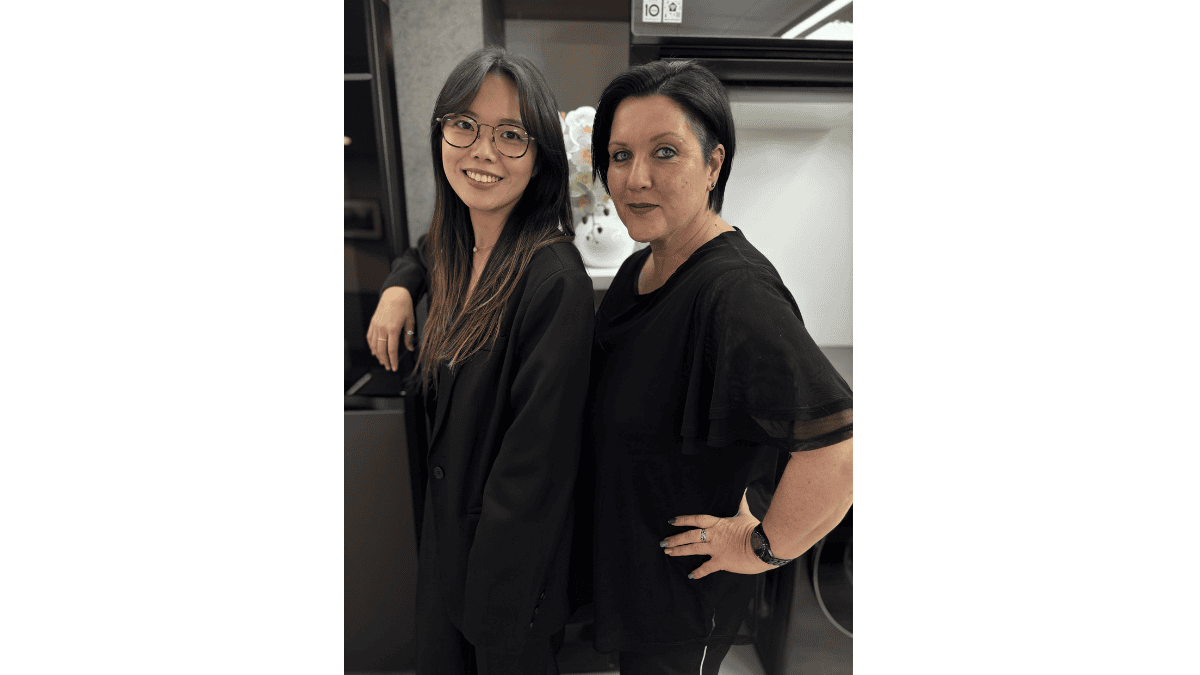
Hongju (Grace) Nam, Eco-Solutions Sales and Product Marketing Specialist at LG Electronics South Africa, started her job in HVAC sales “genuinely nervous”. Much like many other women in less diverse industries. But besides her gender, Nam also had to contend with being one of very few South Africans of Korean descent at the same time. But ‘fitting in’ wasn’t her goal.
“The industry is highly relationship-driven. And as a South African-Korean woman, I wondered about the concept of fitting in and how it would affect my goal of building credibility,” she says. What she found, though, “was that the diversity I contributed was my biggest advantage and value-add. Both by being a woman, and by being from an underrepresented heritage.”
That realisation has reshaped how she thinks about growth generally. “Growth happens when you’re willing to step into spaces where you don’t see many people who look like you, and bring your own strengths proudly,” she says. “Everyone has their own strong points. Success comes from understanding what makes you different. And by using it to your advantage, rather than trying to be the same as everyone else. Everyone wins this way.”
She has seen how increased diversity, with the addition of every woman to teams that lacked them before. And more representation of women of diverse cultural backgrounds have enriched the spaces around them. They have built stronger relationships and stronger commercial gains too.
Nam explains that even a niche, technical sector like HVAC sales in South Africa runs on relationships more than spec sheets. “The industry is incredibly relationship-driven,” Nam says. “Having the right product and the right price matters, of course. But I’ve learned that on their own, those things don’t guarantee as much as you’d think.”
Nam decided to lean into quick response times, flexibility, strong Excel and data skills, as well as attention to detail. “Over time, those strengths became a further differentiator,” she says. “I focused on bringing unique value to my customers and partners.
“In general, most people will easily agree that having a unique skillset or value proposition is what allows them to succeed in their work and businesses. The principle behind that is that diversity is inherently valuable. Adding gender, cultural and ethnic diversity on top of that breeds even more success – for individuals and businesses alike.
Marisa Murphy, Home Solutions Sales Manager at LG, has learned a related lesson from the other side of the counter. Where the wider industry tends to see appliance sales as just a product at the best price – Murphy sees the category differently. “What gets missed is that people aren’t buying appliances for the hardware alone,” she says. “They’re really buying back their time.”
Murphy explains that technology matters because it lightens the daily load of things. And in the case of home solutions like laundry and meal prep, restoring those hours to the household allows more free time to spend on the things that matters the most. That’s exactly why she says she’s so passionate about campaigns like LG’s Life’s Good Celebration: “It’s an initiative for delivering premium technology to customers at the best possible prices, yes, but at its core, it allows people to make purchases that simplify their lives; sustainably, and affordably.”
She hears a version of the same assumption Nam ran into, in a different part of the business. “The persistent misconception is that technical mastery belongs to men, while women rely on soft skills alone,” Murphy says. “The reality is that resilience, drive and technical capability aren’t gendered traits. Women in this industry bring exceptional endurance, sharp strategic focus and intense passion to complex commercial negotiations. What some misread as softness is emotional intelligence paired with real grit. The ability to push through pressure and deliver consistent results you can measure on the bottom-line.”
