

There are certain sentences that have survived for generations because human memory is wonderfully unreliable. For example, how many times have you heard, “I never said that.”“You must have misunderstood me.” Or, “That’s not what I meant.” And my personal favourite… “I definitely told you about this.” For most of our lives, unless someone else happened to be standing there, it turned into a he-said-she-said scenario.. Two people could remember the exact same conversation completely differently and spend the next 45 minutes arguing about whose version was correct. Now all we need is the right technology to tell us what was actually said.
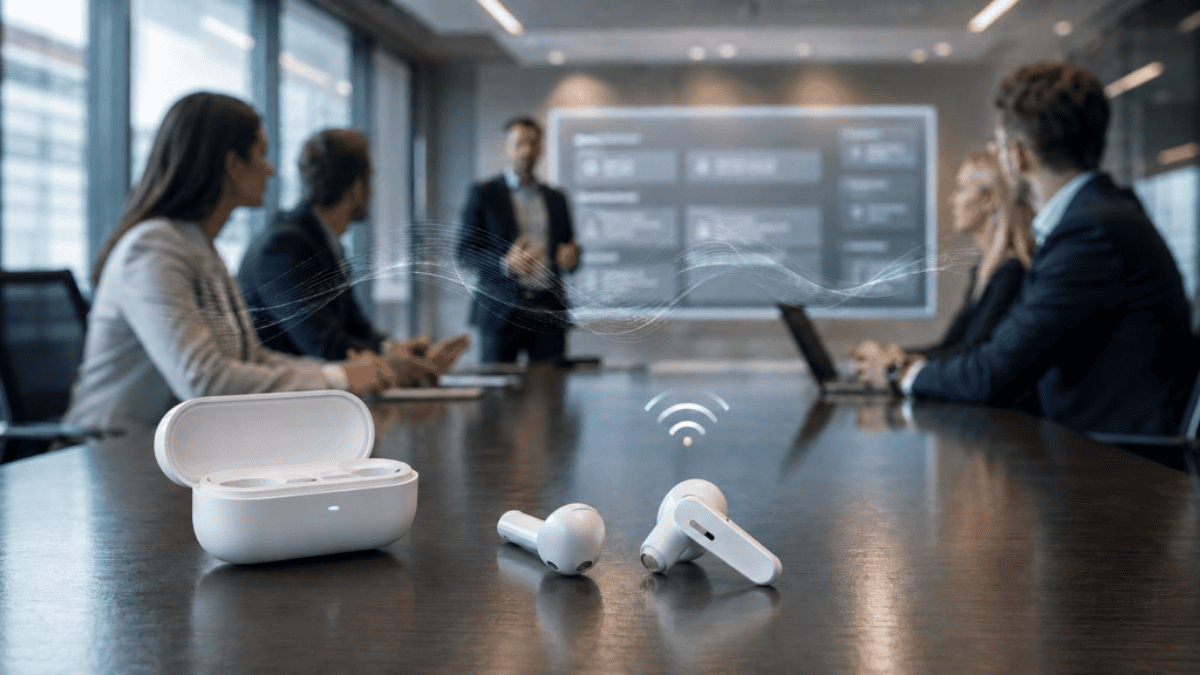
Plaud has unveiled a new pair of AI-powered earbuds called Plaud One, and unlike your regular earbuds, which mostly play music and allow you to ignore people in public, these little things can actually remember your conversations. Yes, they can record them, transcribe them and neatly summarise them. But wait, there’s more. They can also help turn what was said into emails, documents, presentations and tasks. And suddenly “I never said that” becomes considerably more dangerous. Because your earbuds may have receipts.
The Plaud One Explorer Edition looks relatively ordinary. You could easily mistake the earbuds for another pair of wireless headphones, which is perhaps what makes the technology so fascinating. Each earbud contains three microphones and can record conversations from up to two metres away, while the charging case contains another four microphones and can capture voices from as far as five metres. Yes, you read that right. Five metres. Which may mean that it’s no longer just a charging case, but something sitting at the next table minding your business.
To be clear, Plaud isn’t marketing these as some sort of secret surveillance devices. The company says users have to manually activate recording and encourages them to inform other people and comply with whatever recording and consent laws apply where they live. Which is important. Because while the technology itself makes perfect sense, socially we’re going to have some things to figure out. Imagine walking into a meeting only to hear a colleague announce that their earbuds are recording everything everyone says.
I don’t know about you, but this would definitely change my choice of words for the most part. And the strange thing is that I can absolutely see why people would want this technology. We all know that meetings are terrible places for human memory. There are multiple parties who nod and agree in the moment, and two days later nobody remembers who agreed to do what. This is where something like Plaud One becomes the person in the room who actually pays attention.
The earbuds can capture calls and online meetings as well as face-to-face conversations. Plaud’s AI can then transcribe and summarise those discussions so you don’t have to spend half the meeting frantically typing notes. Actually, that’s really useful but Plaud wants to take things further.
Its Plaud Agent is designed to work with services including Gmail, Google Calendar, Notion and Slack. The idea is that AI won’t simply remember what happened during your meeting. It will eventually be able to use that information to help with what happens afterwards. So if somebody says, “Can you send everyone a follow-up email, put together a presentation or set up another call?”, the technology could help with all three requests.
Plaud says higher-stakes actions, such as actually sending an email or changing files, require user approval, which is probably wise. Because we’ve all said things during meetings that sounded considerably better before somebody wrote them down. But this is where I think technology is entering an interesting new phase. For years, our devices mostly waited for us to tell them things. We typed into computers, tapped on phones and asked voice assistants questions. Now we’re building technology that can increasingly understand the conversations happening around us and turn those conversations into information.
You see, conversations are temporary at best. You say something to someone but over time both of you forget exactly how it was phrased. Human memory quietly edits the transcript. But with AI all those edits could simply vanish, and I’m not entirely sure we’re socially prepared for a world where everything can have minutes. The phrase “between you and me” suddenly comes with technical specifications. So maybe that’s the genuinely interesting thing about Plaud One. The technology isn’t particularly frightening because it can record conversations. The difference is how effortless remembering is becoming.
Recording used to require intention. All you had to do was pull out a device, press record and store a file. And if you wished to listen to it later, you could do that too. But now AI can turn the recording into a transcript, summarise it and send it via email. And just like that, a conversation becomes data almost immediately.Now this could prove incredibly valuable in workplaces, classrooms, interviews and anywhere else people desperately need to remember what someone said. It may also force us to become considerably more careful about what we say around people wearing AI devices.
Now Plaud says users retain control over their data and can access, export and delete it. The company also says it doesn’t use customer recordings or transcripts to train AI models without explicit consent. Important safeguards to have, certainly. But technology can solve the technical side of privacy far more easily than it can solve the human side. And the fact is that sometimes you don’t want a conversation preserved forever. Being human means that you can say something stupid, or change your mind, and pretend you absolutely told someone about dinner on Saturday when both of you know perfectly well that you didn’t.
Whether AI earbuds eventually become something we all wear remains to be seen. But I suspect we’re heading towards a world where technology remembers considerably more of our lives than we do. That could make us more productive and it might even end a few arguments. Although it will probably start several others, because the next time somebody says…“I never said that.” There may finally be an answer.
“Actually, according to my earbuds, you did.”
