

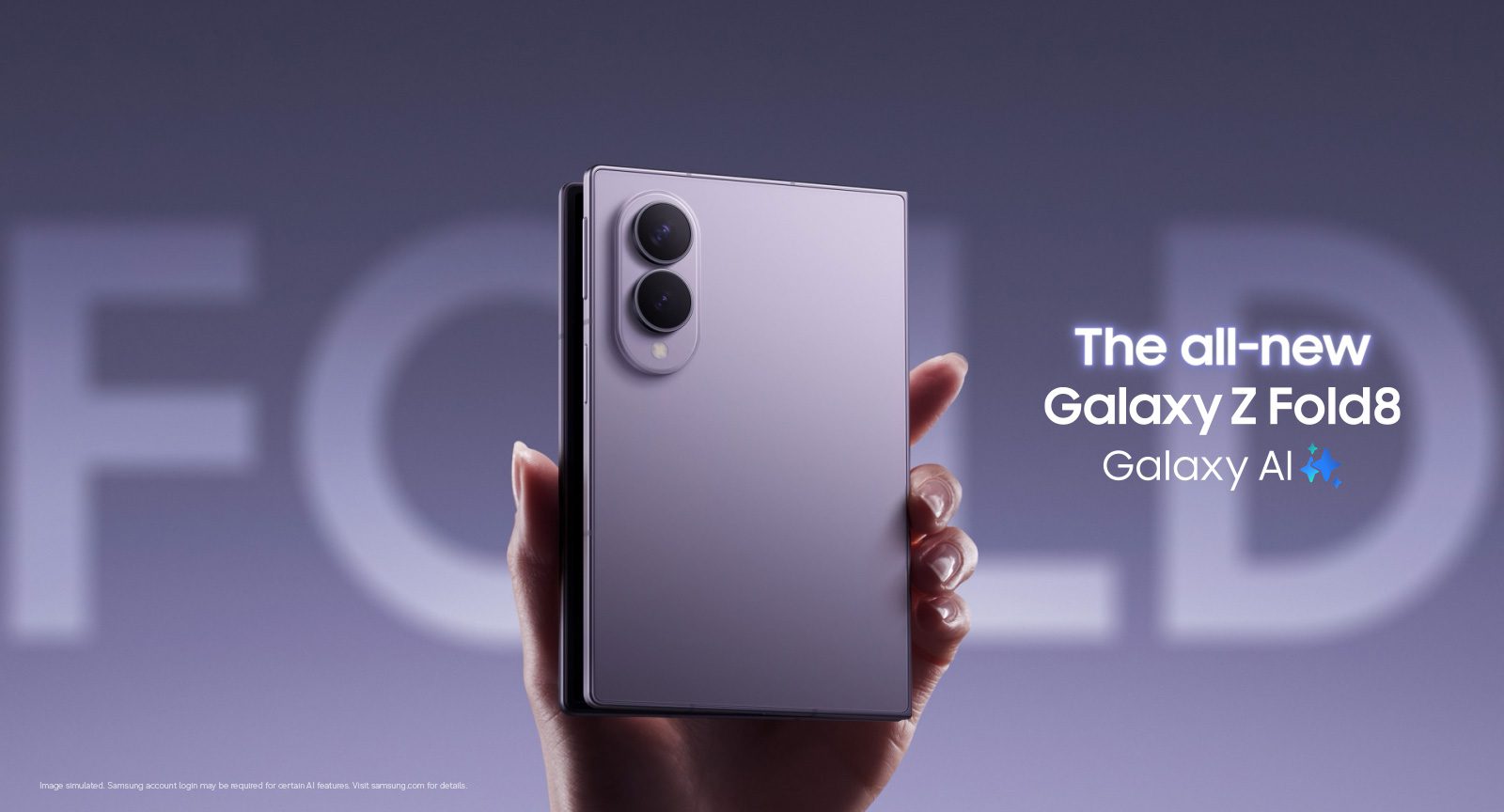
Samsung’s latest foldable smartphones officially landed in South Africa this week with prices climbing as high as R60,999. Everyone I know seems to be talking about the ridiculousness of it, while missing the actual issue. Flagship smartphone prices in South Africa and across the entire industry have quietly entered luxury products territory. It’s not just Samsung’s foldables, but almost every premium device we can think of. Apple. Samsung. Honor. Vivo. Huawei. They’ve all drifted into a price bracket that most South Africans simply cannot reach.
And that’s happening at exactly the same time that real salaries are going backwards.
The R30,000 smartphone is the new normal
A few years ago, spending R30,000 on a phone sounded absurd, but in 2026 it’s almost a given. Apple’s iPhone 17 Pro Max for example starts at around R30,699, The Samsung Galaxy S26 Ultra launched locally at R30,999, while Honor’s Magic 8 Pro sits just below the R28,000 mark. Even Vivo, which let’s be honest, hardly qualified as a premium contender locally has now comfortably crossed R30,000 for their flagship X300 Pro. Huawei seems to be doing ever so slighty better, with their latest Pura 90 series launching between R20,000 and R28,000 albeit without Google Mobile Services.
Then there are the statement pieces, “The Foldables”.
Samsung’s just announced Galaxy Z Fold8 starts at over R40,000, while the fully loaded Fold8 Ultra pushes the price all the way to R60,999. Huawei’s Mate XT is flirting with 70k. That’s a years worth of university tuition, a modest pre-owned car or even a really nice local family holiday. This isn’t the latest technology premium anymore. It’s pure luxury.
Even the “affordable” phones aren’t affordable anymore
Perhaps the strangest shift isn’t happening at the top of the market, but rather in the middle. Take Oppo’s Reno15 Pro which sells for more than R20,000, despite sitting firmly in what we’d traditionally call the premium mid-range category.
Just think about that for a second. Not too long ago, R20,000 bought you the absolute best smartphone money could buy. Today it buys you something manufacturers describe as “Flagship Level”
The entire market has just gone mad.
AI is making your next phone more expensive
Whenever phone prices go up, manufacturers usually blame exchange rates, inflation or rising component costs. But this time they’re actually telling the truth, with the culprit being memory chips. The companies that manufacture DRAM and NAND memory, including Samsung, SK Hynix and Micron, have shifted enormous amounts of production away from smartphones and toward AI data centres. The AI boom has created insatiable demand for high-performance memory, and data centres now consume the majority of memory chips being produced globally.
That leaves fewer components available for smartphones and basic economics just takes over.
Less supply means higher prices. Memory already makes up a significant portion of the cost of building a smartphone, particularly in the mid-range market. As those prices climb, manufacturers have little choice but to pass those costs on to consumers.
Industry analysts don’t expect meaningful relief until at least 2027, with some suggesting shortages could continue well beyond that. So this isn’t a short-term price spike but a new reality we need to adapt to.
South Africans are feeling it even more
For South Africans, the timing couldn’t be worse. The average South African’s take-home salary sits at roughly R21,500 per month, while real earnings have actually declined this year once inflation is taken into account. Financial advisors often recommend spending no more than around five percent of your annual income on a smartphone, which for the average earner, works out to roughly R13,000.
That figure doesn’t buy you an iPhone or a Galaxy S26. Infact it doesn’t even get you close to OPPO’s premium mid-ranger the Reno 15 Pro.
To comfortably justify buying a R31,000 flagship under that guideline, you’d need to earn well over R50,000 a month after tax. While for Samsung’s R60,999 Fold8 Ultra, you’re looking at annual take-home earnings of more than R1.2 million.
Yes, there are people that can afford it, but it’s an incredibly small slice of South Africa. And don’t think for a second, that you can soften the blow by taking a 36 month contract. Check here for a detailed analysis on contract costs.
The flagship has stopped making sense
The uncomfortable truth is this. While flagship smartphones have improved, they haven’t improved that much. Yes, they may be faster, with better cameras and some AI features are starting to become genuinely useful. But none of those improvements justify paying four or five times the price of an excellent mid-range phone or even a certified pre-owned flagship for that matter.
The performance gap has narrowed dramatically, yet the price gap has exploded.
That’s why the real winners today aren’t sitting at the top of manufacturers’ portfolios. They’re sitting right in the middle.
The smartest phones aren’t the most expensive ones
Samsung’s Galaxy A series is probably a better buy for most South Africans over the Galaxy S series. The same goes for Xiaomi’s Redmi Note series and Honor’s X series deserves a serious look as well.
For somewhere between R8,000 and R14,000, you’re getting excellent displays, large batteries, capable cameras, years of software support and enough performance to comfortably handle almost everything people actually do with their phones.
The experience is closer to a flagship than ever before without that absurd price tag. A 14k Honor 600 isn’t half of the phone compared to the flagship Magic 8 Pro. It’s probably closer to 85 or 90 percent of the experience for roughly half the price.
That’s a trade-off most people should happily make.
There’s one catch
Ironically, the memory shortage could hurt affordable phones even more than premium ones. Because memory represents a larger percentage of the production cost on cheaper devices, manufacturers are already beginning to quietly reduce specifications.
That could mean you get less RAM, less storage or higher prices. Sometimes it may even be all three or other compromises as we’ve seen with Samsung’s A27.
Consumers often won’t notice because the model naming convention stays exactly the same.
But the value proposition slowly gets worse. Industry analysts believe this trend will continue over the next couple of years.
The buying advice has changed
If you’re shopping for a phone today, here’s the advice I’d give almost anyone.
Buy in the R8,000 to R14,000 range if you’re and Android user. If you prefer an iPhone, opt for certified pre-owned from reputable dealers such as CellSell, PrO pre-owned and gomaxx.
Buy it outright if you can instead of locking yourself into a three-year contract. Pay attention to the exact RAM and storage configuration rather than just the model name.
Then keep that phone for four years. That’s probably the smartest financial decision you can make right now.
Because while the industry wants us all staring at R60,999 foldables, the reality is far less glamorous.
The biggest story in smartphones today isn’t the latest flagship.It’s that the flagships has quietly stopped being relevant for almost everyone.
