

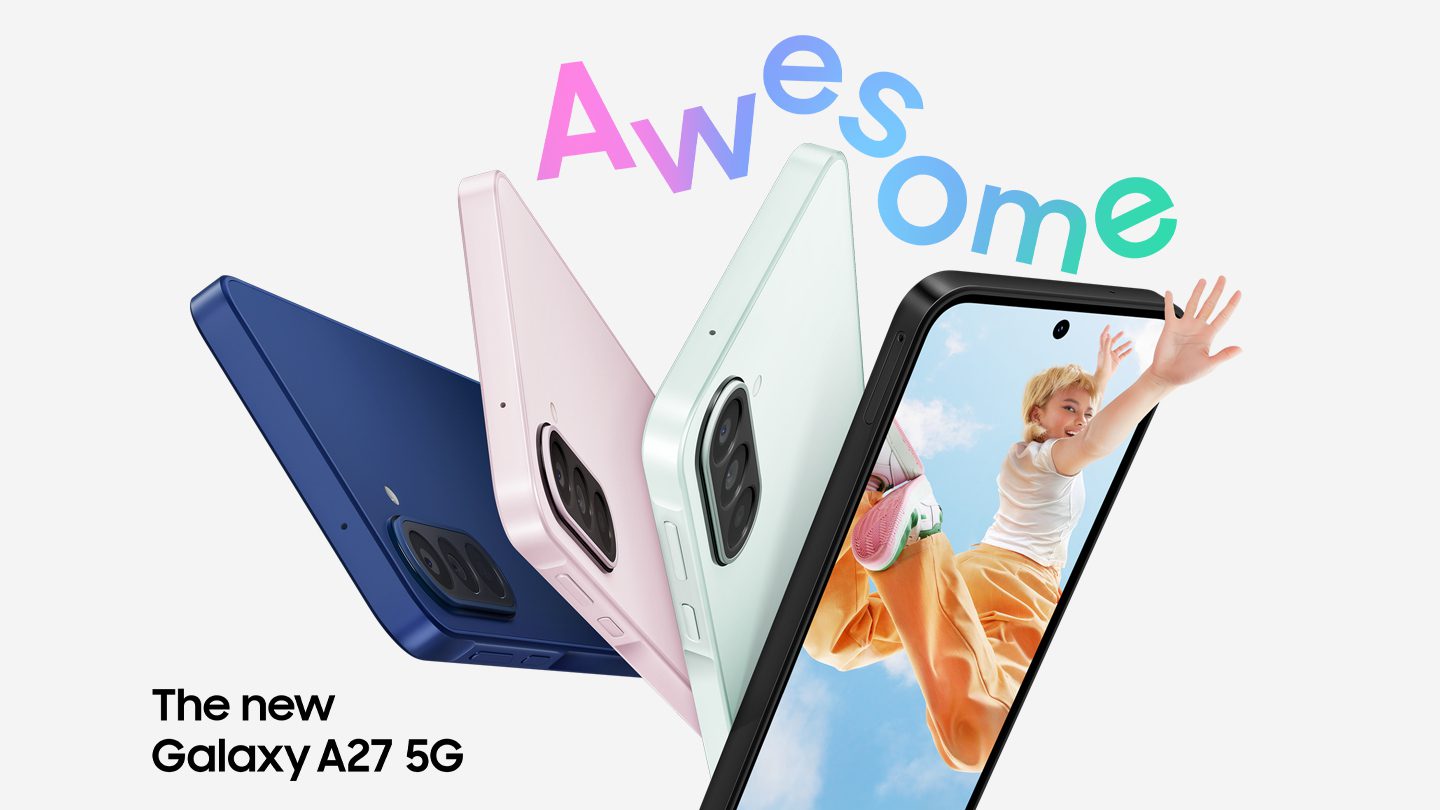
Let me get the awkward part out of the way first. Every year a new budget Samsung lands and the pitch is more or less the same. A little faster, a little sharper, roughly the same money, and you walk away feeling like the device moved forward ever so slightly. That is what we have all come to expect, but the new Galaxy A27 breaks that mould. It arrived here on 1 July at a recommended R6,999, a full R2,000 north of where the A26 started life, and then it has the nerve to hand you back a phone that in a few very real ways does less than the one it replaces.
And I want to be fair about why and we’ll get to that, because the why matters. But in a country where the A26 is already end of life and clearing out at R4,299, the why does not soften the blow. It just gives you something to think about while you swallow it.
First, credit where it is due
The headline change is the chipset, and it is a small but real one. Samsung dropped in the Snapdragon 6 Gen 3, and on a phone at this price the processor is the whole ballgame, because it is the difference between an interface that keeps up with you and one that makes you wait. That upgrade alone will make the A27 feel cleaner day to day and for a few years atleast and I will not take that away from it.
The rest of the good news is familiar. You still get the lovely 6.7 inch Super AMOLED panel running at 120Hz, which remains genuinely nice at this money. Samsung swapped the old waterdrop notch for a proper punch hole, so the front now looks like it belongs in 2026 instead of 2022. It ships on Android 16 with One UI 8.5, and Samsung is holding its promise of six generations of OS upgrades and six years of security patches. That last one is the single best reason anyone buys into this range, because it means the phone stays safe and current for the four or five years most South Africans actually keep a device.
Now we get to the part that Samsung hopes will fly under the radar and where the extra R2,000 starts to sting.
The ultra-wide camera has gone backwards, from an 8MP sensor on the A26 to a 5MP one here. That is the wrong direction for a phone that got more expensive, full stop. The selfie camera drops from 13MP to 12MP, and yes, Samsung will tell you the new sensor handles low light better, and it might, but the number on the spec sheet still went down and you are still paying more.
Then there is the one that will actually catch people out, because it is the kind of thing you only discover at the worst possible moment. The A26 carried an IP67 rating, the sort that survives a proper dunk, and it was a small point of pride as a first for this tier. On the A27 it quietly steps back to IP64 which handles a splash and a bit of rain, but it is not built to survive a drop in the pool or a summer downpour caught out in the open.
And while we are counting, the charging slipped too, from the 45W the A26 could pull, now down to 25W here. None of these on their own is a dealbreaker. But when you put them together, on a more expensive phone, they start to look like a real problem.
The chip shortage is a reason, not an apology
I said the why matters, so let me give Samsung its fair hearing. The pressure on component costs right now is real and it is industry wide. Memory and chip supply have been squeezed for a while, input costs are up across the board, and Samsung is nowhere near the only manufacturer nudging prices up while quietly trimming what sits underneath the glass. Keeping a proper Snapdragon in a budget phone through all of that is a defensible call, and I understand the maths that got them here.
But here is the thing about the maths. The customer standing in the Vodacom store does not buy the maths. They do not care about the memory market or what happens in Samsung boardrooms. They see a phone that costs 40% more than last year’s did at launch, with a weaker ultra-wide, a lower selfie count, slower charging and less protection against water, and they have to decide whether that is worth two thousand rand they probably do not have spare. Those are two completely different conversations, and only one of them happens at the counter.
So who is this actually for?
If you are holding an A26 right now, put your wallet away. There is nothing here worth R6,999 to jump for. A slightly faster chip is nice, but it does not rescue a phone that is otherwise a sideways step at best and a small step back at worst.
And here is the part that borders on absurd. The A26 is still on shelves at around R4,299 as retailers clear the last of it out. That means the outgoing model is landing R2,700 cheaper than its own successor while giving you the better ultra-wide, the better water resistance, the faster charging, the same excellent screen and battery, and the exact same six year software promise. The smartest phone in Samsung’s budget range this month might genuinely be the one Samsung is trying to move on from. Sit with that for a second, because it is a strange thing to be able to write.
Look, the A27 is not a bad phone and I need to be very clear about that, because the screen is good, the software support is class leading, and that new chip will keep it feeling smooth for years. But a phone is never good or bad in a vacuum. It is good or bad against what you give up and what you pay, and by that measure the A27 asks South Africans to pay more for less at the exact moment household budgets can least take the hit. Sometimes the best phone is not the new one. Sometimes it is the one sitting right next to it or the one in your pocket, quietly costing two and a half thousand rand less or nothing at all.
