
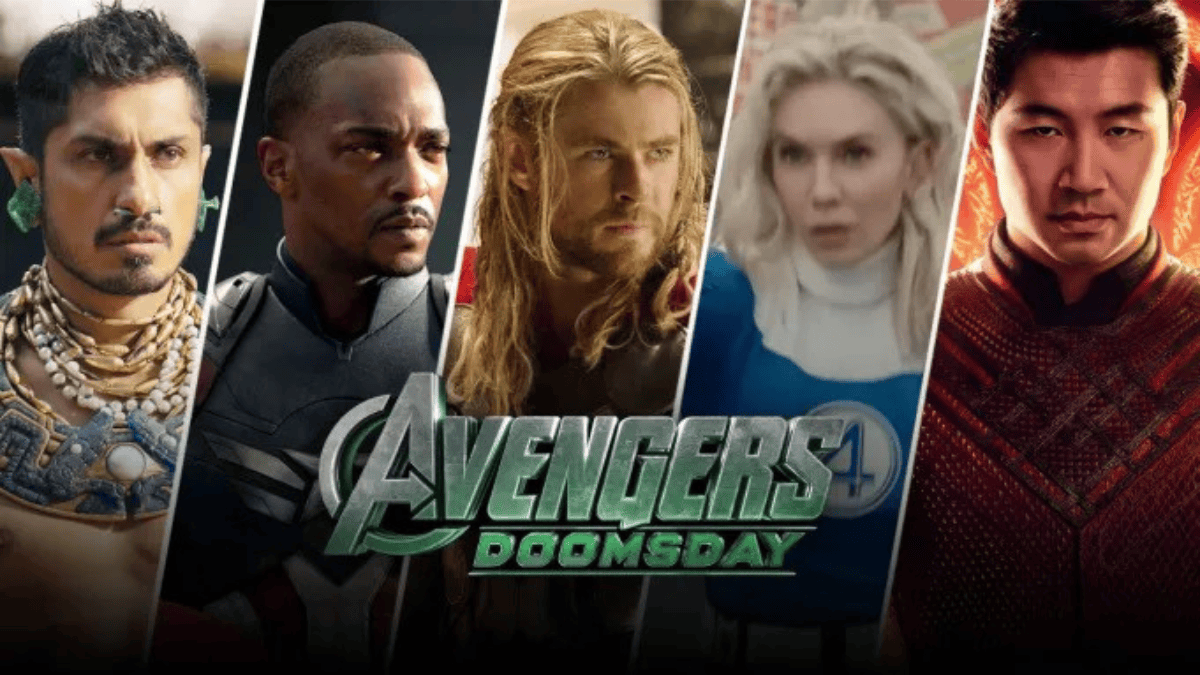
There are certain things in life you probably shouldn’t start before making sure you have everything you need. Building IKEA furniture is one. Baking a cake is another. And somewhere considerably further down that list, I would have assumed, is making one of the biggest superhero movies on the planet. But apparently, Joe and Anthony Russo disagree. For those who don’t know, Avengers: Doomsday is currently in post-production ahead of its December release. And the Russo brothers have revealed something rather interesting in an interview with AP News about the making of the movie. They started filming without a finished script.
Yes. Marvel assembled an enormous cast, brought Robert Downey Jr. back as Doctor Doom, gathered Avengers, X-Men, the Fantastic Four, Wakandans and New Avengers together and then essentially said…We’ll figure out some of the details along the way. Okay, that’s obviously simplifying things considerably. And I really don’t think it was a case of the Russos walking onto set every morning, asking everyone what they felt like doing that day either. But Joe Russo explained that he and his brother have always treated a screenplay as what he called a “living organism.” Their filmmaking style relies heavily on rehearsals and improvisation, allowing actors to influence their characters and scenes as production develops. And according to Russo, that’s where the magic happens.
I guess, depending on how you look at it, that sounds either incredibly creative or completely terrifying. I suppose logic dictates that before hundreds of millions of dollars start flying around, somebody should know exactly what everybody is going to say and do. Particularly when you’re dealing with a movie as complicated as Doomsday. This isn’t two actors sitting in a coffee shop discussing their relationship. The movie brings together an almost ridiculous number of characters from across Marvel’s universe. We’re talking about bringing together the Avengers, the Fantastic Four, and the X-Men. Then we have Robert Downey Jr. playing Victor von Doom after spending more than a decade as Tony Stark. And all of these characters somehow need to occupy the same story. I don’t think it gets trickier than this. Even Anthony Russo admits they’re pushing themselves further than ever when it comes to ensemble storytelling.
So naturally…Why not leave the script slightly unfinished? But we also need to remember that the Russos have certainly earned themselves the benefit of the doubt. After all these are the directors who somehow made Avengers: Infinity War and Endgame work. That movie also had enormous casts, multiple storylines and enough superheroes to make your head spin. Now let’s not forget that Endgame went on to make approximately $2.8 billion worldwide. The brothers also came from television comedy. They directed episodes of Arrested Development and Community, where improvisation, ensemble chemistry and responding to what actors bring to a scene formed an important part of their filmmaking experience.
So perhaps we’re looking at the phrase “unfinished script” the wrong way. There’s a considerable difference between having no idea what movie you’re making and allowing the movie to evolve while you’re making it. Actors sometimes discover things about characters once they’re actually performing them. A line that looked brilliant on paper may sound ridiculous when somebody says it aloud. Two performers may develop unexpected chemistry. A scene might suddenly work better in a completely different way. And sometimes the thing you didn’t plan becomes the thing everybody remembers. But there’s another side to this argument, and interestingly, James Gunn has already made it.
The DC Studios boss has been particularly outspoken about his belief that movies shouldn’t enter production until their screenplays are ready. Last year, Gunn argued that making films without finished scripts is one of the major problems facing the movie industry. He even revealed that DC had abandoned a greenlit project because its screenplay wasn’t good enough. And I can understand that philosophy too from the perspective that improvisation sounds wonderful until the expensive set you built for Scene 72 is no longer required because Scene 47 changed something important.
Marvel also isn’t exactly operating from its old position of invincibility. The MCU has experienced an uneven few years since Endgame, something Marvel Studios president Kevin Feige has partly attributed to oversaturation. That puts considerable pressure on Doomsday to feel like an event rather than simply another entry on an increasingly complicated Marvel timeline. And this movie has already undergone one enormous transformation. It originally existed as Avengers: The Kang Dynasty, with Kang positioned as the major threat. Marvel later reworked the project, the Russos returned and Doctor Doom became central to the story. So perhaps a flexible screenplay was inevitable.
What fascinates me is how completely opposite the Russo and Gunn philosophies appear. I mean, one essentially says: Get the screenplay right before you start, while the other says: The screenplay can become better because you’ve started. And if you think about it, both make perfect sense. A finished screenplay provides structure. But being too attached to it could mean ignoring something better that happens organically on set. Perhaps the real problem isn’t whether a script changes during filming. It’s whether those changes happen because filmmakers discover something better or because nobody knew what they were doing in the first place.
We won’t know which category Avengers: Doomsday belongs to until the movie arrives. But the Russos certainly aren’t treating their approach as something that went wrong. They’re describing it as part of their creative process. And considering they previously managed to combine time travel, quantum physics, a talking raccoon, a giant purple alien and approximately half of Hollywood into something emotionally devastating, I’m willing to let them cook.
Still…
If Avengers: Doomsday opens in December and Doctor Doom suddenly turns to camera halfway through the movie and asks what happens next…
we’ll know somebody should probably have finished the script.
