

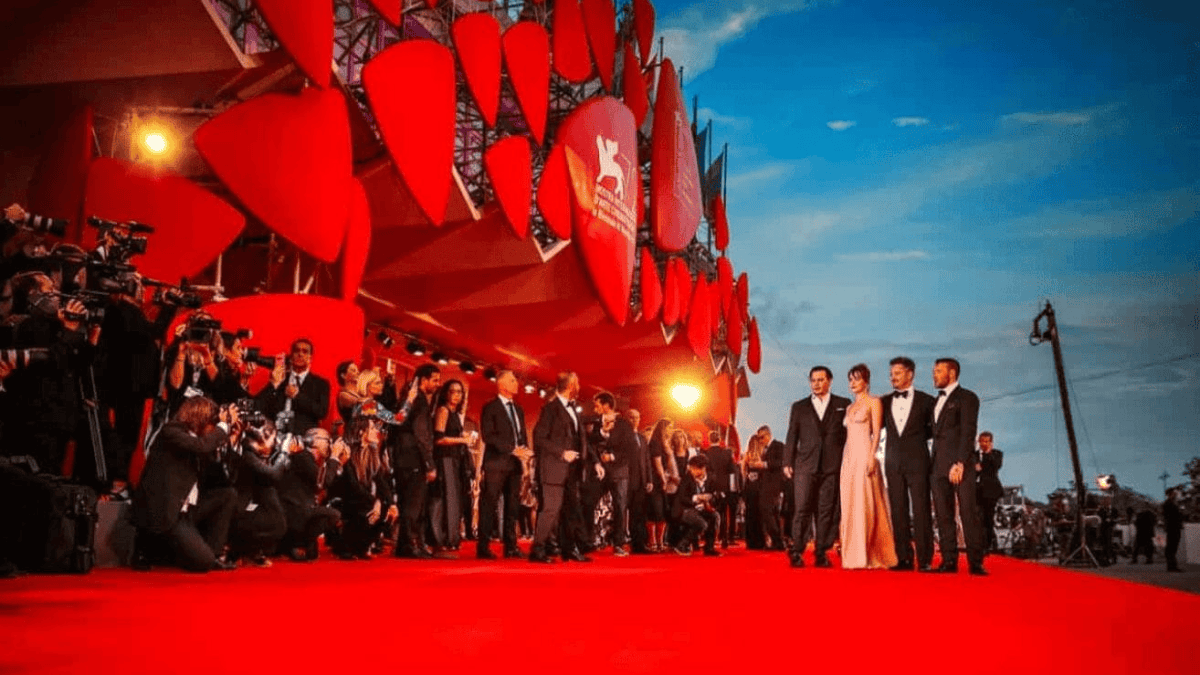
Venice is one of those places where celebrities go to be beautifully photographed while saying very serious things about cinema. And every year we witness red carpets, gowns and standing ovations at the Venice Film Festival. But underneath all the glamour, Venice is also where some of the biggest conversations in film quietly begin. And this year, things are looking particularly intense.
According to the Associated Press, several high-profile films have premiered at the 2026 Venice Film Festival, including Alex Gibney’s documentary Musk, Florian Zeller’s psychological thriller Bunker, starring Penélope Cruz and Javier Bardem, and Casey Affleck’s drama Company. Which is quite a line-up. A nearly four-hour Elon Musk documentary. A Cruz and Bardem thriller about a couple, survivalism and ecological anxiety. And a Casey Affleck drama dealing with grief and connection. So no, Venice is not exactly handing out light weekend viewing at the moment.
The loudest conversation is probably around Musk, because of course it is. Alex Gibney’s documentary takes a long, critical look at Elon Musk’s power, influence and public image. The official Venice listing describes the film as an “incisive look” at Musk, while AP reports that Gibney originally hoped Musk would sit down for an interview, but he declined.
Now I don’t know about you, but a nearly four-hour documentary about Elon Musk without Elon Musk participating feels strangely appropriate to me. And that is where Venice becomes interesting. The festival has become one of the few places where a film can be extremely long. Or politically charged and slightly exhausting to think about. But it will still arrive with the full force of an awards-season conversation behind it. And interestingly enough Musk is not the only film doing work here.
Bunker brings Penélope Cruz and Javier Bardem together in a psychological thriller from Florian Zeller, the filmmaker behind The Father. According to Venice’s official programme, Zeller wrote the film specifically for Cruz and Bardem. The film explores love, fidelity and forgiveness, while placing the couple inside a story shaped by survivalist anxiety and moral uncertainty. Which already sounds like the kind of movie where nobody is simply having a relaxing evening. The film centres on a couple whose marriage is tested when Bardem’s character is asked to design a bunker for a billionaire. And that is where the story becomes very current. It seems like even fictional billionaires are now preparing for the end of the world, while everyone else is
just trying to survive grocery prices and WhatsApp group messages.
And that could be what makes Venice especially interesting this year. You see, the festival is not only premiering films. It is reflecting a particular cultural mood, tech power, political anxiety, ecological fear, celebrity activism, marriages under pressure, billionaires building bunkers, and artists trying to make sense of a world that feels increasingly dramatic. But not always in the glamorous red-carpet way. And somewhere in the middle of all that, Cruz and Bardem are also speaking about politics.
People reports that the real-life couple defended their right to speak about political issues while promoting Bunker in Venice, with Bardem arguing that everyone has the right to express themselves, regardless of profession. The reason that matters is because celebrity interviews are no longer just about the film. We find that stars are increasingly being asked what they think about the world the film is landing in. And more often than not, that can feel exhausting. But with a movie like Bunker, it makes perfect sense. If your film is dealing with fear, survival, morality and the choices people make when the world feels unstable, it would be odd to pretend none of that connects to real life. Right?
That is the thing about Venice. On the surface, it can look like one very elegant parade of famous people standing near water. But the films that launch there often tell us what Hollywood, and the wider film world, is worried about. And in most instances, it comes to us in a rather indirect way. Sometimes it happens through a documentary, a thriller, a marriage drama, and sometimes through a billionaire bunker, because apparently subtlety has packed a bag and left.
This year, Venice seems to be asking a very specific question: What happens when the people with the most power start shaping the future everyone else has to live in? That question is sitting inside the way actors, filmmakers and audiences are talking about politics, technology and survival. And it is probably why these films feel bigger than ordinary festival premieres. Because yes, Venice is still glamorous. But underneath the gowns, flashbulbs and extremely photogenic boats, the festival is also doing something far more useful. It is showing us exactly what cinema is nervous about.
And apparently, cinema is nervous about billionaires, technology, the planet, democracy, marriage and whether anyone has remembered to build a bunker.
So, you know.
A cheerful little trip to Venice.
