

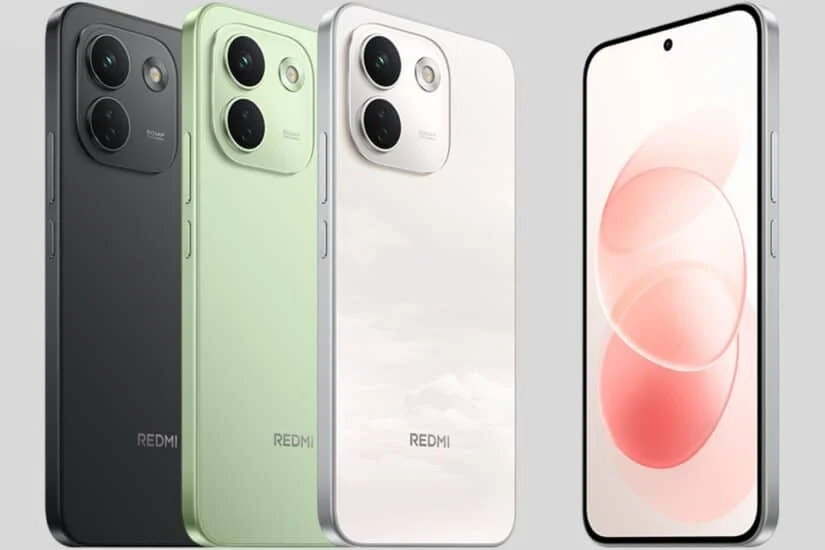
Xiaomi officially launched the Redmi Note 17 series in South Africa at an exclusive event held at the Four Seasons Hotel The Westcliff in Johannesburg last night, introducing three new smartphones priced from R9,999. I attended the launch, where Xiaomi pulled out all the stops to showcase the Redmi Note 17 5G, Redmi Note 17 Pro 5G and Redmi Note 17 Pro Max 5G, alongside its latest Robot Vacuum 6 series and a growing collection of smart home products. With enormous batteries, improved durability and increasingly premium price tags, Xiaomi is clearly making a bigger play for the South African smartphone market.
Last night’s launch demonstrated that Xiaomi knows how to put on a show.
The company pulled out all the stops for the South African unveiling of its new Redmi Note 17 series, hosting an exclusive event at one of Johannesburg’s most prestigious hotels. While it was a polished affair, with Xiaomi clearly determined to make an impression, I got the sense that the company wanted to deliver a message that went well beyond introducing another range of smartphones.
Xiaomi wants South Africans to start taking it seriously as a premium technology brand, even when it comes to products that have traditionally competed on affordability.
The new Redmi Note 17 series consists of three models for the South African market: the Redmi Note 17 Pro Max 5G, Redmi Note 17 Pro 5G and the standard Redmi Note 17 5G. Prices start at R9,999 and climb to R15,999 for the range-topping Pro Max.
Xiaomi also used the occasion to expand its AIoT (Artificial Intelligence of Things) portfolio, introducing its Robot Vacuum 6 range alongside other connected home products.
But while there was plenty of technology on display, the smartphones were undoubtedly the main attraction.
The Redmi Note 17 Pro Max makes its intentions clear
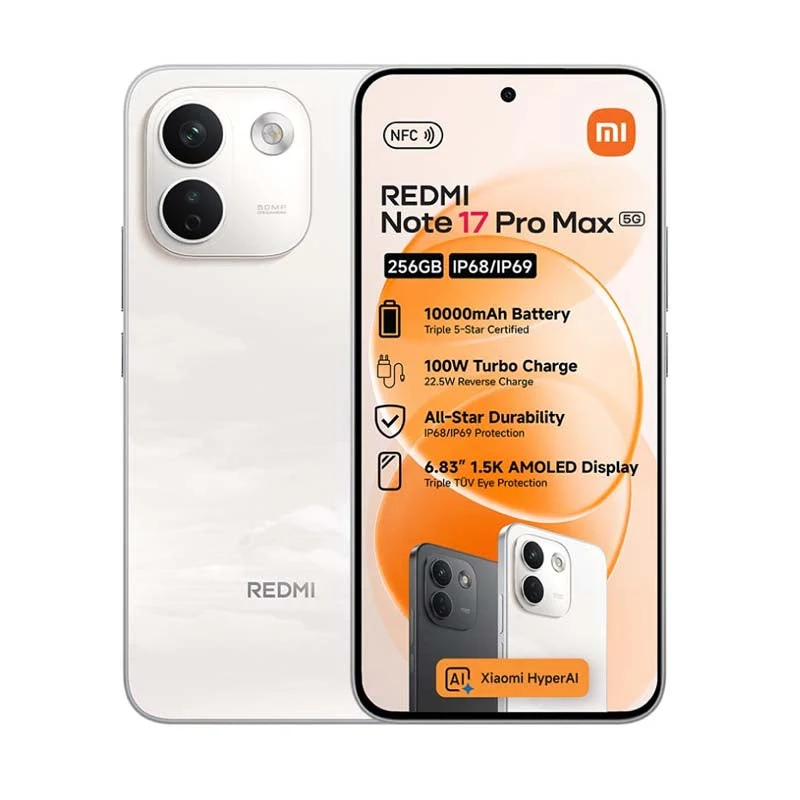
Let’s start with the Redmi Note 17 Pro Max, because it is the most interesting device in this lineup.
Its headline feature is an enormous 10,000mAh silicon-carbon battery which is a bit crazy when you think about it. Ten thousand milliamp-hours, inside a smartphone that measures just over 8.6mm thick.
For context, many premium smartphones still operate with batteries around the 5,000mAh mark, so Xiaomi is effectively offering close to double that capacity without turning the phone into something resembling a portable power bank.
Xiaomi claims the device can deliver up to three days of battery life under its testing conditions, and it supports 100W HyperCharge, meaning you also get the benefit of very fast wired charging.
It even supports 27W reverse wired charging, allowing you to use the phone to charge another compatible device.
Now, battery specifications are one thing, but I’ve reviewed enough smartphones over the years to know that the numbers printed on a product box don’t always translate into the experience you get in your pocket.
What makes this interesting is the practical implication. For someone who spends most of the day moving between meetings, navigating Johannesburg traffic, taking photographs, answering WhatsApp messages and occasionally forgetting where they left their charger, the promise of genuine multi-day battery life is far more compelling than another incremental processor upgrade.
If Xiaomi can deliver anything close to its claims under normal South African usage conditions, it could be one of the biggest reasons to consider the Pro Max.
There’s plenty more to the device than its battery, though.
You get a 6.83-inch 1.5K AMOLED display with a refresh rate of up to 120Hz, Corning Gorilla Glass Victus 2 protection, and a Snapdragon 6 Gen 5 chipset built on a 4nm manufacturing process.
On the camera front, Xiaomi has opted for a 50MP main camera with optical image stabilisation, accompanied by an 8MP ultrawide and a 32MP front-facing camera. The phone also supports 4K video recording at 30fps.
One thing worth pointing out is that the Snapdragon 6 Gen 5 is not a flagship processor, despite the Pro Max branding. That doesn’t automatically make it a poor choice, because most people don’t need flagship processing power for everyday tasks, but at R15,999, performance and camera quality will need to justify the asking price.
It’s a reminder that the Pro Max name is more about its position in Xiaomi’s Redmi lineup rather than a promise of uncompromising flagship hardware.
Built to survive more than the occasional accident
Another area where Xiaomi is placing considerable emphasis is durability.
Both the Pro Max and Pro models feature IP66, IP68, IP69 and IP69K water and dust resistance ratings, while Xiaomi also highlights certified drop resistance of up to three metres under specific laboratory conditions.
The Pro Max uses Gorilla Glass Victus 2 on the display, which should offer additional protection against everyday wear and accidental drops.
Of course, there’s a difference between surviving a controlled laboratory drop and hitting the pavement outside a shopping centre, particularly when the phone lands at an awkward angle. I certainly wouldn’t recommend putting Xiaomi’s claims to the test deliberately.
Nevertheless, stronger durability matters, especially when consumers are holding onto their smartphones for longer.
Xiaomi is also promoting extended ownership benefits for the Note 17 series, including qualifying screen, battery and back-cover replacement services. These are subject to the company’s specific terms and conditions, but the broader idea is encouraging.
A smartphone should be designed to last, not simply to survive until the next annual upgrade.
Redmi Note 17 Pro: The sensible middle ground?
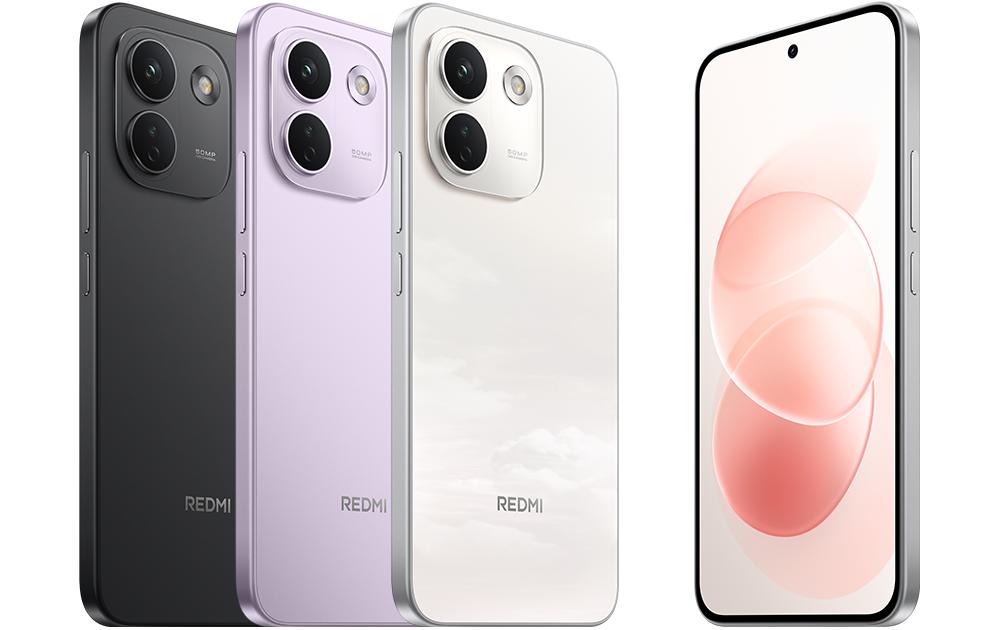
Sitting just below the Pro Max is the Redmi Note 17 Pro 5G, which might actually turn out to be the more sensible choice for many buyers.
At R12,999, it offers several of the same features as its bigger sibling, including a 6.83-inch 1.5K AMOLED display with a 120Hz refresh rate, Gorilla Glass Victus 2 protection and the same headline water and dust resistance ratings.
The differences become more apparent when we look at the battery, processor and cameras.
The Pro comes with an 8,340mAh silicon-carbon battery and 67W fast charging, alongside Qualcomm’s Snapdragon 6s Gen 4 processor. There’s also a 50MP main camera with optical image stabilisation, an 8MP ultrawide camera and a 16MP selfie camera.
While these specifications represent a step down from the Pro Max, they are hardly insignificant.
An 8,340mAh battery is still enormous by conventional smartphone standards, and for someone whose daily routine consists primarily of messaging, social media, photography, streaming and the occasional game, the Pro could deliver a very similar everyday experience.
And that’s really the question buyers should be asking.
Is the Pro Max worth another R3,000 for its bigger battery, faster charging, improved processing platform and additional camera capabilities?
For power users and people who rely heavily on their smartphones throughout the day, perhaps. But for everyone else, the Pro is likely to deserve serious consideration.
We’ll need to spend proper time with both devices before reaching a definitive conclusion.
The standard Redmi Note 17 has a tougher job
Then there’s the standard Redmi Note 17 5G, which enters the South African market at R9,999.
On paper, it still offers plenty to get excited about.
The device features a large 6.99-inch FHD+ AMOLED display with a refresh rate of up to 120Hz, a 7,700mAh battery with 45W fast charging, and Qualcomm’s Snapdragon 4 Gen 4 chipset.
You also get a 50MP rear camera, a 16MP front-facing camera, Gorilla Glass 7i protection and an IP65 water and dust resistance rating.
For an everyday smartphone, that’s a reasonable collection of features, especially if battery endurance and a large display are high on your list of priorities.
But there’s an elephant in the room, and it has a R9,999 price tag.
The South African smartphone market is fiercely competitive at this level. Consumers shopping around R10,000 have plenty of alternatives, including devices from Samsung, Honor, Oppo and Huawei.
And while a large battery is attractive, buyers also care about camera consistency, software experience, after-sales support and whether a device will still perform reliably two or three years down the line.
The standard Note 17 will therefore need to demonstrate that it offers more than just impressive battery capacity.
At this price, value is no longer something you can claim simply because your device belongs to the Redmi family. You have to earn it.
Xiaomi Redmi Note 17 South African pricing
The three phones were announced at the following starting prices for South Africa
| Model | Starting price |
| Redmi Note 17 5G | R9,999 |
| Redmi Note 17 Pro 5G | R12,999 |
| Redmi Note 17 Pro Max 5G | R15,999 |
Xiaomi wants to clean your house, too
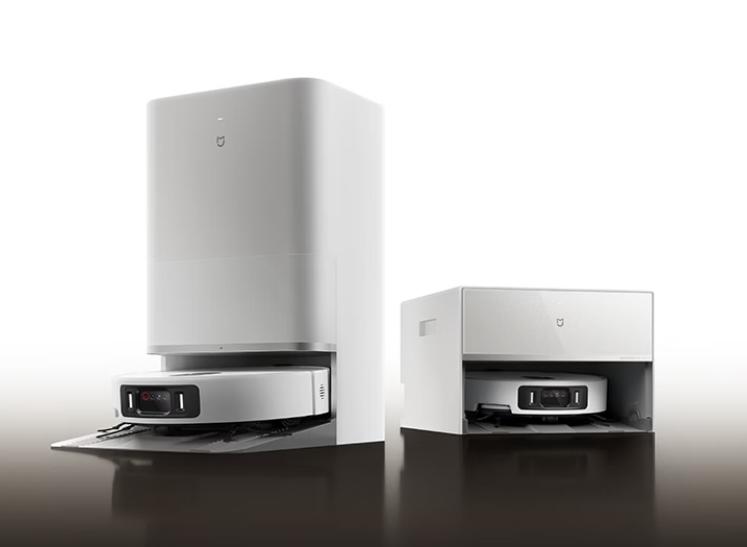
Smartphones might have dominated the evening, but Xiaomi also had more to talk about.
The company introduced its Robot Vacuum 6 range as part of its broader AIoT offering, reinforcing its ambitions to become more than a smartphone manufacturer in South Africa.
The range consists of the Robot Vacuum 6, Robot Vacuum 6 Pro and Robot Vacuum 6 Max, with suction power reaching 35,000Pa on the top model.
The Robot Vacuum 6 Pro, in particular, offers 30,000Pa suction, an AI triple-camera system designed to recognise and avoid household obstacles, and a roller-mopping system that continuously uses clean water.
Its docking station can also wash the mop with water heated to 85°C, while its automated dust collection system is designed to reduce how often users need to empty the machine manually.
In practical terms, Xiaomi is trying to take one of the least enjoyable household chores and automate as much of it as possible.
And that’s where this category becomes interesting.
A robot vacuum that simply moves around your house picking up dust is no longer particularly remarkable. The real value comes from how independently it can operate, how well it handles unexpected obstacles and, crucially, how little attention it demands from the person who owns it.
Anyone who has used an early-generation robot vacuum will know that there’s something deeply ironic about buying a machine to make cleaning easier, only to spend half your time rescuing it from cables, rugs and furniture.
Xiaomi’s newer models promise to address some of those frustrations through smarter navigation, obstacle recognition and improved self-maintenance.
Of course, how well these systems work in a real South African home, with different flooring surfaces, carpets, furniture arrangements and the occasional load-shedding interruption, is something I’d be far more interested in testing than simply accepting the manufacturer’s claims.
While the event highlighted pricing starting at R12,999 for the newly announced vacuum offering, current listings on Mi Store Africa show the Robot Vacuum 6 at R15,999, the 6 Pro at R21,999 and the 6 Max at R28,999. The difference between the launch figure and listed retail prices will need clarification, particularly regarding introductory offers and configurations.
Xiaomi also showcased other AIoT products, adding to its existing portfolio of connected wearables, audio devices and home technology.
The strategy is becoming increasingly obvious. Xiaomi doesn’t just want to sell you a smartphone. It wants to sell you the technology that surrounds it.
The bigger story is Xiaomi’s growing ambition in South Africa
The scale of last night’s event and the confidence with which Xiaomi is approaching the South African market is what actually stuck with me more than the products.
The choice of the Four Seasons Westcliff as the venue was fitting because Xiaomi is clearly looking to elevate how consumers perceive the brand.
For years, Xiaomi built much of its international reputation by offering smartphones with strong specifications at prices that frequently undercut the established competition.
That approach helped it attract buyers who wanted good technology without paying what had become increasingly ridiculous flagship prices.
But the smartphone industry has changed.
Mid-range phones have become considerably better, competition is intense, and the traditional dividing line between affordable devices and premium products has become increasingly blurred.
Almost every manufacturer now offers attractive AMOLED displays, capable cameras, fast charging and some form of AI-powered software experience.
Which means manufacturers need to work harder to stand out.
Xiaomi’s answer, at least with the Redmi Note 17 series, appears to be durability and battery endurance.
And I think that’s a sensible direction.
We’ve reached a point where the average smartphone is already powerful enough for most people’s daily requirements. What users increasingly need is a device that remains dependable, doesn’t demand constant charging and is built to survive the inevitable accidents that come with everyday use.
But Xiaomi also needs to be careful about pricing.
At R15,999, the Redmi Note 17 Pro Max isn’t competing in the same territory as the affordable Redmi devices many consumers might remember. It’s now facing devices from established manufacturers with considerable brand recognition, strong retail relationships and increasingly competitive hardware.
That changes the conversation.
Consumers aren’t simply asking whether a Redmi smartphone is good for the money anymore. They’re asking whether it’s the best way to spend their money.
There’s a difference.
First impressions: Plenty of promise, but the real test comes next
I walked away from Xiaomi’s launch feeling that the company has at the very least started taking its South African business seriously, and that the Redmi Note 17 series represents an interesting shift in what it believes consumers value.
The 10,000mAh battery in the Pro Max is genuinely noteworthy, the durability improvements are welcome, and the overall hardware package appears competitive.
I also like the emphasis on longer device ownership, particularly at a time when upgrading to a new smartphone every year feels increasingly unnecessary.
However, there’s a lot that specifications and launch presentations simply cannot tell us.
We still need to see how these devices perform after extended use, whether their cameras deliver consistent results in different lighting conditions, how well HyperOS manages background applications, and whether those enormous batteries translate into the kind of real-world endurance Xiaomi is promising.
There’s also the question of long-term software performance, something that should matter to anyone spending between R10,000 and R16,000 on a smartphone.
As for Xiaomi’s expanding smart home portfolio, I’m encouraged by the wider range of products entering South Africa, although pricing and practical value will ultimately determine how enthusiastically consumers embrace them.
One thing is clear, though.
Xiaomi is no longer content with being seen as the affordable alternative to the bigger names in technology. It’s positioning itself as a serious competitor across smartphones, connected devices and home appliances.
Last night’s event made that ambition abundantly clear.
Now for what really matters.
Can Xiaomi deliver on all those promises once the impressive launch presentation is over and the products find their way into our homes and pockets?
That’s where the real review will begin.
