

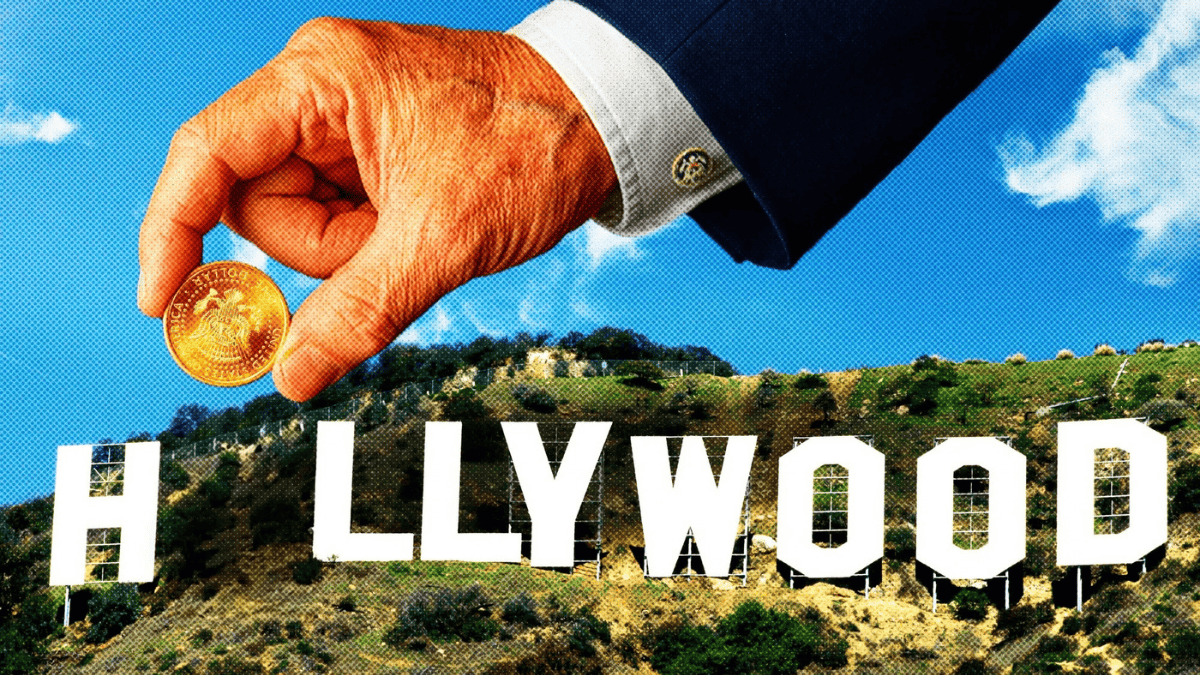
Hollywood and Donald Trump agreeing ………. wow, I never thought I’d see the day. And yet, here we are. After years of very public tension between Trump and large parts of the entertainment industry, Hollywood now seems surprisingly open to one of his latest ideas. According to Vanity Fair, several industry leaders, unions and studio figures are backing a proposed federal film and television tax credit. And apparently Trump has thrown his support behind this.
Which is interesting to say the least, because Hollywood has never exactly been shy about its feelings towards him.
But stranger things have happened and runaway production has a way of making everyone speak in a slightly calmer voice. The idea behind the tax credit is relatively simple. More film and television productions have been moving out of the United States. Because countries like the UK, Canada and Australia have offered attractive incentives to studios. The Los Angeles Times reported that Trump recently urged Congress to approve federal tax incentives to help bring production back to America.The same report noted that productions shot 45% of all US films and scripted television shows internationally last year. This compared with around 33% in 2022.
Now I wouldn’t say that Hollywood is being dramatic. Although, to be fair, Hollywood is very good at that. But if you look closely this is much more than that. This is about livelihoods, crews, studios and local businesses. And the reality of it all is that making movies is not exactly cheap. When we think about movies, we often only focus on the actors, directors and red carpets. But behind every film and TV show are huge amounts of people. People who work in the background and usually only get thanked when someone wins an award and remembers to unfold the speech properly. We’re talking about costume houses, caterers, drivers, set builders, lighting crews, makeup artists, editors, visual effects workers and the list goes on. These are the people that get affected when productions leave.
And that may explain why the politics around this have suddenly become a little less predictable. Vanity Fair reports that key industry figures, including SAG-AFTRA president Sean Astin and Motion Picture Association CEO Charles Rivkin, have praised Trump’s involvement. The Los Angeles Times also reported that productions could stack a proposed federal credit of around 15% to 20% on production labour with state incentives. Although industry experts have warned that higher costs and red tape in the US would still remain a problem.
So in essence this is Hollywood asking for a very expensive rescue ladder. But here’s where things become awkward, because not everyone loves film tax incentives. Critics argue that these kinds of subsidies do not always deliver the economic return that politicians promise. The Washington Post editorial board recently criticised the idea. They argued that a federal film tax credit would not necessarily address the deeper reasons productions have been leaving California.
Everyone seems to agree that there is a problem. But the question is: will this will actually fix it? It is no secret that Hollywood wants to keep more production in America. And this is great because workers want jobs, studios want to lower costs, politicians want to say they saved an industry, and Trump wants to position himself as the person bringing movie production back home. But somewhere in the middle of all that, there are actual crew members trying to work out whether they will still have a career come 2027. This is the reason why the story feels bigger than a tax proposal. It is really about the vast changes in Hollywood.
For years, Los Angeles was treated as the centre of the film and television universe. It was the place to go if you wanted to make movies and make your dreams come true. But now major productions can shoot almost anywhere if the financial numbers make sense. A superhero movie can use London as New York. A television series can build its world in Canada. A streaming film can follow the incentives before anyone has even thought about the premiere carpet. And before long, “Hollywood” becomes less of a place and more of a logo slapped onto something filmed very far away from Hollywood.
Studios are fine with this arrangement but for the people who built their lives around the work being nearby, it’s a problem. So it is easy to understand
why the industry is paying attention. What makes it strange is the Trump of it all. Because this is the same entertainment industry that has mocked him at award shows, criticised him in speeches and built a fair amount of its public identity around opposing him. But the moment he backs a policy that could bring money and jobs into the business, we see tones changing. Not completely, of course.
Nobody is pretending Hollywood and Trump are suddenly best friends sharing popcorn and notes on cinematography. But the reaction does suggest something very obvious and very human: when an industry feels threatened, survival starts sounding louder than ideology. And maybe that is the real story. Not that Hollywood has suddenly changed its politics or that Trump has suddenly become the entertainment industry’s favourite person. But that the business side of Hollywood is under enough pressure that strange alliances begin to look practical. Yeah, that is usually how these things work.
It’s funny that when times are comfortable, everyone has principles at full volume. But when jobs start disappearing, production dries up and people begin talking about losing the industry’s future to other countries, the conversation becomes a little more flexible. But of course this does not mean that the tax credit is definitely the answer. The truth of it is that it may help or it may become another expensive policy that sounds better in a press conference than in practice. And let’s not forget that it could also run into political resistance from lawmakers who do not particularly feel like subsidising Hollywood, especially when the industry is already viewed by many conservatives as hostile territory.
But the fact that this conversation is happening at all says that Hollywood is worried. Not in the dramatic, awards-season, “cinema is in crisis” way that gets said every few months. But more in the practical, employment, production, where-is-the-work-going kind of way. And that kind of worry tends to make people far more willing to sit at the same table with someone they would normally avoid. You know the saying: Better the devil you know than the devil you don’t.
So yes, Hollywood and Trump agreeing on a federal film tax credit does feel like a plot twist. But in a business where superheroes are filmed in Britain, American cities are recreated in Canada, and everyone is chasing the best incentive package like it is the final scene of an action movie, maybe it was only a matter of time.
Because when the cameras stop rolling close to home, everyone suddenly remembers that Hollywood is not only an idea.
It is also a workplace.
And workplaces need work.
