

Imagine an entire village deciding that you are a witch. Nobody wants to see evidence and there is absolutely no interest in hearing your side of the story. They have already reached a conclusion, and now several people would like to hunt you through the countryside. What a charming place to spend the evening.
Hunter’s Moon has arrived on PlayStation 5, turning the history of England’s witch hunts into a first-person folk-horror game. Players take control of Lilith Thorne, a woman accused of witchcraft who must survive one very long night in a 17th-century village. And no, she cannot simply explain that everyone has made a terrible mistake.
Lilith must hide from the Witchfinder General, the village magistrate and a local huntsman. She will move through the village, nearby forests and surrounding moors while searching for safety. Players must use stealth to avoid capture, which means anybody who normally solves gaming problems by charging directly towards them may need to calm down.
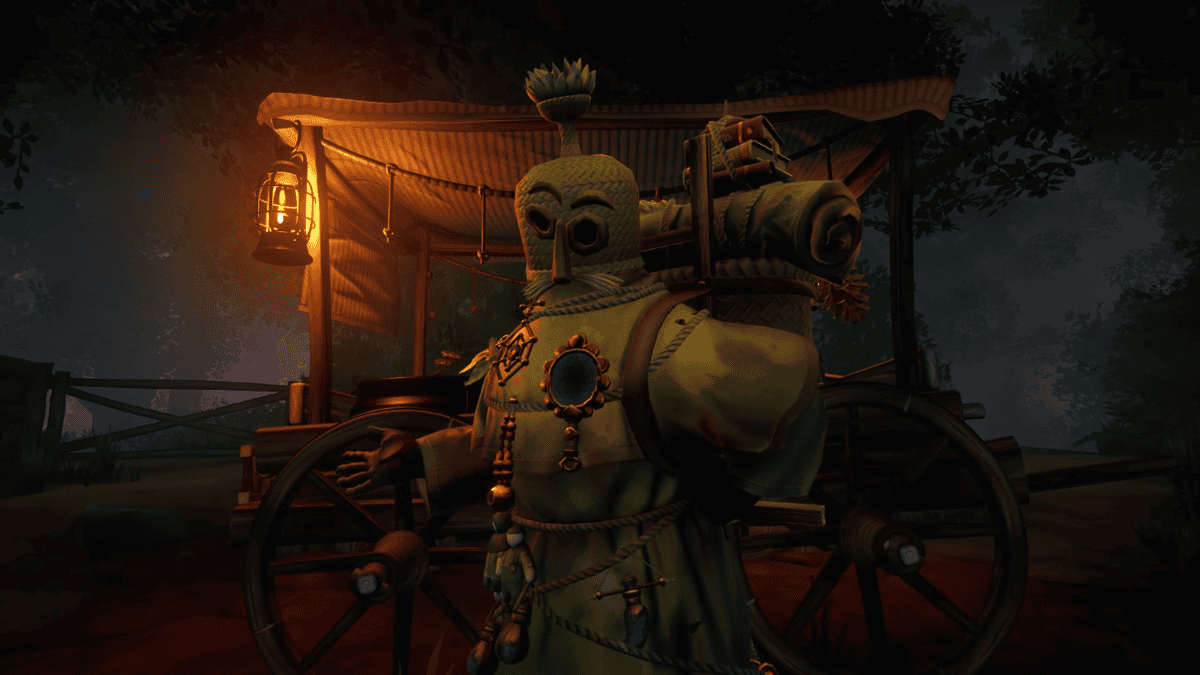
Developer Twin Swans released the game on 26 October, the night of the full Hunter’s Moon. That is either wonderfully organised marketing or the beginning of something we should all be slightly worried about. According to the studio’s official announcement, the entire story unfolds during a single night. Players will encounter mummers dressed in folk costumes and villagers worn down by war and misfortune. And because nothing improves a stressful escape quite like strangely dressed people appearing after dark, Lilith will have to decide who she can trust.
But Hunter’s Moon does not appear interested in filling the village with traditional monsters. The people are the monsters, or at least they may become them once fear and suspicion take over. And that is what makes the premise so disturbing. Most horror games give us something obvious to fear. A creature chases you, a ghost appears in the corridor or a person with an unreasonable collection of sharp objects decides that you look interesting. You understand the danger even if you do not know how to stop it.
Lilith faces something much messier.
The villagers believe she has committed a crime that cannot easily be proven or disproved. If a person becomes sick, livestock die or crops fail, somebody must carry the blame. And once the village chooses its witch, every attempt to defend herself may appear to confirm their suspicions.
Remain quiet and you look secretive. Argue with them and you look dangerous. Run away and, well, only a witch would run. What an absolutely
fantastic system they created there.
The game draws inspiration from the real history of English witch hunts. That historical grounding gives the horror greater weight because accusations like Lilith’s destroyed actual lives. People did not need magical powers to become targets. Rumours, old disagreements and behaviour that made others uncomfortable could place them in danger. Hunter’s Moon appears to understand that fear does not always need evidence. Sometimes, it only needs enough people repeating the same story.
Players can eavesdrop at windows to learn more about the village and find information that may help Lilith survive. Twin Swans describes the system as being inspired by immersive theatre. More than 100 fully voiced characters help tell the story, which means those windows could reveal useful secrets, personal grudges or the identity of someone who urgently needs to mind their own business. I find this mechanic particularly interesting because it turns listening into a survival tool. Lilith is not an armed hero entering the village to defeat everyone who wronged her. She has to understand the people hunting her. Their conversations may reveal safe routes, weaknesses or reasons behind the accusation.
The village therefore becomes more than a creepy collection of houses. It becomes a network of people watching, whispering and deciding what they believe. And that feels strangely familiar. We may no longer conduct witch trials in village squares, but public accusations can still spread before anybody checks whether they are true. Social media allows thousands of people to form an opinion, select a villain and demand punishment within minutes. Once the story becomes popular enough, correcting it can feel almost impossible.
Naturally, being criticised online is not the same as facing a 17th-century witch hunter. But the behaviour beneath both situations can look uncomfortably similar. Fear travels quickly. Anger makes people feel certain, and crowds do not always pause to ask whether certainty has earned its place. Hunter’s Moon asks whether Lilith can survive until morning. But the more unsettling question may be what happens to ordinary people when fear gives them permission to become cruel.
Watch Trailer here:
The village believes it is hunting a monster. Lilith simply needs to survive long enough to prove that she is not the one they should fear.
