

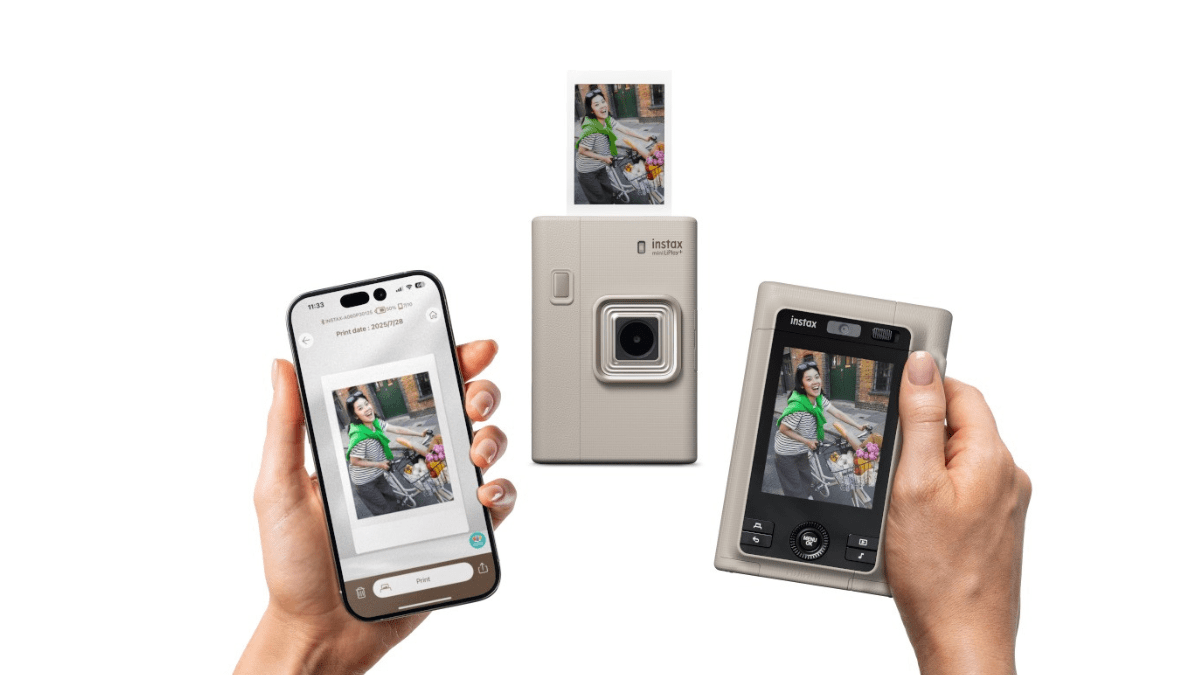
We carry phones that can shoot 8K video and rebuild your face with AI, and yet every few months a new little box arrives promising to print a slightly grainy square you can stick on your fridge. Fujifilm has just dropped the latest one locally, the Instax Mini LiPlay+, and the headline feature is that it has finally grown a second camera.
For the uninitiated, the LiPlay line has always been the brand’s hybrid play. It is not a pure analogue camera in the spirit of the originals, and it is not just a pocket printer either. It is both, a digital instant camera that lets you review a shot on its little screen before deciding whether it deserves film, and a Bluetooth printer for the photos already sitting on your phone. This is the second LiPlay since the line started in 2019, and Fujifilm has used the time to add the things people kept asking for.
Two cameras, one obvious reason
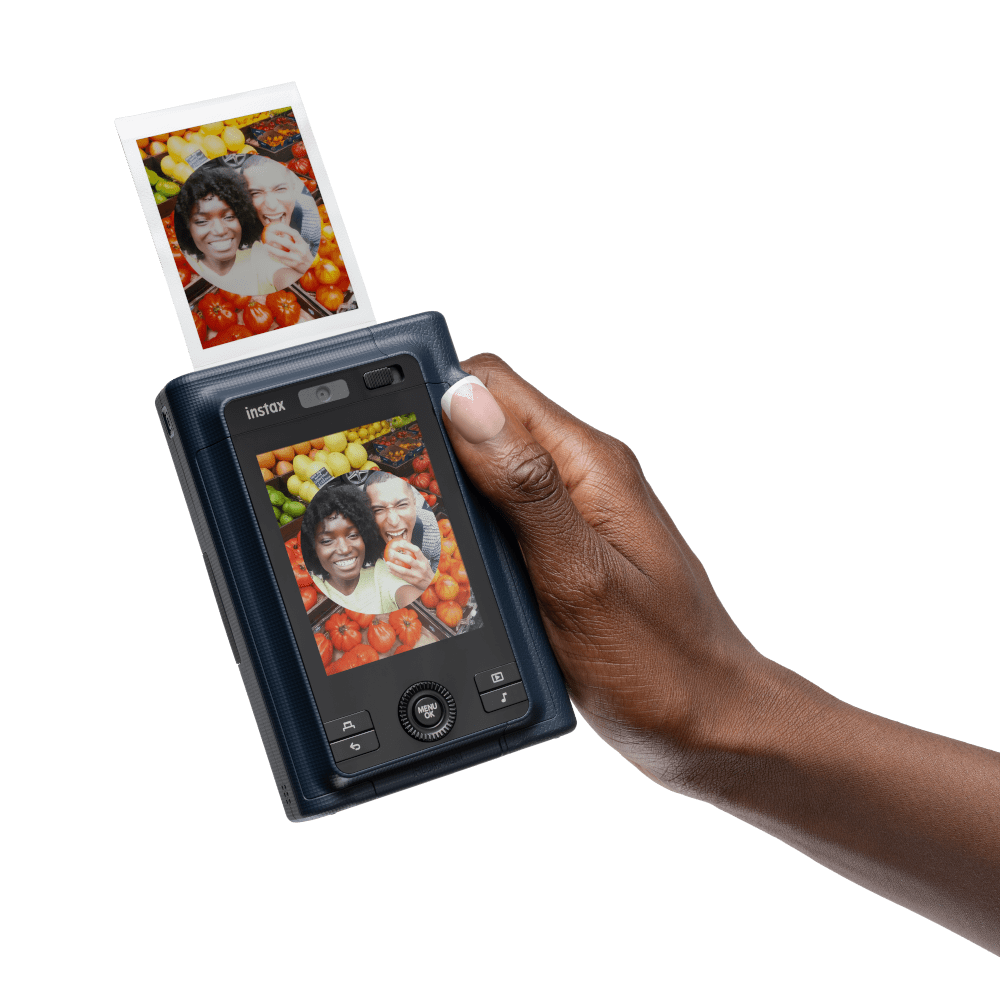
The big addition is dual cameras, which makes the LiPlay+ the first Instax to ship with the setup. There is a main camera on the front sitting inside a lens ring, and a wide-angle selfie camera on the back, with a 3-inch screen to help you actually frame the thing properly instead of guessing and hoping. The wide angle is the tell here. This is a camera built for group selfies and the kind of arm’s-length shots where someone always gets cropped out.
The two cameras unlock a Layered Photo mode, where a front shot and a back shot get combined into a single print. It is a neat trick, the sort of feature that sounds gimmicky until you are at a braai trying to get yourself and the whole table into one frame. There are also filters to play with, Vivid, Poster and Fisheye among them, plus a choice when you print between a Natural mode for the classic muted Instax look and a Rich mode if you want your colours louder. Automatic exposure and flash control are along for the ride, and there is a 2- and 10-second timer for when nobody wants to be the one holding the camera.
The sound thing is genuinely interesting
Here is where the LiPlay+ stops being a slightly better version of the last one and starts doing something I have not really seen elsewhere. Through the free companion app, you can record a sound clip while you take the photo, or add a voice note afterwards. The printed picture then carries a QR code, and scanning it on a phone plays back whatever you recorded.
It sounds small written down, but think about what that actually does. A printed photo is a frozen moment, and now it can carry the voice that went with it, someone laughing, a kid saying something ridiculous, the noise of the room. There is also an Instax Sound Album feature that lets you build a slideshow-style video of up to 30 seconds from your sound-embedded images, with background music layered in, which again gets baked into a QR code and printed alongside a cover image.
Whether people will use this beyond the first week of novelty is the real question, and I genuinely do not know the answer. But it is a more thoughtful idea than just bumping a megapixel count, and credit where it is due for that.
The app does the usual app things
The free app handles the rest of the expected hybrid-camera business. You can trigger the camera remotely over Bluetooth, print photos already living on your phone, and dress images up with stickers, overlay text, frames and filters before they hit the film. None of this is revolutionary, but it is the connective tissue that makes a device like this worth carrying alongside your phone rather than instead of it.
Pricing, and the honest bit
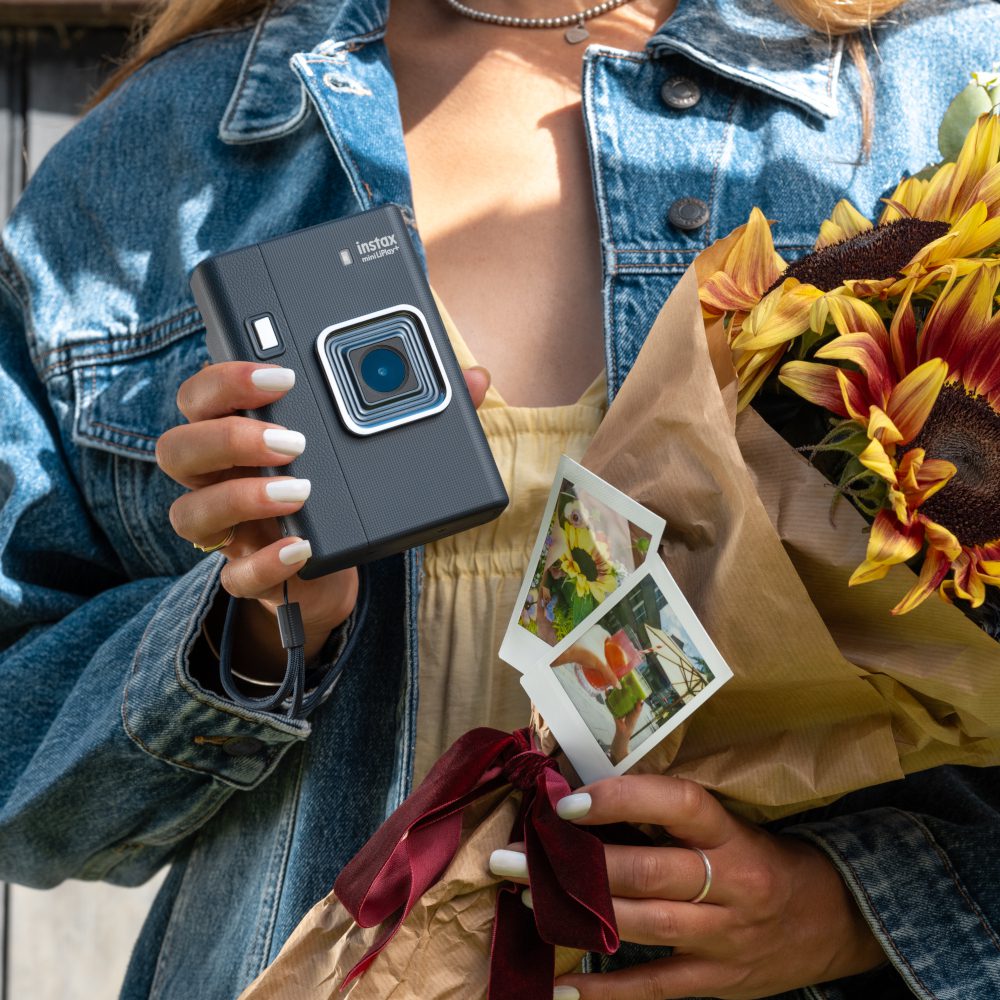
The LiPlay+ comes in Sand Beige or Midnight Blue at a suggested R3 999 including VAT. And that is where I have to be straight with you. Four thousand rand is real money for what is, at its heart, a fun camera, and that is before you factor in the ongoing cost of Instax Mini film, which is the part nobody likes talking about. Instant photography has always run on the printer-and-ink economics model, and the LiPlay+ is no exception.
So who is this for. Not the person chasing image quality, because your phone wins that fight every time. This is for the people who like the ritual of a physical print, who miss the idea that a photo can be an object you hand to someone rather than a file that disappears into a camera roll of 40 000 others. The sound feature genuinely adds something to that pitch, and the wide-angle selfie camera fixes the most common frustration with cameras of this type.
It is a charming, slightly indulgent gadget, and in a year where most tech announcements are AI this and AI that, there is something refreshing about a device whose entire purpose is to print a little square that makes you smile. Whether it is worth four grand of your money is a question only your relationship with nostalgia can answer. As for me, I can keep pretending to weigh this up rationally, but I can’t help picturing that first talking print stuck to my fridge.
