

review
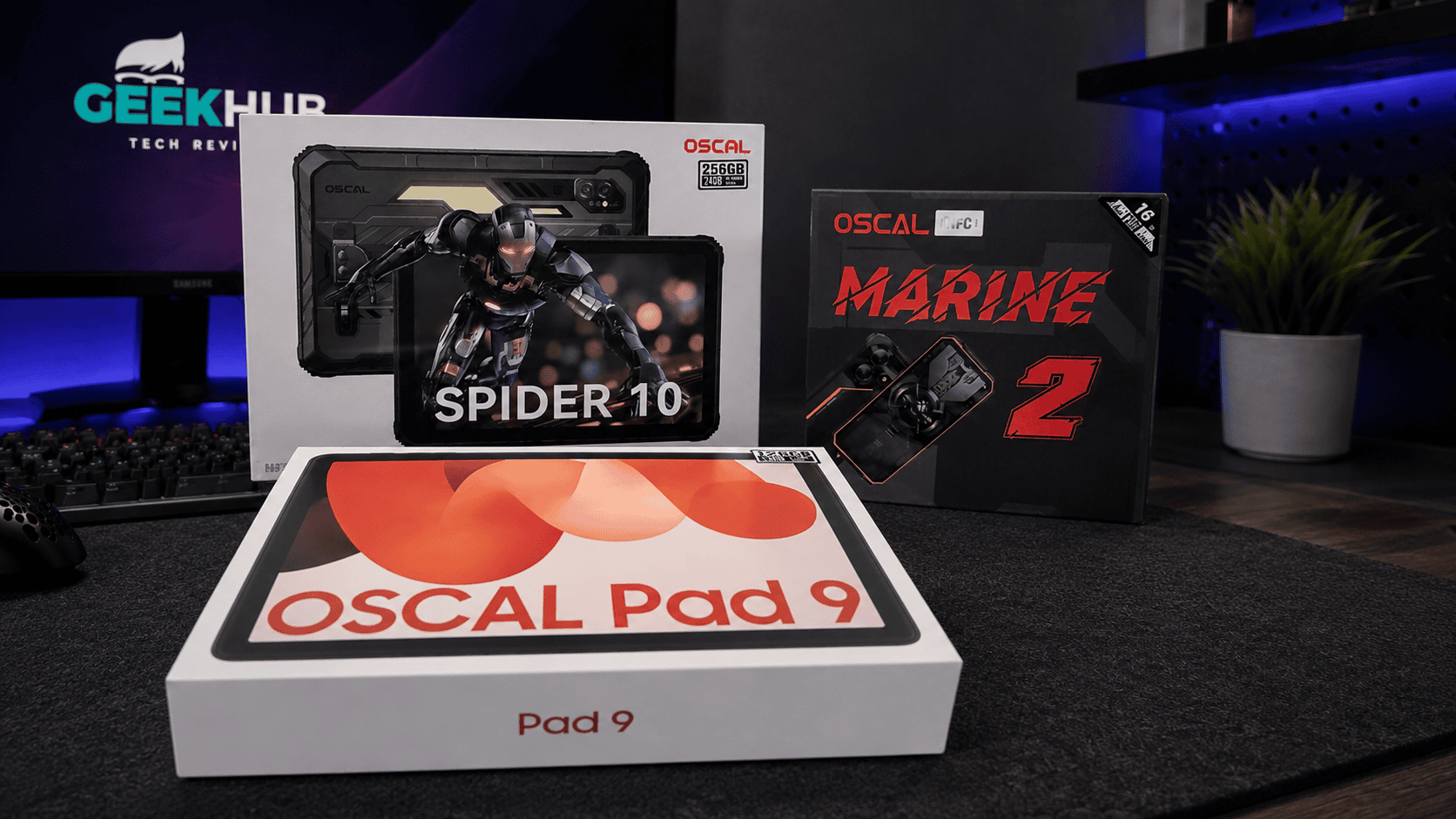
OSCAL hands-on
Marine 2 · Spider 10 · Pad 9 LTE
Rugged range
Marine 2
11,000mAh rugged phone · Unisoc T615
Spider 10
20,000mAh rugged tablet · Helio G81
Standard tablet
Pad 9 LTE
Everyday LTE tablet · Unisoc T310
▲ Pros
- ✓Rugged pair has genuine construction-site build quality
- ✓Full IP68, IP69K and MIL-STD-810H certification
- ✓Enormous batteries that last for days off-grid
- ✓Spider 10’s built-in 1,100-lumen camping light
- ✓Ridiculously good pricing across the whole range
▼ Cons
- ✗Entry-level chips mean noticeable lag, even browsing
- ✗Rugged pair is hard to live with as a main phone
- ✗Rugged durability claims couldn’t be tested first-hand
- ✗Pad 9 LTE’s weak T310 shows in daily use
Verdict
The rugged pair are tough, dependable, absurdly well-priced tools for people who need tech that survives conditions that would kill a normal phone. The Pad 9 LTE is a perfectly serviceable budget tablet, just don’t expect speed. Across the board you’re trading performance for durability and price.
A couple weeks ago I wrote about OSCAL landing in South Africa, and I said I’d be getting hands-on with the lineup over the coming weeks. Well, that time came sooner than expected. I managed to spend some proper hands-on time with three of the devices, and I’ve got some honest thoughts to share.
Two of them, the Marine 2 and the Spider 10, are rugged devices built to survive being dropped, drenched, and dusted. The third, the Pad 9 LTE, is a different animal entirely. It’s a standard everyday Android tablet, no rugged armour, no military certifications, just a regular budget slate with a SIM slot. I’m reviewing it here alongside the rugged pair, but it’s worth keeping that distinction in mind throughout, because it’s not fair to judge a normal tablet by the same yardstick as a construction-site workhorse.
Let me start with the good, because there’s a lot of it.
Build quality that actually feels the part
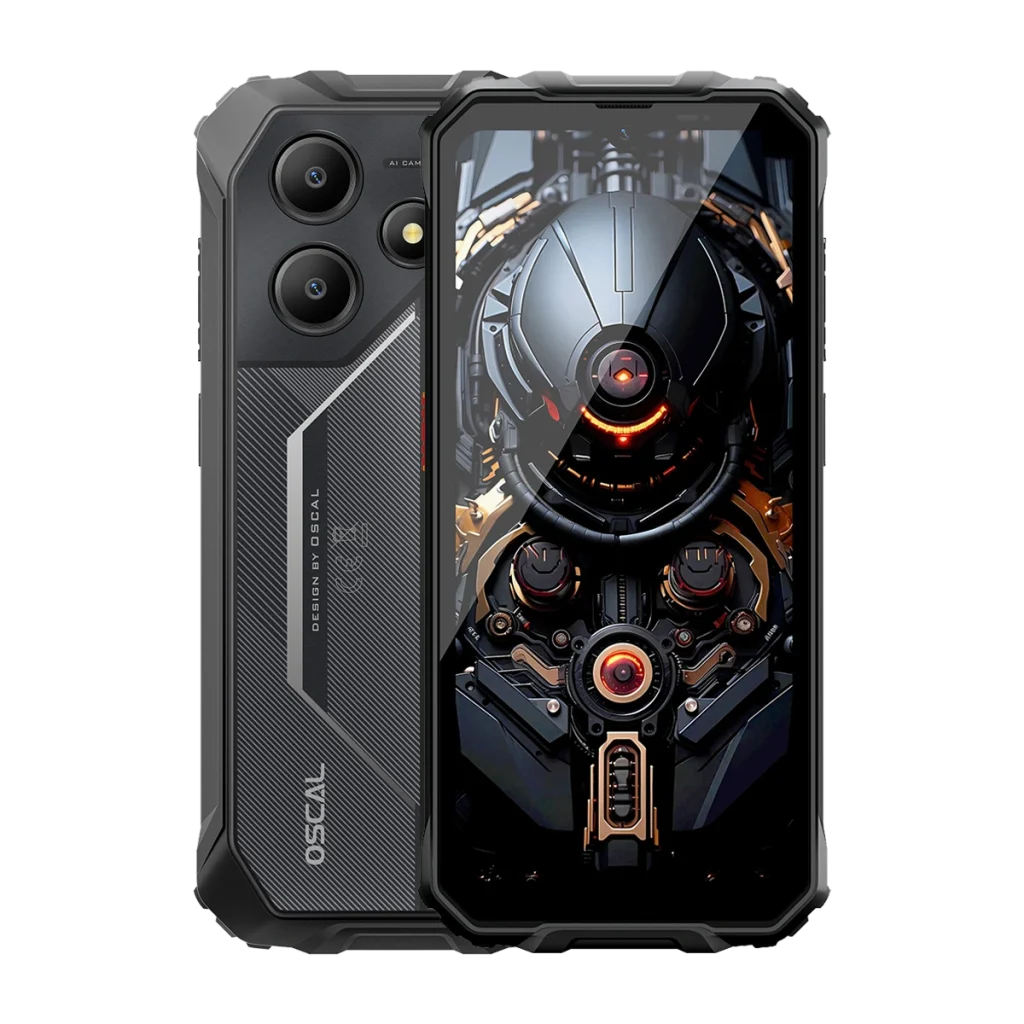
Both rugged devices, the Marine 2 and the Spider 10, feel substantial in the best possible way. There’s a proper construction site heft to them, the kind of reassuring weight and density that tells you this thing was built to take a beating and keep going. Pick either one up and you immediately understand what you’re holding. These aren’t flimsy plastic slabs pretending to be tough, they feel genuinely engineered for abuse.
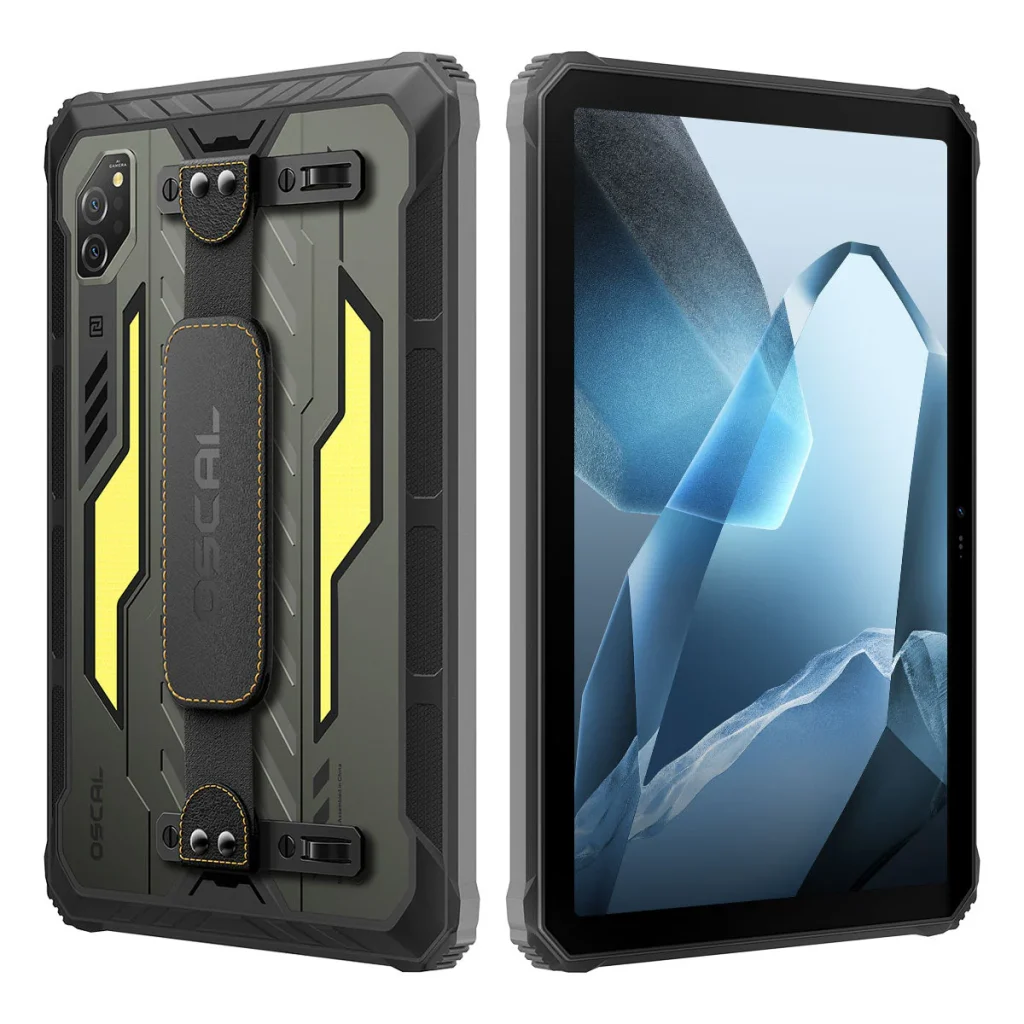
On paper the certifications back this up. Both carry the full IP68, IP69K, and MIL-STD-810H triple whammy, meaning they’re rated for dust, high-pressure water jets, submersion, drops, and temperature extremes from -20 to 60 degrees Celsius. The Marine 2 is rated to survive drops of up to 1.2 metres and water immersion, while the Spider 10 pushes even further, waterproof to 1.55 metres for half an hour and protected by Gorilla Glass 5 on that big 11-inch display.
Now for the honest part, and I want to be upfront about it. I couldn’t actually test those drop resistance or water resistance claims myself. ASBIS, the local distributor of OSCAL tends to hold reviewers responsible for any damage during testing, so we weren’t about to chuck their hardware into a bucket of water or drop it onto concrete just to see what happens. I’d love to tell you I drove over the Spider 10 with my Ford Ranger and it came out laughing, but I can’t, and I’m not going to pretend otherwise. What I can tell you is that everything about the physical construction suggests these devices would hold up to regular abuse. The build gives you confidence even if I couldn’t put it to the ultimate test.
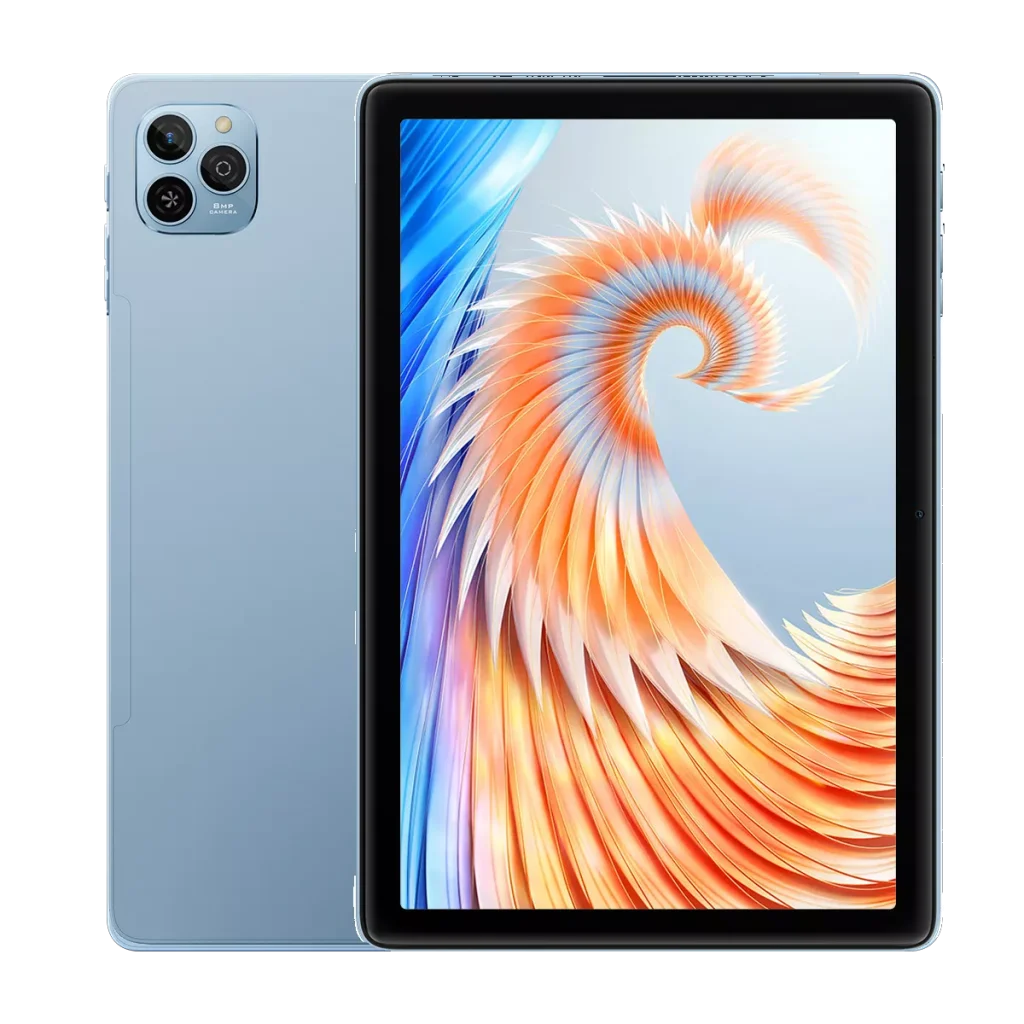
The Pad 9 LTE, being a standard tablet, plays a different game here. It doesn’t pretend to be rugged and it isn’t, so there’s nothing to stress-test. It feels like what it is, a slim, light, ordinary budget tablet, and that’s completely fine because that’s exactly what it’s meant to be.
Where reality sets in
And this is where I have to shift gears a bit.
For all that impressive rugged build quality on the Marine 2 and Spider 10, these devices perform like entry-level Android devices, because underneath the armour, that’s essentially what they are. The Marine 2 runs on a Unisoc T615 and the Spider 10 on a MediaTek Helio G81, and neither is a chip that’s going to set your world alight. The Pad 9 LTE, meanwhile, runs an even more modest Unisoc T310, which is genuinely entry-level silicon even by budget tablet standards.
The common thread across all three is that these are budget processors paired with full Android, and you can feel it.
I’m not talking about heavy gaming or anything demanding here. I mean you can feel the lag just browsing. Just scrolling through a webpage, opening apps, moving around the interface, there’s a hesitation, a slight stutter, a sense that the device is thinking about what you asked it to do before it actually does it. To put a number on it, the Spider 10 scores somewhere around 420 on Geekbench 6 single-core, which is firmly in budget territory and lines up exactly with what my hands were already telling me. The Pad 9 LTE, with its weaker chip, is the most sluggish of the three in everyday use.
Now, is that a dealbreaker? It depends entirely on what you want the thing for.
So who is this actually for?
Here’s where I land, and I think the fair way to look at it is to take the rugged pair and the standard tablet separately.
Starting with the rugged devices. If you want a rugged phone or tablet purely for what I’d call crazy work, the kind of environment where a normal device would die a quick and messy death, then honestly, the Marine 2 and Spider 10 will get the job done. If you’re on a construction site, working a farm, or doing anything where your device needs to survive being dropped, drenched, and dusted on the regular, they make a genuine case for themselves. You’re buying them for durability and endurance, and on those fronts they deliver. That 11,000mAh battery on the Marine 2 and the frankly ridiculous 20,000mAh cell in the Spider 10, complete with its built-in camping light, are exactly the kind of things that matter when you’re off the grid and nowhere near a plug.
But, and this is a big but, if you’re thinking of one of those rugged devices as your main phone, your everyday daily driver, it’s going to be hard to live with. That constant little bit of lag that you can forgive on a dedicated work tool becomes genuinely irritating when it’s the device you use for everything, all day, every day. What you tolerate on a rugged workhorse you’ll resent on your primary device.
The Pad 9 LTE sits in a completely different bracket. It’s not competing with rugged tools, it’s competing with every other affordable Android tablet on the shelf, and there it’s a more ordinary proposition. It’ll handle the basics, streaming, browsing, a bit of light productivity, and the LTE connectivity is a nice touch for using it on the go without tethering to your phone. Just go in knowing that the performance is modest, and if speed matters to you, this isn’t the tablet that delivers it.
And the price. Across the whole range, the price is absolutely ridiculous, in the good way. That’s the real story here. What OSCAL is charging for this level of build quality and battery capacity on the rugged devices is genuinely hard to argue with, and even the Pad 9 LTE is priced to move. When you’re paying R2,999 for a triple-certified rugged phone, you make peace with a slower chip pretty quickly.
How OSCAL stacks up against the established players
There’s another thing I’d be doing you a disservice if I skipped over. OSCAL isn’t arriving into an empty segment. South Africa already has a genuinely healthy rugged device scene, and the two names that stand out here are Blackview and Ulefone, both of which are readily available locally, chiefly through Rugged SA, and increasingly through mainstream channels like Makro too.
Now the first thing you’ll notice when you go shopping across these brands is the price gap, and it’s a big one. Where OSCAL’s Marine 2 lands around R2,999 and the Spider 10 at R6,499, the established players sit meaningfully higher. Blackview’s current rugged lineup through Rugged SA often runs north of R6,000 and even close to R10,000 for the flagship Fort and BL series. Ulefone climbs even steeper, with popular Armor models sitting anywhere from around R3,599 to well over R8,000, and the thermal imaging and satellite messaging flagships pushing past R13,000 at list price before discounts. So on pure rand-for-rand value, OSCAL undercuts nearly everyone, and that’s really its headline strength.
But based on what my hands actually told me, price isn’t the whole story.
Here’s what’s really interesting. OSCAL is the sister brand of Blackview. They share DNA, they share design language, and in some cases they share components. But having spent time with the hardware, it’s clear to me that Blackview is the more premium and, frankly, the safer option of the two. The Blackview devices tend to run stronger chipsets, feel a notch more refined in the hand, we were actually able to test the durability claims and crucially they come with a well-established local support behind them. Rugged SA has been the official Blackview distributor here for years, offering a full twelve month warranty and a proper repair centre, and that after-sales backbone matters enormously in a category where your device is meant to survive genuine abuse.
Ulefone occupies its own space too, leaning hard into the specialist features, the thermal cameras, the satellite messaging, the enormous batteries, all of which command a premium but also serve professionals who specifically need those tools.
So where does that leave OSCAL? Right where you’d expect a new entrant to sit. It’s the value play, the brand you look at when your budget simply won’t stretch to a Blackview or a Ulefone but you still need something rugged that works. And on that basis, it earns its place. Just understand that you are trading some polish, some processing power, and some peace of mind on the support side in exchange for that lower price. If you can afford to step up, Blackview in particular gives you a more complete package. If you can’t, OSCAL is a legitimate entry point rather than a compromise you’ll regret, provided your expectations are set accordingly.
The bottom line
OSCAL has built devices that know exactly what they are, and I respect that. The Marine 2 and Spider 10 are tough, dependable, absurdly well-priced tools built for people who need their tech to survive conditions that would kill a normal phone. The Pad 9 LTE is a perfectly serviceable everyday budget tablet that happens to share a badge with them. Judged on their own individual terms, they each make sense.
Just go in with your eyes open. Across the board you’re trading performance for durability and price, and whether that’s a good trade comes down entirely to how you plan to use each device. As rugged second devices or dedicated work tools, the Marine 2 and Spider 10 are easy recommendations. As your one and only phone, think carefully about the compromise. And the Pad 9 LTE is a fine budget tablet as long as your expectations are set accordingly.
