

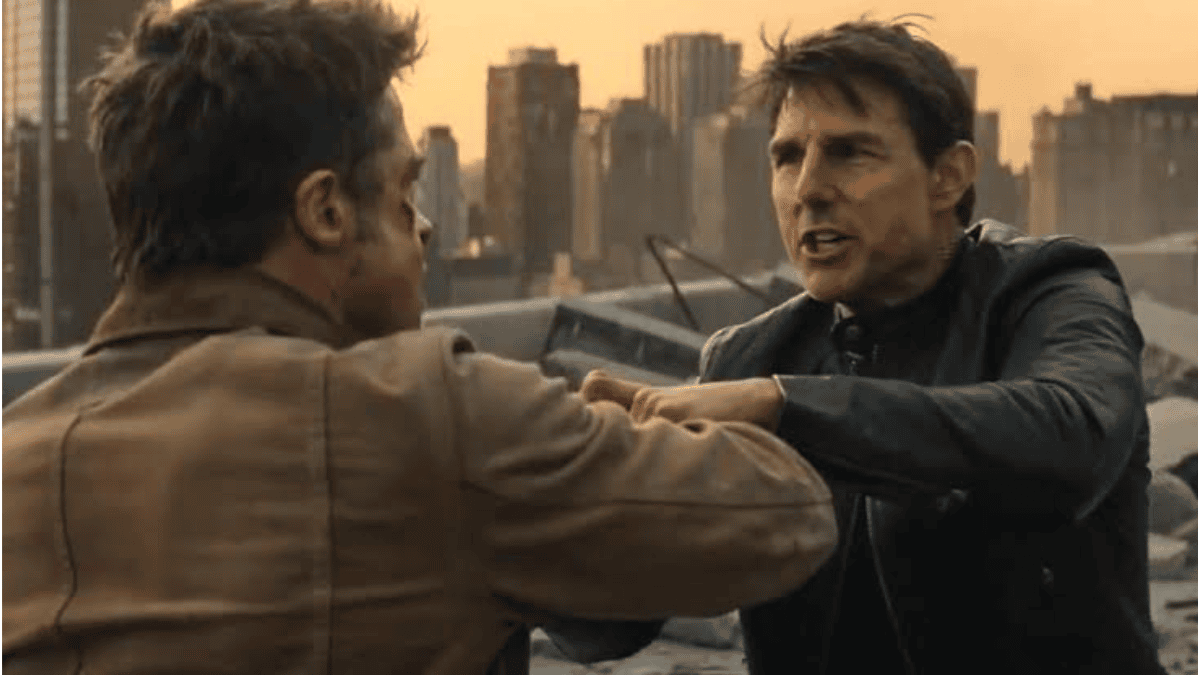
There was a time when seeing Tom Cruise and Brad Pitt together in an action scene would have required Hollywood executives, contracts, agents, stunt teams, camera crews and probably a budget large enough to buy a small island. Today apparently all you need is artificial intelligence. And therein lies the problem.
I am sure you are all familiar with an AI-generated scene of Tom Cruise fighting Brad Pitt thanks to ByteDance’s AI video generator Seedance 2.0. Not to mention the commotion that was caused after videos began appearing online featuring incredibly convincing versions of famous actors and copyrighted Hollywood characters. Well….it seems that AI simply decided Hollywood’s casting department was taking too long. And as funny as that sounds, the implications were far less amusing.
So it’s no wonder that Hollywood studios were quick to push back. ByteDance faced backlash from the likes of Disney, Paramount Skydance, Netflix, Sony Pictures, Warner Bros. Discovery and others who accused ByteDance of allowing its technology to reproduce copyrighted characters and celebrity likenesses without permission. And it only got worse when the Motion Picture Association joined the fight, sending ByteDance a cease-and-desist letter over what it described as widespread infringement. After all that it now appears that ByteDance has listened.
According to Deadline, the company’s newer Seedance 2.5 model is successfully blocking attempts to recreate Hollywood intellectual property and celebrity deepfakes. Try asking it for certain famous characters, actors or protected material and apparently the answer is essentially… no way. It is this situation that raises a question we’ve been dancing around since generative AI exploded into our lives. Just because technology can do something, does that automatically mean we should allow it?
AI has advanced to a point where the line between real and artificial is becoming increasingly difficult to see. All you have to do is give these systems enough information and they will recreate faces, voices, environments and performances that look way too real. And you have to admit that is incredible technology, right? But somewhere between “look what AI can do” and “look what I made Tom Cruise do,” there’s that little aspect of consent that needs to be addressed. An actor’s face isn’t simply another piece of internet content and quite frankly, neither is their voice. These are parts of their identity and, importantly, their livelihood. The same applies to writers, musicians, artists and filmmakers whose work helped provide the creative foundation from which many of these systems learn.
That makes Hollywood’s reaction completely understandable. Imagine spending thirty years building a career only to wake up one morning and discover a digital version of yourself starring in something you never agreed to make. I’m sure you’d have a whole barrel of questions surrounding this. The copyright argument is equally complicated. Spider-Man belongs to someone. Darth Vader belongs to someone. SpongeBob SquarePants belongs to someone. Studios spend billions creating, acquiring and protecting these characters because intellectual property has enormous value. AI doesn’t suddenly make ownership disappear because generating something has become easier. And perhaps that’s where this entire debate becomes much bigger than Hollywood.
Today we’re talking about Tom Cruise and Brad Pitt because anybody would notice this. But AI technology isn’t going to remain a celebrity problem. As these tools become more powerful and accessible, the same questions are going to apply to you. Who owns your face and controls your voice? And who gets to decide how a digital version of you can appear? Those questions suddenly make a funny AI movie clip feel considerably less funny. To ByteDance’s credit, the company has spent months strengthening Seedance’s safeguards following the backlash. It has previously announced measures including watermarking, monitoring and additional intellectual-property protections designed to identify AI-generated material and prevent misuse.
While that can be acknowledged as progress, we’re also watching technology and society engage in a very strange race. AI developers build something incredibly powerful. Humans discover all the questionable things they can do with it. Companies install guardrails. Then somebody immediately starts looking for the next boundary. Welcome to the AI era. But none of this means AI video generation is inherently bad. Used responsibly, the technology could give filmmakers, independent creators and artists tools that previous generations could only dream about. You see, the problem was never simply what AI could create.
The problem was whether the humans using it had permission to create it. Because innovation without boundaries isn’t automatically progress. Sometimes it’s just really impressive technology doing something it had no business doing in the first place. Seedance appears to have learnt that lesson.
The bigger question is whether the rest of us will.
