

review
Apple Watch Series 11
A year on · By Shaheer Ali
The scorecard
▲ Pros
- ✓Lightweight and comfortable, easy to sleep with all night
- ✓Battery finally lasts the night, no nightly charge to track sleep
- ✓Fast charging fills it in about half an hour
- ✓Tougher, more scratch-resistant glass
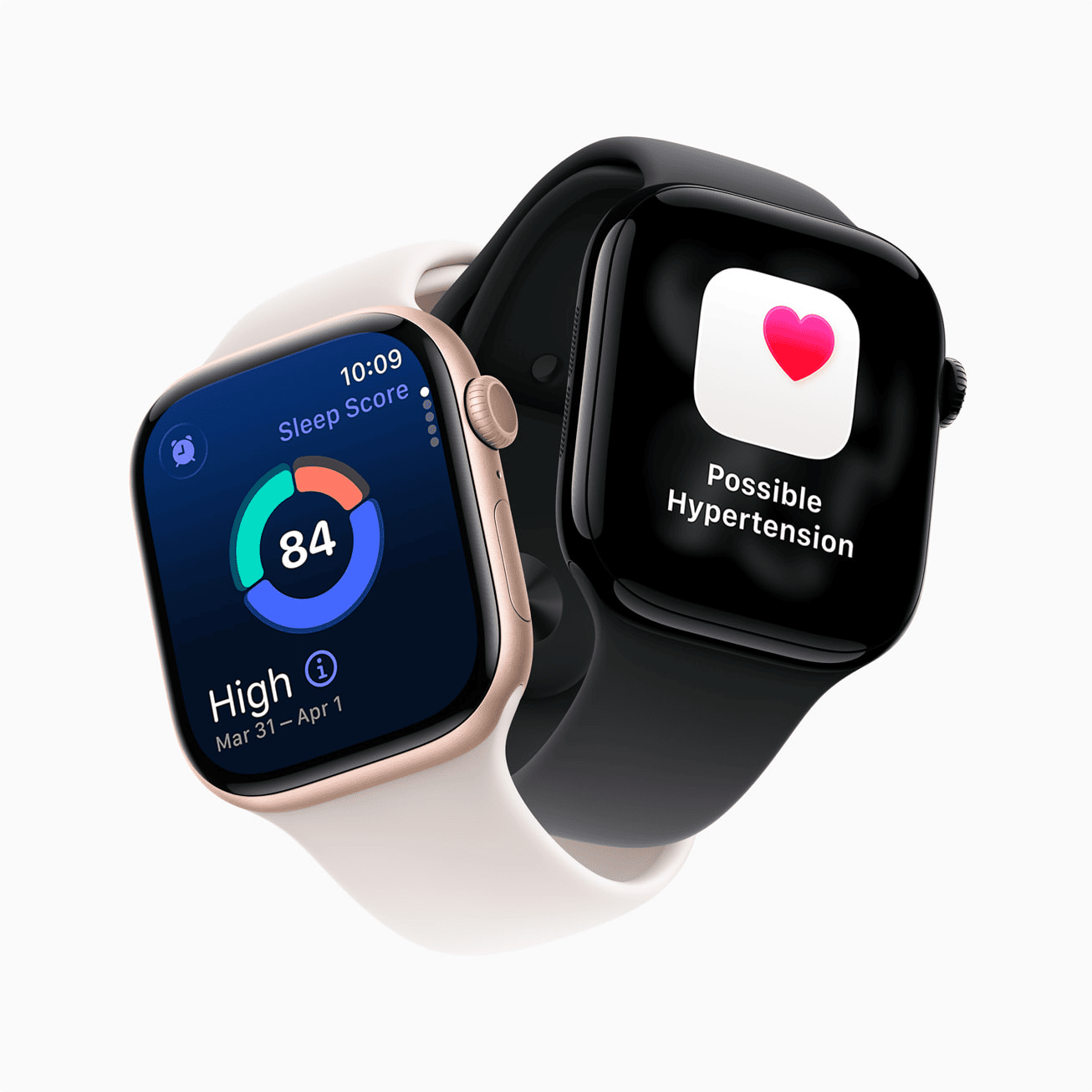
- ✓watchOS 26 adds a proper Sleep Score and hypertension alerts
- ✓Slots into Discovery Vitality for real rewards
- ✓Still the most polished watch for an iPhone owner
▼ Cons
- ✗Barely changed from the Series 10; same look, chip and sensors
- ✗Best new health features also reach older watches
- ✗Still a one-day watch when a Garmin or Huawei runs for a week
- ✗iPhone-only, and Cellular costs extra up front and monthly
- ✗The Series 12 and Ultra 4 are only months away
Verdict
The Series 11 does not reinvent anything, but it fixes the one thing that always frustrated me and slots perfectly into my day. The jump to a genuine 24 hours finally lets you wear it to bed and track your sleep without the old nightly-charge ritual. Having gone from a Series 5 through the Ultra and a Garmin Venu 3 to get here, I can say it plainly: no regrets, this is the best smartwatch I have ever owned.
The Apple Watch Series 11 is not a reinvention, and it does not pretend to be. It looks like the Series 10, runs the same S10 chip, and carries over the same sensors. What it does is fix the one thing owners have complained about for years: battery life. I am not coming at this cold: I have worn a Series 5, an Apple Watch Ultra and a Garmin Venu 3 before landing here, so I will explain why the standard Series 11, not the flashier alternatives, is the one I kept on my wrist.
Design and display
Pick up the Series 11 and you would struggle to tell it apart from the Series 10. It is Apple’s thinnest watch, comes in 42mm and 46mm cases, and keeps the same wide, wraparound display. Every Series 10 band fits, so nothing in your drawer is wasted. The one real change is durability: tougher glass Apple rates as twice as scratch resistant, with sapphire crystal on the titanium models.
A personal note, because it matters more than the spec sheet. I used to wear an Apple Watch Ultra, and on paper it is the better watch: gorgeous screen, far longer battery. But I could never sleep with it on; the weight of that titanium case overnight meant I took it off before bed, which defeats the point of a watch you bought to track sleep. The Series 11, as Apple’s lightest watch, disappears on the wrist at night in a way the Ultra never did. The Ultra wins on battery and screen, but the Series 11 is the one you actually keep on for 24 hours, and for sleep tracking that is the whole game. The display, meanwhile, is bright and readable in everyday South African sun, if nothing new over last year.
Battery life
This is the reason the Series 11 exists, and the upgrade that actually changes how you use the watch. For years the Apple Watch was stuck at around 18 hours, which meant sleep tracking forced a daily juggle: charge before bed and lose the night, or charge in the morning and lose the day. Having lived with that ceiling all the way back to my Series 5, the Series 11 finally breaking it with a rated 24 hours, through an internal battery redesign rather than a bigger case, is the change I felt most.
In practice this is the single biggest quality-of-life improvement Apple has made to the watch in years. You can wear it through a full day, a workout and a night of sleep tracking and still have charge to spare. Fast charging makes the routine work: 0 to 80 percent in about 30 minutes. I put it on the charger in the morning while I check my sleep score and get ready, a little over half an hour, and by the time I leave it is full for the day and night ahead.
Two honest qualifiers. Heavy cellular use away from your phone pulls the real figure toward 18 to 20 hours, though Low Power Mode stretches it to around 38. Still, this is a daily-charge device at heart; it moves the charge to a convenient window rather than removing it, so if you wanted the multi-day life of a Garmin or Huawei, this is not that.
Health features
This is where Apple wants the attention, with two useful additions and one caveat about how “new” they really are.
The headline is hypertension notifications. To be clear, the Series 11 is not a blood pressure monitor and will not give you a reading like the cuff at the pharmacy. It quietly watches in the background over a rolling period, and if it spots signs your blood pressure might be running high, it taps you on the wrist and suggests you get checked. Since high blood pressure often has no symptoms and goes unnoticed for years, that early flag is a genuinely useful, potentially serious heads-up. Think of it as a nudge to see a doctor, not a diagnosis.
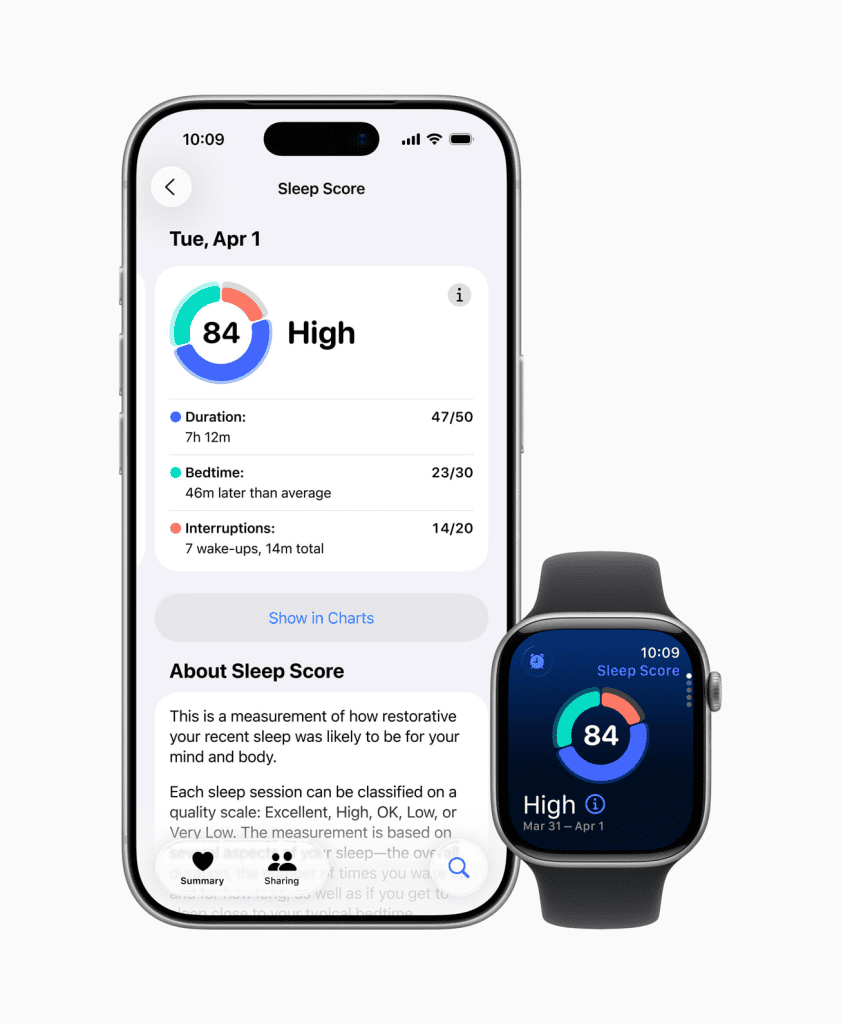
The second addition is Sleep Score, grading each night out of 100 on how long you slept, how consistent your bedtime was, how often you woke, and time in each stage including deep sleep and REM. It turns Apple’s already-decent sleep tracking into something you can act on at a glance, showing not just that you slept badly but why, though testers note the score runs a touch generous.
Sleep Score breaks the night into duration, bedtime consistency and interruptions. Image: Apple
The honest caveat: neither is exclusive to the Series 11. Both arrive with watchOS 26, so a Series 9, 10 or Ultra 2 gets them too. Good news if you own one of those, but it means you are not buying the Series 11 to unlock them. The rest of the health suite, ECG, blood oxygen, temperature and the Vitals app, carries over unchanged.
Fitness
As a fitness watch the Series 11 does everything the Apple Watch is known for: tracking a huge range of workouts accurately, mapping runs and rides on its own GPS, and feeding cleanly into Apple Health and apps like Strava. For anyone who runs, walks, cycles or lifts a few times a week, it is more than capable. The new touch is Workout Buddy, an AI feature giving spoken encouragement during a session; a nice motivator for some, easy to ignore for others. Where it stops short is serious endurance and adventure sport: for long trail runs, multi-day hikes or open-water swims, the Ultra 3 is the right tool. The Series 11 is a very good everyday fitness watch, not a specialist one.
Living with it: what I actually use it for
Specs only tell you so much, so here is how it fits into my day, as a South African on Discovery Vitality. The feature I check most is my sleep score every morning, and this is where the local angle gets interesting. The Vitality app links into the watch and reads that sleep data to generate a Vitality Sleep Score, which you are rewarded for: average 75 or higher across at least 25 tracked nights in a month and you earn Vitality points. The score is Discovery’s own metric built from the watch’s data, not Apple’s number directly, but the watch is what makes it possible. For a Vitality member, a watch you can actually sleep in every night turns good sleep habits into real rewards.
The rest is straightforward. I run with Strava, which pulls cleanly from the watch, and I watch my VO2 max, which Apple calls cardio fitness, as a long-term trend, though it is an estimate from outdoor workouts rather than a lab figure. Vitality uses this too. Then there are the everyday rings, calories, fitness minutes and stand hours, that turn movement into a daily game you want to close.
The Series 11 runs watchOS 26, with a refreshed look, new watch faces, Workout Buddy, and the Sleep Score and hypertension tools above. If you live in the Apple ecosystem it is as smooth as ever, with tap-to-pay, message replies, Siri and the tight handoff between watch and iPhone that remains Apple’s biggest advantage. It uses the same S10 chip as last year, which you will never notice, but which confirms this is an efficiency update, not a power one.
I can speak to that advantage from experience. After the Ultra I tried a Garmin Venu 3, drawn by the battery life and fitness pedigree, both excellent. What sent me back was the integration: on an iPhone a Garmin lives in its own world, with Connect separate from Apple Health and small conveniences like tap-to-pay just not the same. Nothing is broken, and plenty of people live with it happily, but for an iPhone owner the way an Apple Watch clicks into everything else matters more than any single sensor or battery figure.
Price and availability
The Series 11 is Apple’s current flagship standard watch in South Africa, above the SE 3 and below the rugged Ultra 3. Local pricing starts at roughly R9 400 and climbs with case size, material and band, so for the exact price on the configuration you want, check iStore’s current listing, since Apple watch pricing shifts with the rand. Bought through official local channels it carries a one-year warranty, worth having on a device you wear every day.
It comes in two versions, GPS-only and GPS plus Cellular. The GPS model relies on your iPhone nearby for calls and texts, though its GPS still tracks runs on its own; the Cellular model adds its own mobile connection so you can leave your iPhone at home and still take a call. Cellular costs more up front and needs a supported network plan, added as a wearable eSIM through your carrier for a small monthly fee. Either way it needs an iPhone 11 or later on iOS 26, so this is an Apple-only device, worth remembering if anyone in the household is on Android.
Who should buy it
First-time buyers get the best standard model Apple has made, with nothing meaningful to hold out for, and anyone on a Series 6, 7 or 8 or older gets a transformative jump: better battery, tougher glass, a modern display, 5G and the full watchOS 26 health suite at once. If you own a Series 9 or 10, it is harder to justify, since you already get the new health features by software and the design and sensors are identical. The only real reason to upgrade is if the jump from 18 to 24 hours of battery, and the sleep tracking it enables, matters to you.
New Apple Watches coming in 2026
One more thing to weigh, especially at full price. Apple is expected to refresh the line in September 2026 with the Series 12 and a redesigned Ultra 4. Reporting points to a new chip and a possible wrist blood pressure feature, though that has slipped before. The Ultra 4 is the more interesting rumour, tipped for a roughly 15 percent thinner build that would directly fix the weight-and-sleep problem I described, plus a larger sensor array, with talk of Touch ID and a new Siri AI on the wrist.
None of this is official, and Apple could delay any of it. But the takeaway is simple. If you need a watch now, the Series 11 is an excellent buy and gets watchOS 27 anyway. If you can wait until September, you will either get a better watch or see the Series 11 drop in price the day the Series 12 lands.
Verdict
If you own a Series 6 or older, this is the most compelling Apple Watch in years. If you own a Series 10, you can sit it out unless overnight battery bothers you. The jump to a genuine 24 hours finally lets you wear the watch to bed and track your sleep without the old nightly-charge ritual. Add faster 5G on the cellular models, tougher glass, and two useful health additions in hypertension notifications and a proper Sleep Score, and you have the best standard Apple Watch yet.
All told, the Series 11 earns a 4.5 out of 5 from me. It does not reinvent anything, but it fixes the one thing that always frustrated me and slots perfectly into my day. Having gone from a Series 5 through the Ultra and a Garmin Venu 3 to get here, I can say it plainly: no regrets, this is the best smartwatch I have ever owned.
