

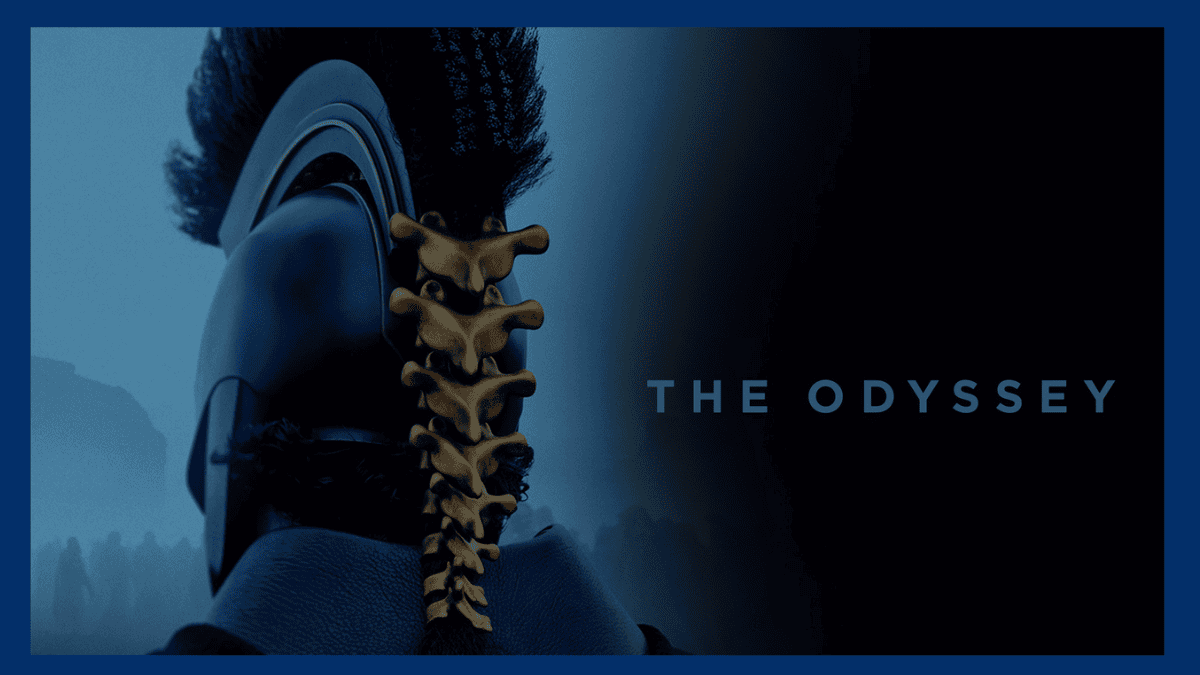
So Variety has reported that Elon Musk has made an announcement on X that his AI platform, Grok Imagine, will create a full-length adaptation of The Odyssey before the end of the year. He described it as “historically accurate and true to the art of Homer” after criticising Christopher Nolan’s blockbuster adaptation for its casting choices and creative direction.
That being said, there is one word in Elon Musk’s latest announcement that really had me in a spin more than anything else. The word accurate. My brain didn’t even give a second thought to words like Grok, AI and even The Odyssey. But the word Accurate just caught my attention and wouldn’t let go. I mean, to make a claim about a story that has survived for nearly 3,000 years precisely because every generation has interpreted it differently, is simply fascinating. Long before Christopher Nolan gave us his version, there were countless films, television series, books, stage productions and modern retellings. And every creator has looked at Homer’s epic through a different lens. That’s what has kept The Odyssey alive for centuries.
Now it looks like Elon Musk wants Grok to have a turn. But let’s be real for a second. The Odyssey is pure mythology, not history. It’s one of the oldest works of literature ever written. For nearly three millennia, each generation has interpreted, adapted and retold its tale of folklore, oral storytelling, divine intervention, monsters and heroism. So I really don’t get what “historically accurate” actually means. Does it mean accurate to Homer’s text, Bronze Age Greece or archaeological evidence? Maybe what it means is to be simply accurate to Elon Musk’s interpretation?
Isn’t that interesting. We all know that AI can analyse thousands of translations, historical records and academic papers in seconds. It can also compare sources, identify inconsistencies and even recreate clothing, architecture and landscapes based on available evidence. But art has never been about assembling the largest collection of facts. It all boils down to interpretation.
Let’s be clear: Christopher Nolan didn’t set out to make a documentary. He made a movie for the purposes of entertainment. Every movie starts with one simple question: What story do we want to tell? Ask ten different directors, and you’ll probably get ten different answers. And to be fair we’re still figuring out whether AI can provide those answers.
If Grok really does produce a full-length version of The Odyssey before the end of the year according to its own interpretation, that would be fascinating. But bear in mind that it wouldn’t just be another AI experiment. It would have the potential to become one of the biggest tests yet of whether audiences are willing to watch a feature film created by algorithms instead of filmmakers.
I have no doubt that AI will become incredibly good at recreating the past. But I’m still not convinced it understands why we’ve kept telling these stories for nearly 3,000 years.
