

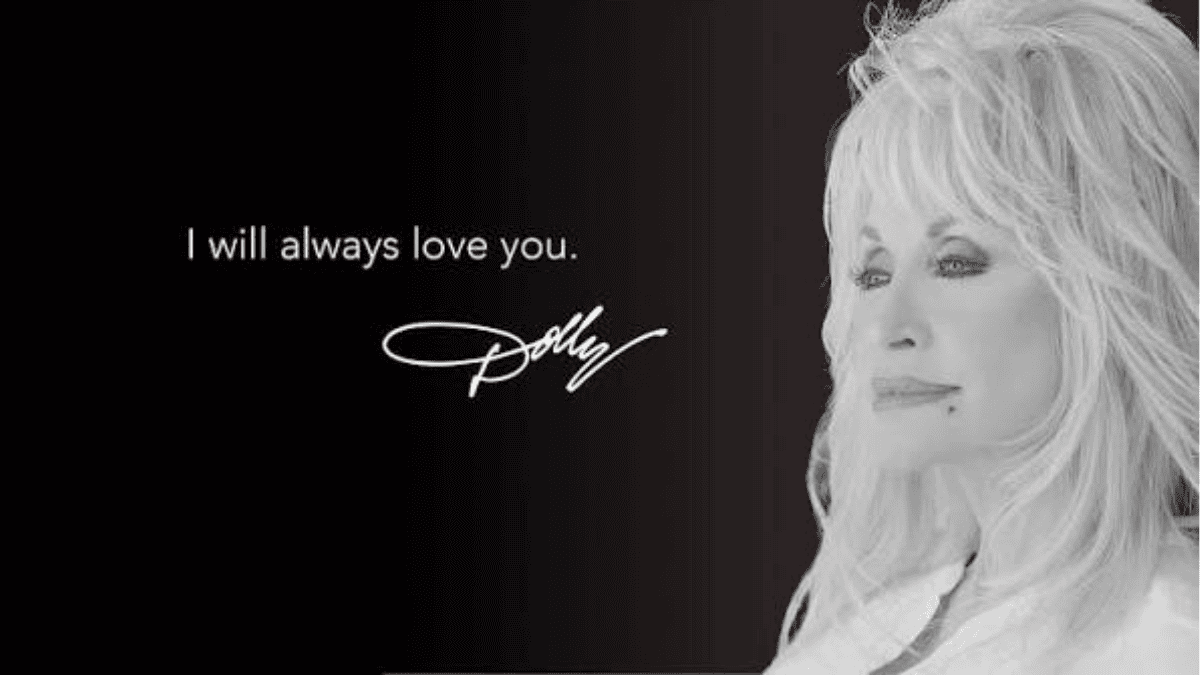
There are famous people. There are superstars. And then there are those incredibly rare human beings who somehow become part of the furniture of our lives. We hear their songs at weddings, funerals, parties and on long drives. Their movies become part of our memories and their voices are instantly recognisable within seconds. Dolly Parton was one of those people who we sadly bid farewell to.
The legendary singer, songwriter, actress, businesswoman and philanthropist died on Tuesday, 25 August, at the age of 80. Her nephew Bryan Seaver announced the news on behalf of the Parton and Owens families. And her representatives later confirmed that she died following a brief battle with cancer. She spent her final days at Vanderbilt-Ingram Cancer Center in Nashville, surrounded by those that knew her intimately. It’s difficult to know where you even begin when talking about Dolly Parton. Because simply calling her a country music legend doesn’t quite cover it.
Yes, there was the music. Jolene. 9 to 5. Coat of Many Colours and I Will Always Love You. These songs survived their era and somehow kept finding new audiences as the decades rolled on. She won 11 Grammys from more than 50 nominations and received the Grammy Lifetime Achievement Award. She also belonged to that remarkably small group of artists inducted into both the Country Music Hall of Fame and Rock & Roll Hall of Fame.
The fascinating thing about Dolly is that it wasn’t necessary to know country music to know who she was. That enormous blonde hair. The rhinestones. The acrylic nails. The unmistakable Tennessee accent. And of course that wonderfully sharp sense of humour that meant Dolly was usually in on the joke before anybody else had even thought of making it. Behind all of that was also one seriously clever woman. She grew up as the fourth of 12 children in a poor family in Tennessee before moving to Nashville the day after graduating from high school.
I find it amazing that she initially wrote songs for other performers before building a recording career eventually made her one of the most recognisable entertainers on Earth. Her performance alongside Jane Fonda and Lily Tomlin in 1980’s 9 to 5 introduced Dolly to an entirely different audience. She didn’t just star in the film either. She wrote its ridiculously catchy title song, famously developing its rhythm by clicking her acrylic fingernails together on set. The song reached No. 1 in the United States and earned her an Academy Award nomination and two Grammys. She went on to appear in films including The Best Little Whorehouse in Texas, Steel Magnolias and Straight Talk, proving there really wasn’t much she couldn’t turn her hand to.
When you think about the song I Will Always Love You, it is and I suppose will always be associated with Whitney Houston and The Bodyguard. And understandably so. Houston’s version became one of the greatest vocal performances in popular music history. But few people know that song was written by Dolly. She originally wrote the song as a farewell to her professional partner Porter Wagoner, and when Houston transformed it into a global phenomenon almost two decades later, Dolly celebrated her rather than becoming territorial about the song. That in itself tells you about the woman.
Because perhaps Dolly Parton’s greatest legacy won’t actually be found on Spotify or in a movie. Perhaps it will be found on a child’s bookshelf.
Dolly created the Imagination Library in 1995, inspired partly by her father, who could neither read nor write. What began as an effort to provide books to children in her home county grew into an enormous international literacy programme. Her representatives said following her death that the programme had distributed hundreds of millions of books, while her philanthropic work also included a $1 million contribution to coronavirus research at Vanderbilt University that helped support development of the Moderna Covid-19 vaccine.
For someone who spent much of her life surrounded by rhinestones and enormous stages, some of Dolly’s most important work happened behind the scenes. Quietly surfacing in homes she would never visit, through books being opened by children she would never meet. And that’s probably why the reaction to her death has stretched so far beyond country music.
Tributes have poured in from across entertainment and public life. Her 9 to 5 co-star Lily Tomlin responded simply with “No words”, while musicians, actors and admirers across generations have remembered not only Dolly the performer, but Dolly the person. Being a Celebrity has changed enormously during Dolly Parton’s lifetime. We now live in an age where fame can arrive overnight and disappear in a matter of minutes. Dolly’s fame lasted more than six decades because there was something unique underneath it.
Not just talent, but also humour, generosity, business sense and the extraordinary ability to remain recognisably herself while the world around her kept changing. Her husband Carl Dean, whom she married in 1966, died in March 2025 after almost 60 years of marriage. In the months that followed, Dolly spoke about dealing with health problems while also trying to rebuild herself emotionally, physically and spiritually. I think it is rather comforting about knowing that Dolly Parton created the kind of legacy that doesn’t really disappear when somebody dies.
Her songs will continue playing and children who have absolutely no idea who Dolly Parton was will continue opening books because of something she started more than 30 years ago. And somewhere, inevitably, somebody will hear the opening notes of Jolene and immediately start singing along.
There are plenty of celebrities whose careers we remember. Dolly Parton gave us something considerably bigger.
She gave us pieces of herself that became part of our lives.
