

Waiting for an answer for thirty years must take immense strength and patience. That amount of time is long enough for children to become adults and for entire careers to begin and end. For music to change several times over. Long enough for a 25-year-old rapper to become one of the most influential artists in history without ever getting the opportunity to see what his influence would eventually become. And yet for almost 30 years, one question continued to follow Tupac Shakur.
Who was responsible for his murder?
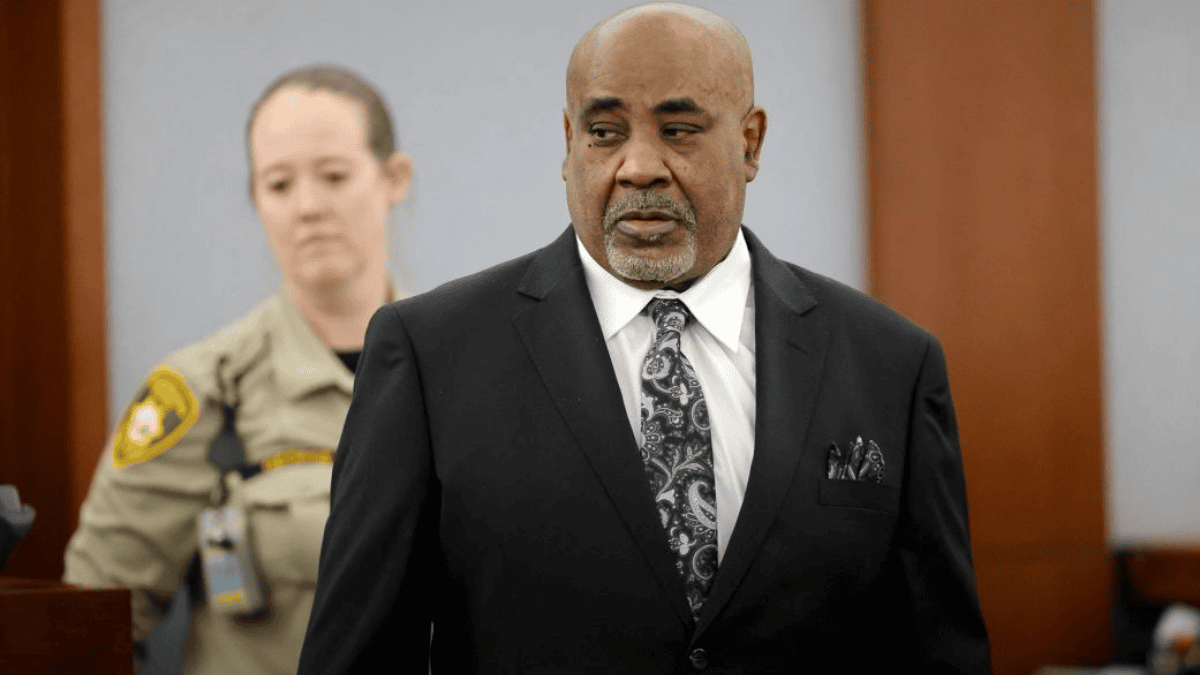
On Monday, a jury in Las Vegas finally delivered an answer. A Las Vegas jury found Duane “Keffe D” Davis guilty of first-degree murder with a deadly weapon for orchestrating the 1996 drive-by shooting that killed Shakur. A judge will sentence the 63-year-old on October 13, and he now faces the possibility of spending the rest of his life in prison. But according to Variety, Davis has already indicated that he plans to appeal. Which I’m sure does not come as a shock. For anyone who remembers September 1996, it is difficult to explain just how enormous Tupac’s death felt at the time. He had been in Las Vegas for the Mike Tyson fight when, shortly after leaving the MGM Grand, he became involved in an altercation involving Orlando Anderson, the nephew of Davis.
Hours later, Tupac was sitting in a BMW driven by Death Row Records co-founder Marion “Suge” Knight when a white Cadillac pulled alongside them at a red light. Shots were fired, hitting Tupac multiple times. Six days later, on 13 September 1996, the 25 year old died, leaving many unanswered questions. Over the years, Tupac’s murder seemed to become part of hip-hop mythology rather than simply an unsolved criminal case. You could find documentaries, books, interviews, conspiracy theories, and accusations to last a lifetime. People analysed grainy footage and old photographs where names surfaced, disappeared and resurfaced again. And all through this, everybody who was anybody seemed to have a theory.
What was lacking, though, was a conviction. Until now.
Perhaps the strangest part of the case against Davis is that many of the words prosecutors eventually used against him came from Davis himself.
Over the years, he repeatedly discussed what happened that night in interviews, conversations with investigators and eventually his 2019 memoir, Compton Street Legend. Prosecutors argued that Davis obtained the weapon and sat inside the Cadillac when someone opened fire on Tupac, although they did not allege that Davis personally pulled the trigger.
Under Nevada law, that distinction did not prevent prosecutors from holding him responsible for the murder. During closing arguments, prosecutor Binu Palal pointed to the extraordinary fact that Davis had spent years talking publicly about the killing. Prosecutors argued that his own accounts, together with corroborating evidence and witnesses, established his responsibility for what had happened. But the defence saw it very differently.
Davis’ attorney, Michael Sanft, argued that his client’s public accounts were unreliable, exaggerated and designed to generate attention and money. Wow, did Sanft basically just argue that his own client exaggerated the story for money? Anyway, moving on… he also challenged the lack of physical evidence tying Davis to the shooting and argued that investigators had failed to corroborate crucial parts of his story. But he left the jury unconvinced. Then after an 11-day trial, jurors deliberated for less than three hours before returning with a guilty verdict. Finally the question that had followed hip-hop for three decades had a legal answer.
But does the verdict provide closure? I’m not sure that it does, because a guilty verdict doesn’t return the person who died, or give Tupac the 30 years he lost. He never got to grow older and discover what kind of artist he would become at 30, 40 or 50. He never got to see hip-hop become the global cultural force it is today. But more importantly, he never got to understand how enormous his own place within it would eventually become. His family grieved him all those years while waiting for his killer to be brought to justice.
Tupac’s sister, Sekyiwa “Set” Shakur, sat in the courtroom as the jury announced its verdict. She cried and embraced prosecutors after hearing the jury’s decision, while Davis’ son, sitting elsewhere in the courtroom, covered his face with his hand. Two families sitting in the same courtroom with two completely different kinds of pain. Perhaps that’s the part of stories like this that gets lost once they become famous. Tupac’s murder became mythology because Tupac became mythology. The East Coast-West Coast rivalry. Death Row Records. Bad Boy Records. Suge Knight. The Notorious B.I.G., who himself would be murdered six months later in a case that remains unsolved. All of it became woven into one of the darkest chapters in hip-hop history.
But underneath all of that mythology was something considerably simpler. A 25-year-old man was shot at a traffic light and all his family wanted to know was who was responsible? And for almost 30 years, the justice system couldn’t give them an answer. But there’s another uncomfortable lesson buried in how this case eventually reached a courtroom. It really does not matter how much time passes, because sometimes time doesn’t bury the truth. It simply gives people more time to talk.
Police had long suspected Davis but said they lacked enough evidence to charge him. Then came interviews, television appearances and his memoir. Prosecutors ultimately turned the story Davis had repeatedly told about that night into a central part of the case against him. I find something almost surreal about that. One of music’s most notorious unsolved murders didn’t suddenly crack because investigators discovered some forgotten piece of DNA or revolutionary forensic evidence. No, a significant part of the prosecution’s case came from the words of the man they eventually charged.
But yesterday still represented something that Tupac’s family, friends and millions of fans had waited three decades for. Accountability. Tupac Shakur has been gone for almost 30 years, yet his music never really allowed him to disappear. Generations born after his death know his face, his lyrics and his story. His influence somehow continued growing while one of the biggest questions surrounding his life remained unanswered.
Now, almost 30 years later, a jury has finally answered it.
