

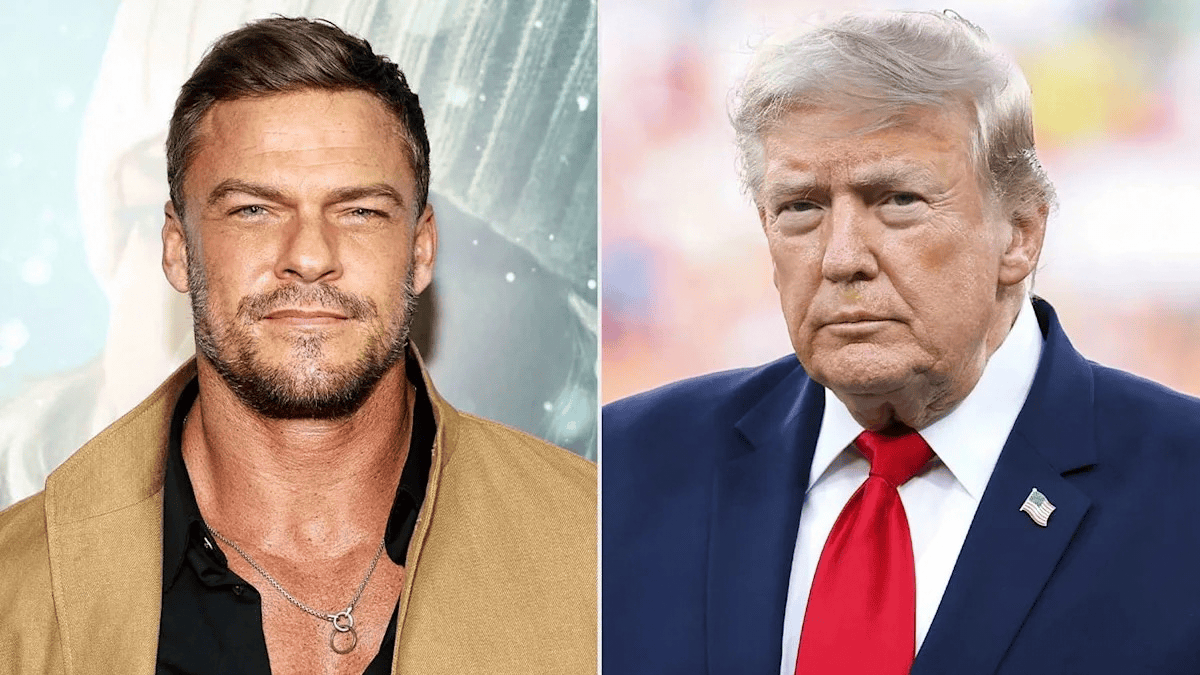
There are certain things Jack Reacher does very well. He arrives in a town. Notices that something is wrong. And deals with the problem using detective work, intimidation and fists that look like they require their own insurance. So the idea of him taking on a white-supremacist militia feels exactly like the kind of situation the character was created for.
But according to Alan Ritchson, that storyline nearly made it into the Prime Video series. But that was before a certain political event got in the way. The actor recently responded to a fan on Threads who said they hoped the series would eventually adapt Die Trying, the second novel in Lee Child’s Jack Reacher series. Published in 1998, the book follows Reacher after he and an FBI agent are kidnapped by an extremist militia. The group wants to form a white-only state, which naturally gives Reacher several terrible people to punch.
Ritchson revealed that the adaptation had previously received approval, writing: “Fun fact: I had it approved until someone got reelected.”
He did not mention Donald Trump by name, but I don’t think we need Reacher’s investigative skills to figure out who he meant. TheWrap reported that the comment appeared to connect the decision to Trump’s return to office following the 2024 US presidential election. Now, Prime Video has not confirmed why the adaptation did not move forward. And Ritchson also did not explain who approved it, who later rejected it or whether the election provided the only reason for the change. So we should not treat his comment as an official production announcement.
Still, it raises a fairly uncomfortable question. How did a storyline about an action hero fighting white supremacists become too politically sensitive to adapt? Because really, this should not be complicated.
White supremacists are villains. Reacher punches villains. Everyone goes home satisfied, except the villains, who will probably need extensive dental work. Yet the fact that the storyline apparently became more difficult after an election tells us just how nervous studios can become when fiction moves too close to the political moment. And Die Trying is not a new response to Trump or MAGA politics. Lee Child published the book more than 25 years ago. Its villains were not created to comment on the current administration. The story existed long before Trump entered the White House, left it and returned.
But context changes how audiences read entertainment. A television season about an armed separatist group trying to establish a white-only state would inevitably invite comparisons with present-day America. Social media would analyse every scene. Political commentators would decide which voters the villains supposedly represented. Someone would almost certainly use the word “woke” before Reacher had thrown his first punch. So yeah, I can understand why executives may have looked at the timing and felt nervous. Understanding it does not make the possibility any less strange.
Ritchson’s own relationship with Trump supporters probably adds another layer to the situation. The actor has openly criticised Trump in the past, while Reacher has attracted an audience that includes plenty of conservative viewers. This has created one of those oddly modern entertainment disputes where people enjoy a fictional character but strongly dislike the political opinions of the actor playing him. But actors are not their characters. Ritchson can disagree with Trump and still play Reacher. Viewers can disagree with Ritchson and still enjoy watching him fold criminals into furniture. That is normally how entertainment works.
The more interesting issue here is whether studios have become so afraid of political backlash that even obvious villains now require a risk assessment. If a story cannot clearly condemn a group built around racial supremacy without everyone wondering which political audience might feel attacked, then perhaps the problem does not lie with the story. But there may also be practical reasons why Die Trying has not made it to television. The show has skipped several books and adapted them out of order since its first season. Prime Video continues to move ahead with other Reacher stories, so the decision does not mean the series itself is in trouble.
Perhaps the novel will still receive its season once the political atmosphere changes. Although, judging by the current state of politics, everyone involved may be waiting for a calm moment that never actually arrives. For now, we only have Ritchson’s short comment and a very obvious implication. But it offers an interesting glimpse at how entertainment decisions can shift when politics enters the room.
Jack Reacher can fight assassins, corrupt officials and entire criminal organisations. Apparently, the one opponent even he may struggle to get past is a nervous studio executive holding an election result.
