

There’s usually a fairly predictable rhythm to my tech reviews. A product arrives, I spend some time testing it then end up writing about the experience, and eventually it gets packed back into its box and sent on its way.
The three Eufy cameras I’ve been testing, have made that last bit slightly more difficult, because after living with them for two weeks, I’ve reached the point where I’m seriously considering buying the outdoor ones for myself wishing I never had to give them back.
That probably tells you quite a lot about how this review has gone.
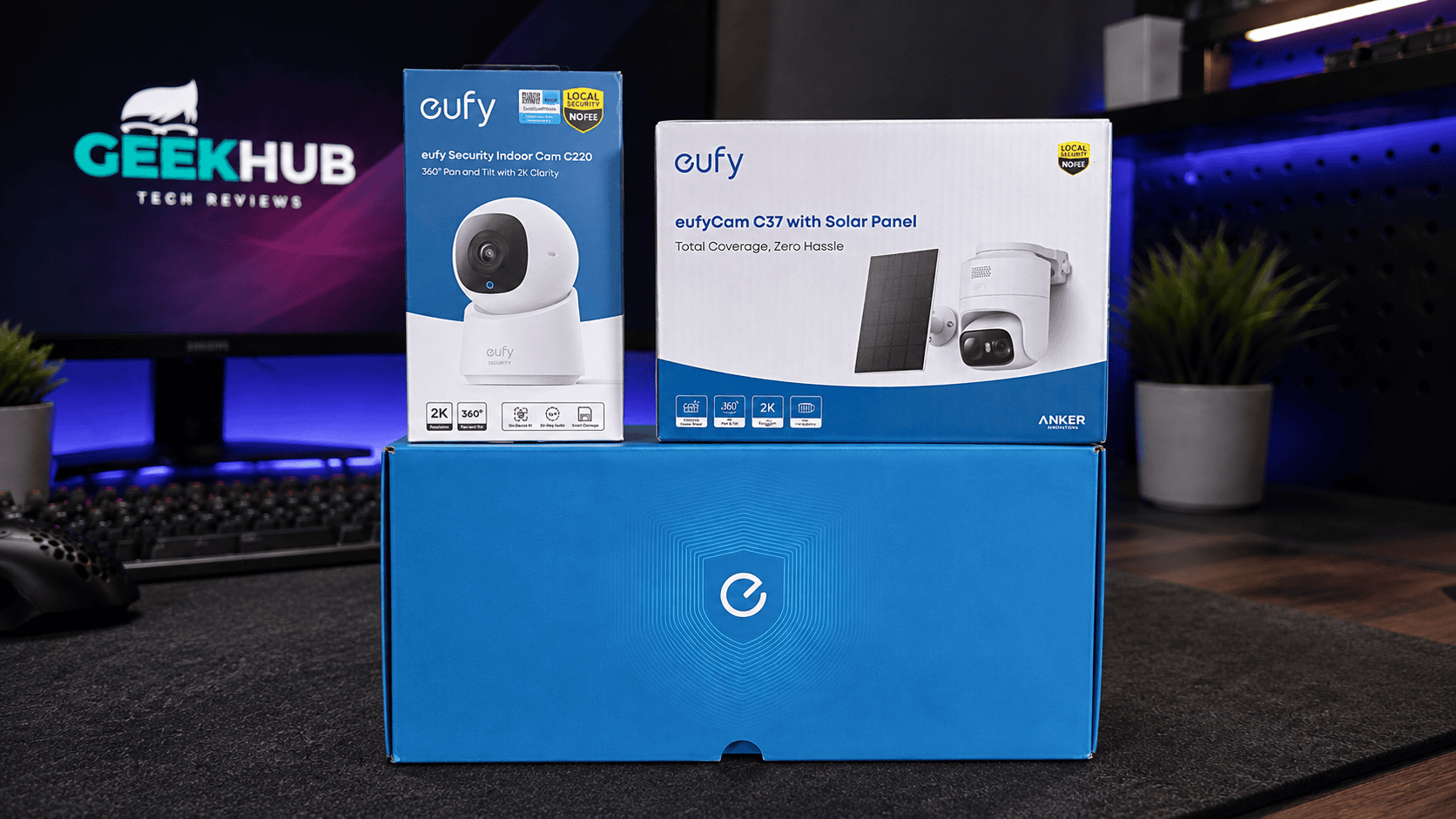
The cameras I’ve been using are the Eufy C37 wireless solar outdoor camera, the C220 indoor camera, and the considerably more expensive eufyCam S3 Pro system with HomeBase 3. There’s a significant difference in pricing across the range, starting at R699 for the C220 and climbing all the way to R9,999 for the two-camera S3 Pro kit, yet what surprised me most is that I came away impressed by all three for very different reasons.
That doesn’t mean they’re perfect. Apple users are going to find a few frustrating limitations, particularly if Apple Home is central to their smart-home setup, while the indoor camera left me questioning whether I actually want a camera inside my living spaces at all.
Still, the overall experience has been very positive, and that started almost immediately with installation.
Setting everything up was refreshingly straightforward
Smart-home products have an irritating habit of turning what should be a simple setup process into an afternoon of troubleshooting, resetting routers and wondering why an app can suddenly no longer find the device sitting just two metres away from you.
Thankfully, that wasn’t my experience here.
I connected the HomeBase 3 to my router using an Ethernet cable, opened the Eufy app, scanned the QR codes on the devices and followed the setup process from there. The outdoor cameras obviously still need to be physically mounted, but because you don’t have to worry about running electrical cables through walls or finding nearby power points, the installation process is considerably easier than a traditional wired camera system.
In my case, it was mostly a matter of mounting the brackets, finding the right viewing angle and making sure the solar panels had access to enough sunlight to keep the cameras charged.
The HomeBase also became useful for another reason, which is storage.
I’m not particularly interested in having footage from inside or around my home automatically uploaded to cloud storage if I can avoid it, and while the C220 doesn’t ship with a microSD card, having HomeBase 3 available meant I could store those recordings locally instead.
It’s worth understanding exactly how the different cameras handle storage before buying, because the setup varies depending on the model. The C37 can operate independently using a microSD card or connect to a compatible HomeBase, while the C220 can also use microSD storage or HomeBase 3 for recordings while remaining connected over Wi-Fi. The S3 Pro, on the other hand, relies on HomeBase 3, which means buying an add-on camera alone won’t give you a complete working system.
Local storage was my preference here, although that shouldn’t be interpreted as meaning these cameras never communicate with online services. They’re still connected smart-home products, but the important distinction for me is that I don’t have to rely on a cloud subscription simply to keep recordings.
The image quality is where these cameras really impressed me
All three cameras produce very good footage, and while there are obvious differences in specification, I never felt that choosing one of the cheaper models meant accepting poor image quality.
The C37 and C220 record at 2K resolution, while the S3 Pro moves up to 4K, and unsurprisingly the S3 Pro produces the best overall image of the three. What impressed me more, though, is how capable the cheaper cameras are in real-world use, because neither left me feeling as though Eufy had deliberately held back quality simply to push buyers towards the more expensive system.
Motion detection has also been reliable throughout my testing, while the two-way audio has been clear enough that speaking to someone through the camera feels natural rather than like trying to have a conversation through a badly compressed voice note.
The HomeBase setup also adds some useful recognition features, particularly the ability to distinguish familiar people from strangers, which becomes more valuable the longer you live with the system. Instead of getting a notification every time someone you know walks past the camera, there’s more context around what the system is seeing.
There is, however, an important distinction between a camera being able to follow someone’s movement and actually recognising who that person is. Eufy lists the C220’s HomeBase support primarily for storage, so connecting it doesn’t suddenly give it all the same AI capabilities as the S3 Pro.
That distinction matters, because smart-home product pages can sometimes make these features sound more universal than they really are.
The C37 is probably the sweet spot for most people
At R1,999, the C37 is the camera that stood out to me most when it comes to value.
If you want to improve security around your home without immediately committing to a full multi-camera system, this is probably where I would start, because it gives you a very capable outdoor camera without turning the purchase into a major investment.
You’re getting 2K video, wireless installation, solar charging, motion detection, two-way audio and support for local storage, which covers most of what the average person is likely to want from an outdoor security camera.
There are some limitations worth knowing about, though.
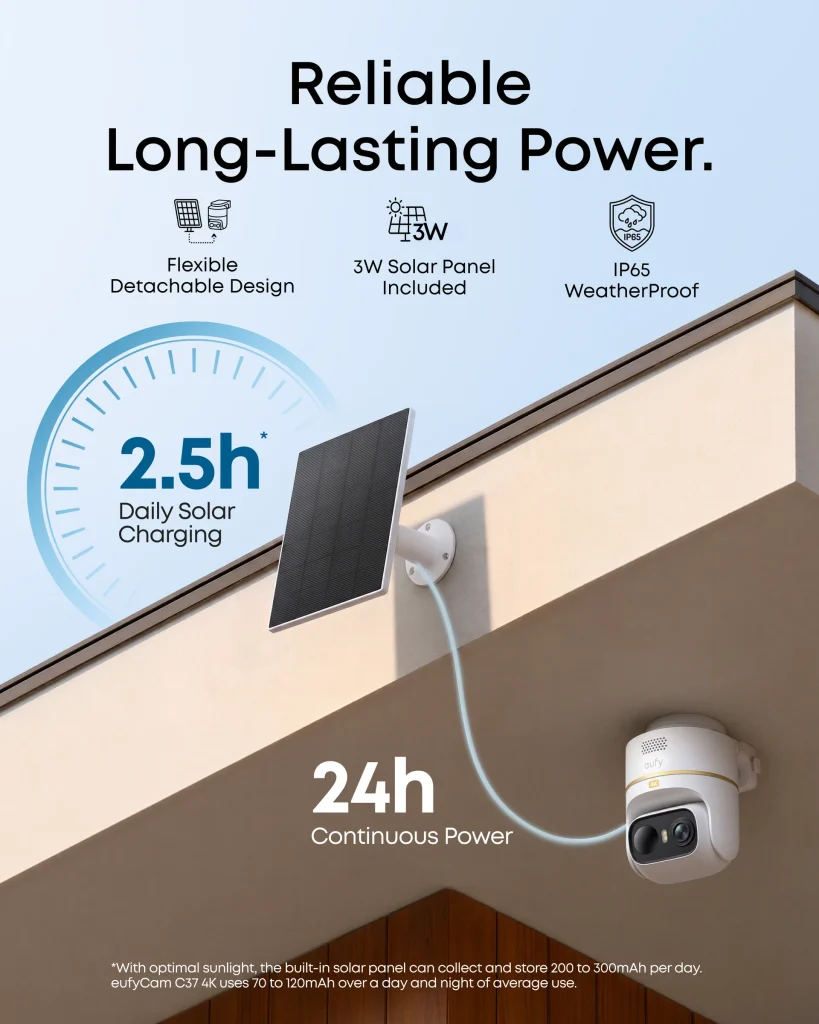
The C37 records motion events rather than continuous 24-hour footage, so if you’re looking for full-time recording, this isn’t the right product. The solar charging performance will also depend on where the panel is installed, how much sunlight it gets throughout the day and how frequently the camera is triggered, because no solar panel can compensate indefinitely for poor placement and constant activity. In my testing though, I never had to charge it once since mounting and as of this writing, the battery was sitting at 100% powered exclusively by sunlight.
If you plan to use the C37 on its own and want to store recordings locally, you’ll also need to budget for a microSD card.
Even with that small caveat, I think it offers a very compelling balance between price, features, excellent battery life and ease of installation.
The S3 Pro feels like a proper security system
The S3 Pro sits at the opposite end of the range and comes with a much more serious price tag.
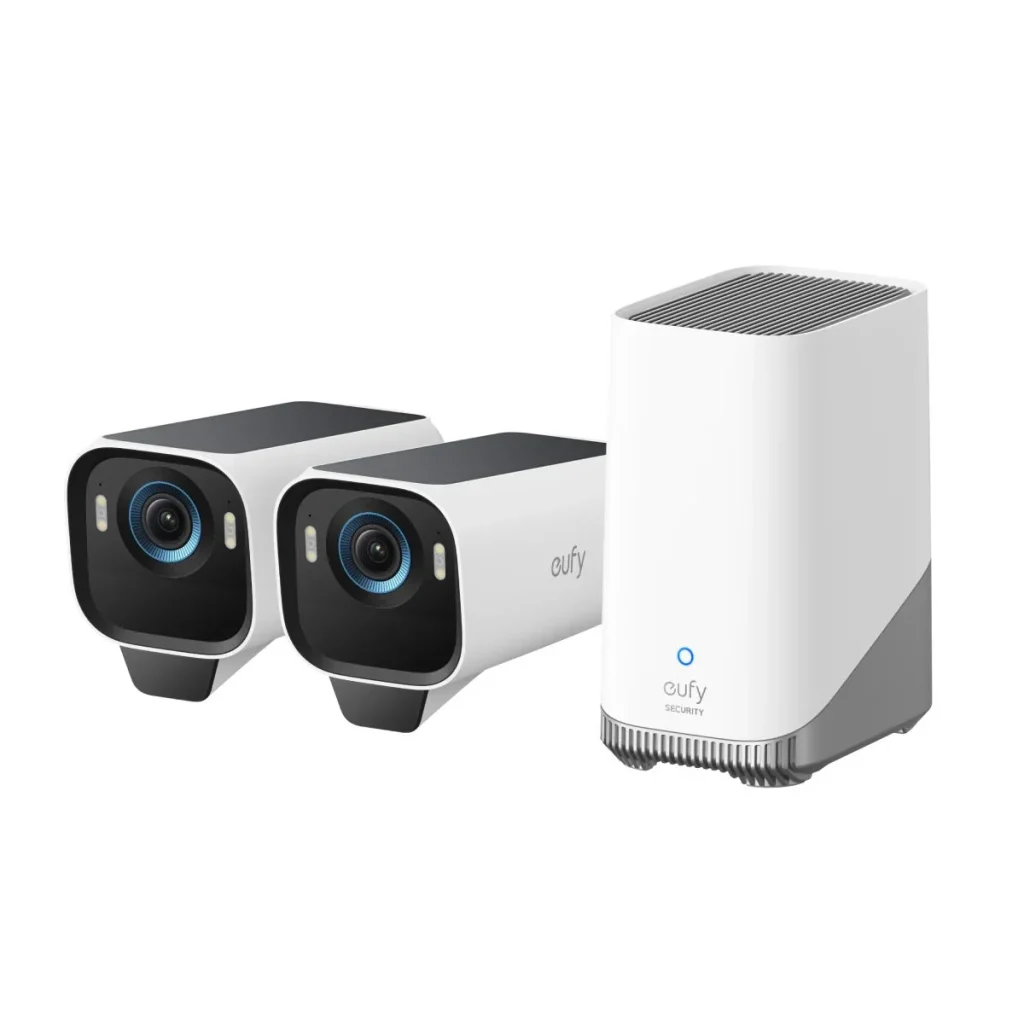
The two-camera kit with HomeBase 3 is currently selling for R9,999 at iStore, discounted from R12,999, and while ten thousand rand is obviously not a casual purchase, the system at least feels like it belongs in that higher tier.
The 4K image quality is excellent, motion detection has been impressive, the recognition features are useful, and the HomeBase gives the system a more complete feel than simply having a collection of standalone cameras around the house.
More importantly, it behaves like good smart-home technology should, which is to say that after the initial setup, you largely stop thinking about it.
That might sound like faint praise, but I actually think it’s one of the most important things any connected device can achieve. The best technology in your home shouldn’t constantly demand attention, generate unnecessary notifications or require regular troubleshooting. It should quietly do the job you bought it to do.
The S3 Pro has mostly done exactly that, and while the price is significant, I can genuinely understand the value once you’ve lived with the system for a while.
The Apple experience is where things get frustrating
As an Apple user, this is the part of the experience that disappointed me most.
I wanted all three cameras to integrate with Apple Home, but only the S3 Pro and HomeBase combination supports HomeKit out of the devices I tested, which meant the C37 and C220 couldn’t simply be added into the Apple ecosystem alongside the rest of my smart-home devices.
I ended up installing Google Home as well, although it’s important to point out that you don’t need Google Home to use the cameras. Eufy’s own app handles setup and everyday management perfectly well, but if you’re already invested in a particular smart-home ecosystem, having to split devices across different apps quickly becomes irritating.
There’s also another limitation worth knowing about if you’re buying the S3 Pro specifically because of its 4K capability.
Eufy says footage viewed through Apple Home is limited to 1080p, which means the camera may be recording at 4K, but you won’t see that resolution inside HomeKit.
That’s disappointing, particularly when you’re paying a premium for the better camera hardware, and it’s definitely something Apple users should understand before buying.
The C220 is excellent, but I’m not sure I want it in my house
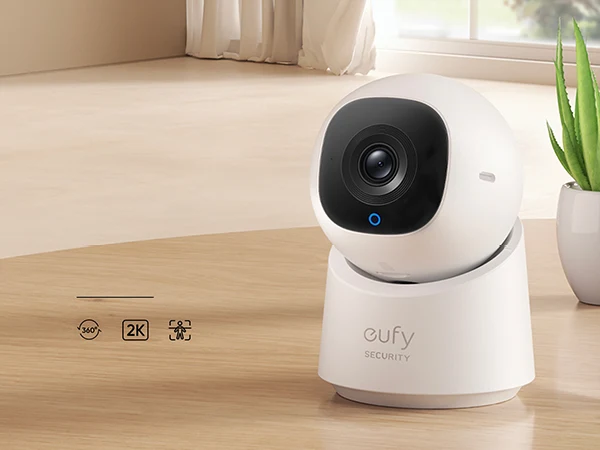
The C220 is probably the strangest product in this review because I think it’s very good, I genuinely do, especially at its current promotional price of R699, but I still don’t think I would buy one for myself.
The camera itself isn’t the problem. Image quality is strong, the pan-and-tilt functionality works well, motion detection is reliable and the two-way audio is perfectly usable.
My hesitation is a more personal one.
I don’t have young children I need to keep an eye on, I don’t have a specific reason to monitor people inside my home, and I’m simply not particularly comfortable with the idea of having a camera watching family or visitors while they’re sitting around in a living space.
There are obviously situations where an indoor camera makes complete sense, whether you’re monitoring a baby, checking in on pets, looking after an elderly family member or using it for security while the house is empty, and Eufy does include a privacy mode for people who want more control over when the camera is active.
For me, though, the issue is less about whether the camera can be made private and more about whether I have a genuine reason to own one in the first place.
The missing microSD card also irritated me slightly, because although I had HomeBase 3 available during testing, someone buying the C220 on its own will need to factor in the cost of a card if they want local recording without adding a HomeBase to the setup.
I’d happily recommend considering the C220 if you actually need an indoor camera, because at R699 it offers a lot for the money, but I wouldn’t buy one simply because it’s affordable.
Sometimes the most useful conclusion you can reach in a review is that a product is good, but it isn’t necessarily for you.
So, would I buy them?
When it comes to the outdoor cameras, my opinion hasn’t really changed since I first installed them.
The image quality is excellent, the audio is really good, motion detection has been reliable, installation is simple enough that you don’t need to turn your house into a mini construction site, and the ability to keep recordings locally remains one of the biggest advantages for me.
The C37 is the obvious choice if you want something relatively affordable that can work as a standalone outdoor camera, while the S3 Pro makes more sense if you want to build a more complete home security system and are prepared to pay for it.
I still wish the Apple support were better, because having all three cameras inside Apple Home would have made the experience far more seamless for me, and the 1080p limitation through HomeKit takes some shine off the S3 Pro’s 4K hardware.
Even so, I’ve now reached the point in the review process where I should be taking these cameras down, putting them back into their boxes and arranging for them to be returned, and I’m finding myself increasingly reluctant to do that.
There’s a very good chance the C37 and S3 Pro will end up staying exactly where they are.
The only difference is that now, I’ll be paying for them.
