

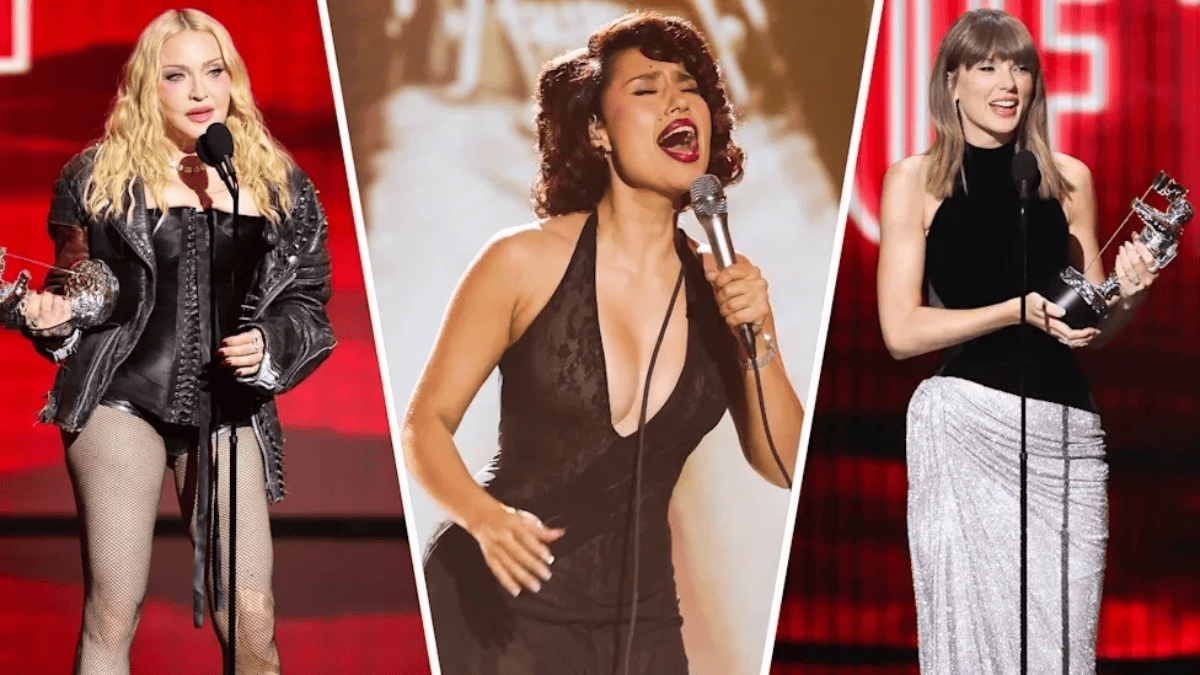
So let’s start off with a question. Are you convinced that award shows still create moments? You know, the kind people discuss at work the next morning instead of watching a twelve-second clip while standing in a grocery queue. Well, for those of you who watched, you know that Madonna returned to the MTV Video Music Awards after 23 years. Taylor Swift made even more history and, for a while at least, the VMAs felt as though somebody had remembered what the show was supposed to be.
Madonna opened the 2026 ceremony at the Peacock Theater in Los Angeles. This was her first VMA performance since 2003. Back then she appeared onstage with Britney Spears and Christina Aguilera. She definitely gave television something to talk about for several months. So no pressure there.
This time, Madonna performed Bring Your Love with Sabrina Carpenter before moving into Danceteria, which included Charli xcx and Julia Garner. Yes, the same Julia Garner who was once meant to play Madonna in a biopic that never made it to the screen. Now that is either a lovely full-circle moment. Or the beginning of a conversation I would very much like to overhear.
Madonna also had a rather successful evening away from the stage. She won seven awards, including Artist of the Year, Best Dance and Best Collaboration with Carpenter. Now that is rather brilliant for someone who returned to an awards show where, as she reminded the audience, many viewers were not even alive when she performed at the very first VMAs. And she was not the only person making history.
Taylor Swift won Video of the Year for The Fate of Ophelia and received the first Artist Director honour. The new award recognises musicians whose work behind the camera has expanded what music videos can do. Swift has written and directed 18 of her nearly 60 videos, so it was not exactly a trophy handed over because someone had an empty shelf to fill. She also premiered the video for Patient Zero, featuring Dakota Johnson and Colin Farrell, because apparently winning awards was not enough work for one evening.
Swift dedicated her Video of the Year win to Dolly Parton, who died last month at the age of 80. Kacey Musgraves also honoured Parton with a performance of I Will Always Love You. Between Madonna’s return, Swift’s tribute and Nirvana receiving the Video Vanguard Award, the ceremony spent quite a bit of time looking backwards. But oddly enough, that may have been what helped the VMAs feel current again. The Guardian
Now don’t get me wrong, younger artists were certainly present. Lisa won Best Pop, while British singer Sienna Spiro took home Best New Artist. BTS won Best Group, Best K-pop and Song of the Year for Swim. So the show was not simply a very glamorous reunion where everyone compared awards and lower-back pain. For me the most memorable parts of the evening came from artists whose careers already carry history with them. And that tells us something about the position award shows find themselves in.
The VMAs once had the power to create pop-culture moments simply because people watched them together. An outrageous performance happened, television audiences reacted at the same time and the conversation continued for days. Now viewers can skip the ceremony and watch whichever clip survives online the following morning. Which is rather sad.
And this is the real question: How does an awards show make itself matter when the entire evening can be reduced to several short videos by social media? Well……simply put, I think you give people something that does not happen every week. Madonna’s first VMA performance in 23 years qualifies. Taylor Swift receiving a new award for directing qualifies. Nirvana being recognised for the visual impact of its music qualifies. The show needed moments with enough weight behind them to feel bigger than whatever happened to be trending for six minutes.
We all know that nostalgia alone cannot keep an awards show alive. So if the VMAs rely too heavily on reminding viewers how exciting they used to be, they may eventually become their own tribute act. I believe that new performers still need the opportunity to create the moments people will remember twenty years from now.
But in saying that, there is something fitting about Madonna helping the ceremony rediscover a bit of its personality. Her performances helped establish the VMAs as a place where pop stars did more than collect trophies. They arrived with ideas, controversy and enough confidence to make everybody pay attention.
Taylor Swift represents a newer version of that control. She does not only perform inside the visual world surrounding her music. She increasingly builds and directs it.
So perhaps the evening was not really Madonna versus Taylor Swift, even if award shows love turning successful women into opposing teams. It was a look at two generations of artists who understand that a memorable pop career needs more than a good song.
It needs a moment.
And for one evening, the VMAs remembered that too.
