

The Social Network arrived in 2010, back when Facebook was still the place where people posted song lyrics, shared blurry party photographs and accepted friend requests from somebody they met once in a queue. But things have changed a little since then.
Now Aaron Sorkin has returned to the world of Facebook with The Social Reckoning. A companion film about what happened after the platform stopped being a university project and became something capable of influencing politics, public safety and how your aunt feels about vaccines. The first reactions have arrived ahead of the film’s release on 9 October. And viewers cannot seem to agree on whether Sorkin has delivered an important follow-up or a film stuck in the shadow of its much better-looking older sibling. So yes, the social network has divided people again.
But at least this time it is about a movie.
The Reactions Are All Over the Timeline
Some early viewers have praised The Social Reckoning as a timely and frightening examination of Facebook’s power. Andrew Garfield’s upcoming Sam Altman film Artificial may be receiving the stronger reactions. But Sorkin’s sequel has also earned compliments for its cast, pace and willingness to examine what Facebook became. Others have been less impressed. Several reactions argue that the film cannot match The Social Network, while some describe it as a solid journalism drama that never becomes particularly revealing. There are reports that views range from claims that the sequel stands beside the original to suggestions that it arrived several years too late. Wow, that is quiet a difference of opinion.
But The Social Reckoning was always going to face a difficult comparison. The Social Network is widely regarded as one of the best films of this century. David Fincher directed it with such precision that people still discuss scenes involving depositions and computer code as though they were action sequences. Sorkin wrote that film, but he directs this one himself. And I suppose that’s where the first challenge lies. Sorkin may understand the rhythm of fast dialogue. But here he is following a film where Fincher, cinematographer Jeff Cronenweth and composers Trent Reznor and Atticus Ross turned people arguing in offices into something tense and almost dangerous. For many that is not an easy group project to repeat.
This Is Not Really Mark Zuckerberg’s Story
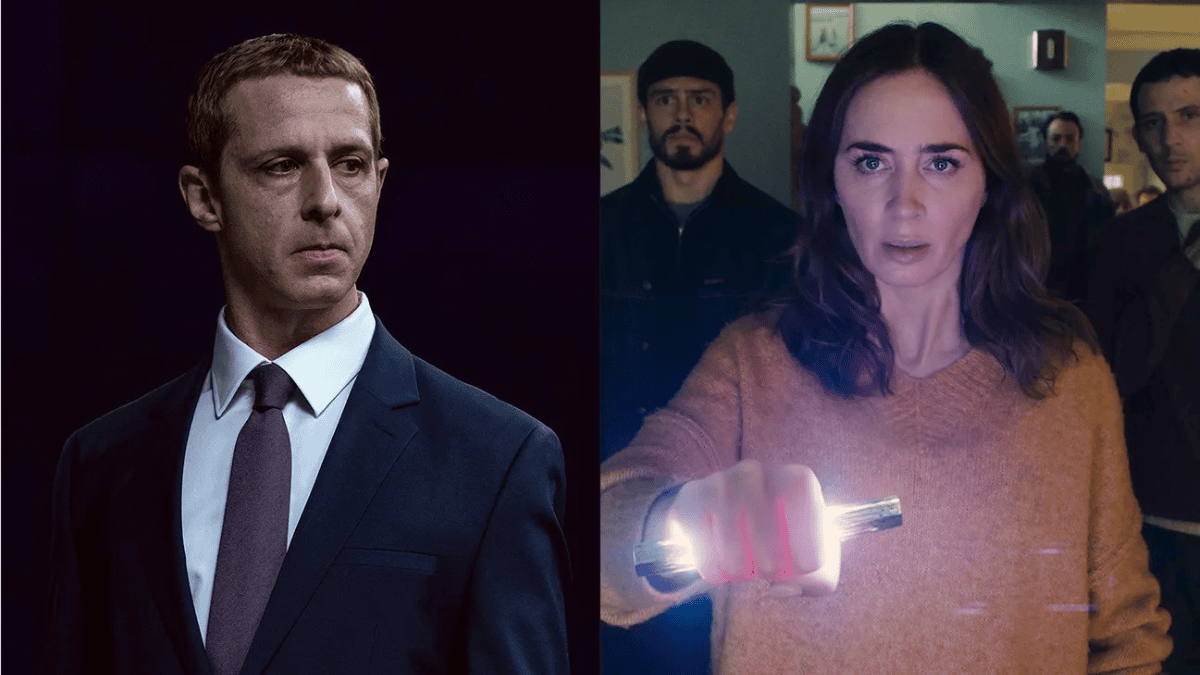
Jeremy Strong replaces Jesse Eisenberg as Mark Zuckerberg, which means audiences must adjust to a different actor playing one of the most recognisable tech executives in the world. Strong is an interesting choice. After Succession, he certainly understands powerful men who believe every room is waiting for them to make the final decision. But Zuckerberg is not the centre of this story in the same way he was in The Social Network. The Social Reckoning follows Facebook engineer Frances Haugen, played by Mikey Madison.
Haugen enlists the help of The Wall Street Journal reporter Jeff Horwitz, played by Jeremy Allen White, to expose the company’s closely guarded information. Sony describes the film as a David and Goliath story inspired by true events. It examines the Facebook Files, Haugen’s disclosures and the platform’s role in extremism and division. Sony Pictures
That gives the sequel a very different purpose.
The first film asked how Facebook began and what its creation cost the people involved. This one asks what happened when the platform became too large for those personal consequences to remain personal. And we already know that answer is uncomfortable.
The Original Film Became Better as Facebook Became Worse
When The Social Network was released, Facebook still felt exciting to many people. The film presented its creation as a story about ambition, loneliness, friendship and betrayal. It made typing code look dramatic and turned the question of who invented a website into a modern tragedy. But the film’s reputation grew partly because of what happened afterwards.
Facebook became one of the world’s most powerful companies. Questions emerged about privacy, misinformation, political influence, mental health and the way algorithms reward anger because calm people apparently do not click enough things. The story continued long after the credits ended. That creates both the reason for The Social Reckoning to exist and the problem it has to overcome. Audiences no longer need a film to tell them that social media can be dangerous. We have watched arguments begin in comment sections, enter family groups and somehow ruin lunch. The sequel has to offer more than information we already know.
What it needs is to make that information feel urgent again.
Perhaps Divided Reactions Are Appropriate
There is something almost fitting about a film concerning Facebook producing reactions that immediately divide people into opposing sides. Some viewers want the sequel to match The Social Network. Others want it to stand alone. Some will miss Fincher’s direction and Eisenberg’s performance, while others may appreciate the shift towards Haugen and the journalists who helped make the company’s internal decisions public. The film may also face the problem of familiarity. We have seen several movies and series about powerful technology companies, difficult founders and employees who discover that the organisation they work for may be harming people.
At this point, the prestige drama about a tech company has almost become its own genre. There will be rapid dialogue, glass meeting rooms and at least one executive explaining something troubling with the emotional warmth of a printer manual. Still, The Social Reckoning has one major advantage.
The subject matters.
Watch Trailer Here:
Facebook is no longer simply the company behind a website that helped university students compare photographs. Its decisions affect billions of people, which means a story about how those decisions became public deserves attention. Whether Sorkin has found the right way to tell that story remains unclear. The early reactions certainly have not settled the matter. But perhaps expecting another Social Network is part of the problem.
The first film showed us how Facebook was created.
The sequel has the much more difficult task of explaining what we allowed it to become.
