
When you hear that a film about artificial intelligence has been described as terrifying. The expectation is that robots will arrive with blinking red lights. And the background will be filled with an announcement made by a computer that humanity is no longer required. But Artificial does not appear to need any of those things. It seems that all that is required is a boardroom filled with human beings. Who knew it could be this easy?
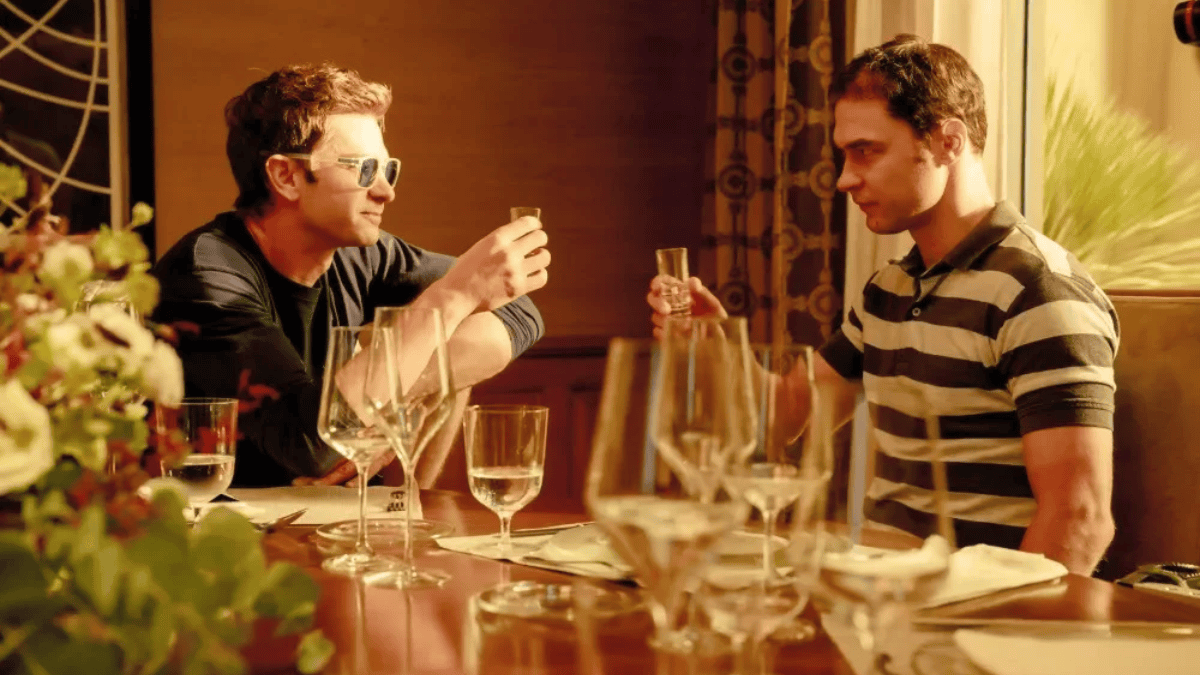
The new film from director Luca Guadagnino tells the story of the 2023 drama at OpenAI, when the company’s board fired CEO Sam Altman before bringing him back several days later. Andrew Garfield plays Altman, while Yura Borisov takes on the role of OpenAI co-founder and former chief scientist Ilya Sutskever. Now I totally understand if the phrase “corporate disagreement at an artificial-intelligence company” does not immediately sound like a thrilling drama. Because most workplace disputes usually end with uncomfortable emails. Then come several awkward meetings, which normally end with somebody realising that they have made questionable choices. This one though was dramatically different. It involved a company helping to shape technology that could change how millions of people work, learn and communicate.
So yes, the stakes were naturally slightly higher than an argument over who told the cleaner to go home at midday. Artificial recently screened at the New York Film Festival. This instantly got my attention because the first reactions made it sound more like a horror film than a traditional business drama. Some viewers have referred to it as frightening, furious and uncomfortably relevant. As for Garfield’s Altman, he has been described as everything from a brilliant businessman to something resembling a movie monster. Variety
Please remember that these are early reactions, not full reviews. And I am guessing we should hold off on declaring that the film has explained artificial intelligence, Silicon Valley and the possible end of civilisation all at one go. Still, the responses point towards a rather interesting idea.
The terrifying part may not be the technology.
It may be the people controlling it.
For the longest time, films have taught us to fear intelligent machines. Why? Well… because there is a chance that machines might eventually stop listening to us humans. Take for example, The Terminator which gave us Skynet and The Matrix that trapped humanity inside a simulated world. Both those movies speak volumes when it comes to man and machine.
Those stories are frightening because the machines take control. But Artificial asks a different question. What if the idea that humans have all this control is just a delusion? The OpenAI drama unfolded in public at an incredible speed. Altman lost his position, employees threatened to leave and the board suddenly found itself under enormous pressure. A few days later, he returned. For most of us watching from the outside, it was difficult to understand exactly what had happened. And honestly, I’m not entirely convinced everyone inside the building understood what was happening either.
But these people were not faced with trivial arguments. The arguments concerned topics of leadership, trust and the future of a powerful technology. And that is what makes the story fascinating from a human perspective. Because artificial intelligence often arrives wrapped in language that makes it sound inevitable. Companies discuss progress, innovation and the future as though technology develops by itself while everyone else watches from the sidelines. But the fact is that people build these systems. People decide how quickly to press the release button and which risks they consider acceptable. Then we also need to ask whether profit should move faster than caution.
And people, as history has repeatedly shown us, are not always known for making sensible decisions when money, ambition and power enter the room.
That may be where Artificial finds its horror.
The film does not need to show an AI system that turns into Satan himself. It only needs to show intelligent people convincing themselves that they are the ones responsible enough to control it. Every person in the room may believe they are protecting humanity while also protecting their career, reputation or place in history. The difficult part is working out where one concern ends and the other begins. I guess this also explains why Garfield could be such an interesting choice to play Altman.
He has the skill to appear sincere, charming and slightly uncomfortable all at once. That right there makes it difficult to decide whether a character deserves your trust. And in a film about a man selling a vision of the future while navigating a very public power struggle, that uncertainty may prove useful. Guadagnino is also not the kind of filmmaker I would expect to turn this story into a straightforward lesson about technology. His films usually pay close attention to desire, obsession and the strange things people do when they want something badly enough.”. Place those interests inside Silicon Valley, where people regularly speak about changing the world without always asking whether the world requested an update, and things start to get rather awkward.
There is another odd layer to all of this. Artificial is dramatising events from only three years ago. The people involved are still shaping the industry, and AI continues to change at a speed that makes yesterday’s confident prediction look rather adorable. The story has not settled into history yet and we are still living through whatever comes next. That means the film is not simply asking us to look back at a famous corporate battle.
It is asking us to consider how much power we have handed to a very small group of people while the rest of us try to understand what the technology can actually do. Neon acquired the film after Amazon MGM decided not to release it. The production reportedly cost around $40 million, and will arrive in cinemas as a Christmas gift, on 25 December. Nothing says Christmas quite like watching Andrew Garfield participate in a boardroom crisis that may affect the future of humanity.
Of course, Artificial is still a dramatisation. It will shape real events into a story, and audiences should not treat every scene as a documentary record. But perhaps its most important idea does not depend on every conversation happening exactly as shown. We spend so much time asking whether artificial intelligence will become too powerful. Maybe we should spend a little more time asking who already has that power.
Because the machines may be artificial.
The ambition, fear and greed behind them are extremely human. Just saying.
