

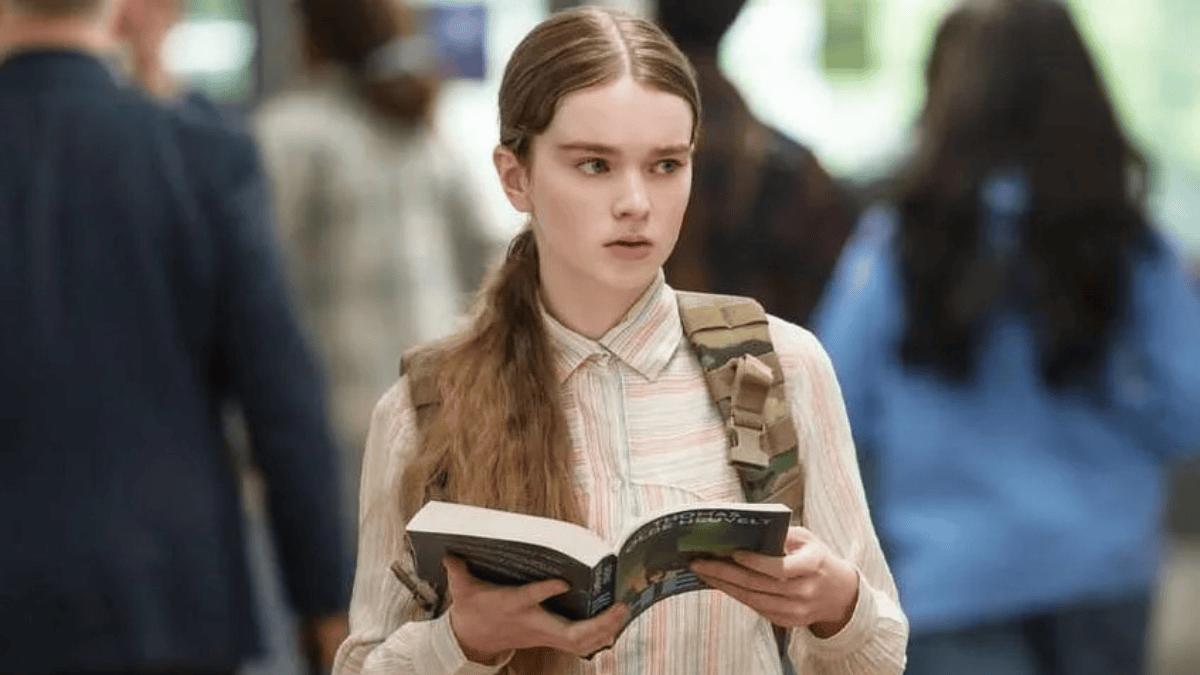
Carrie White has always had a difficult time at school. Her classmates mock her, her mother controls almost every part of her life and, to make matters worse, she discovers that she can move things with her mind. Most teenagers only have to worry about homework and somebody taking an unfortunate photograph. Carrie has to worry about accidentally destroying the building.
Now we find that Mike Flanagan’s new Carrie series has added to her woes and given her another problem. Social media.
The eight-episode series arrived on Prime Video on 7 October, with Summer H. Howell playing Carrie and Samantha Sloyan taking on the role of her deeply religious mother, Margaret. Flanagan wrote and produced the adaptation, while also directing four episodes. My first reaction was, “Do we really need another version of Carrie?” Stephen King published the novel in 1974. Brian De Palma turned it into a film in 1976, and another remake arrived in 2013. There has also been a television film, a sequel and even a musical. Carrie White has been invited to that prom quite a few times, and things never end well.
But there’s always a reason for a story to make the rounds again, right?
Here Carrie portrays teenage cruelty with the freedom it never had before. The story unravels when Carrie starts attending public school. Remember this is new because she spent many years at home with her mother, Carrie starts attending public school. Here she quickly becomes the target of an anonymous Instagram account that shares videos of students at their worst.
In King’s story and earlier adaptations, the infamous locker-room incident features Carrie experiencing her first period. This can be a frightening time for someone like her who does not understand what is happening. But instead of helping her, Carrie’s classmates ridicule her. The incident is made worse by sanitary products being thrown at her. And to be honest, this is an apt portrayal of what actually happens in schools today. It is a horrifying to think that people would rather choose cruelty over helping. And it only gets worse because in 2026, because they have one more accessory. The phone.
According to Flanagan he wants the scene to reflect exactly what bullying looks like in today’s world. Hence, Carrie’s humiliation does not stop when a teacher enters the room. Someone records it, posts it and sends it into a world where people who have never met her can watch, comment and share. And that’s exactly why this version hits closer to home.
Teenagers have always worried about fitting in. There have always been popular groups, rumours, embarrassing moments and that one person who apparently knows everybody’s business before everybody else. But previous generations could at least go home. The school day ended, the doors closed and, for a few hours, you managed to escape the people making your life miserable.
But with the arrival of Social media that distance that kept you safe got removed.
A cruel comment can follow a teenager like a stalker on steroids. A photograph often enters the group chat within seconds. And videos… well, we know the speed at which they can move between Instagram, TikTok and WhatsApp. All this happens before the person inside them actually gets a chance to understand what happened. And as most of you know, once something is online, deleting the original post doesn’t help much because there is no guarantee that somebody else has not saved it.
I think that is a frightening amount of permanence to attach to the most awkward years of a person’s life. I’m sure that when most adults look back at teenage embarrassment, they are grateful that they did not have a high-definition camera staring them in the face. Unfortunately, today’s teenagers do not have that luxury. Their mistakes can attract an audience from far and wide. Even worse, the audience participates without ever seeing the damage it causes. A person who wouldn’t confront Carrie on an ordinary day could choose to rather tap a reaction button, forward the video or leave a comment because the screen creates just enough distance to make cruelty feel harmless. But as we all know, it is far from harmless.
And I think that is what makes social media such a useful addition to Carrie. You see, the original story was much more than just simply about a girl with telekinetic powers. It demonstrated what happens when people are repeatedly hurt by people who ignore every warning and then act surprised when all that pain eventually comes back at them. And make no mistake, the phones do not create the cruelty in Flanagan’s version. Because teenagers being horrible to one another arrived long before Wi-Fi showed up. But social media gives that cruelty speed, reach and an audience who are capable of turning bullying into entertainment. It’s easy to get blinded by likes and attention. And once that happens, humiliating another person may start to feel like content rather than abuse. And before you know what’s what, everybody gets involved.
The series also explores the reason behind teenage participation. Not every person sharing a cruel post thinks of themselves as a bully. Some join in because they fear becoming the next target. Others want attention, approval or simply a place inside the group. Then there are those who watch quietly, feel uncomfortable and do absolutely nothing. And that for me is the most human part of the entire story.
Watch The Trailer Here:
It is easy to separate the world into Carries and bullies. It is more difficult to admit that many people have stood somewhere in the middle. They saw somebody being mocked, recognised that it was wrong and decided that speaking up would make life inconvenient. Reports claim that Flanagan invited teenagers into the writers’ room to understand their daily experiences. This included how bullying and social media affect their lives. That was probably a wise decision. Adults have a habit of discussing teenagers and their phones as though young people invented the internet and personally forced everyone else to join Facebook.
But the reality is more complicated.
Social media allows teenagers to find friends, communities and support that may not exist in their immediate surroundings. It can give isolated people somewhere to belong. But the same tool can make rejection feel enormous. If everyone appears connected and happy while you feel alone, the loneliness becomes even louder. Carrie enters this world without the experience or support required to navigate it. She does not understand ordinary teenage life, never mind an anonymous account turning humiliation into public entertainment. The fact that she can move objects with her mind almost feels like the easier problem.
So perhaps we did not need another Carrie that simply repeated the prom, the blood and the screaming.
But a Carrie about growing up when every cruel moment can be recorded may have something new to say. The story has always asked what happens when bullying goes too far. Social media forces us to ask another question.
How far is too far when there is no longer anywhere to hide?
Carrie White can leave the school, but her humiliation can follow her home.
